Pilates vs. Yoga: Differences, Benefits & Which One Is Right for You
The Modern Wellness Dilemma: Pilates or Yoga?
Walk into any fitness studio or scroll through social media, and you’ll quickly notice a recurring theme: people are trying to choose between Pilates and yoga. Both are low-impact, both promise a stronger, healthier body, and both seem to deliver that effortlessly toned, balanced lifestyle everyone is chasing. But despite their similarities, they offer very different experiences—and that’s where the confusion begins.
What makes this decision tricky is that Pilates and yoga are often grouped into the same “mind-body” category. While that label is accurate, it doesn’t tell the whole story. One leans more toward structured physical conditioning, while the other blends movement with mental awareness in a more fluid way. For someone new, the difference isn’t always obvious until they try both.
There’s also a cultural shift happening. More people are moving away from high-intensity workouts and looking for something sustainable—something that feels good both physically and mentally. Pilates and yoga sit right at the center of this shift, making them more popular than ever among beginners, athletes, and even people recovering from burnout or long periods of inactivity.
Another reason this dilemma feels so common today is accessibility. You can do either practice at home with minimal equipment or join a studio for a more guided experience. Online classes, apps, and short-form videos have made both Pilates and yoga easy to start—but they’ve also blurred the lines between them, sometimes oversimplifying what each one actually offers.
Ultimately, choosing between Pilates and yoga isn’t about picking the “better” option. It’s about understanding what each practice emphasizes and how that aligns with what someone is looking for—whether that’s building strength, improving flexibility, or simply finding a way to move more intentionally in a fast-paced world.
For those leaning toward yoga but feeling hesitant, it’s worth addressing some common misconceptions that often hold beginners back. Many people assume yoga requires extreme flexibility or prior experience, which isn’t the case. A helpful starting point is understanding these barriers in more detail: Common Yoga Myths That Stop People from Starting.
Origins & Philosophy: Ancient Wisdom vs. Modern Science
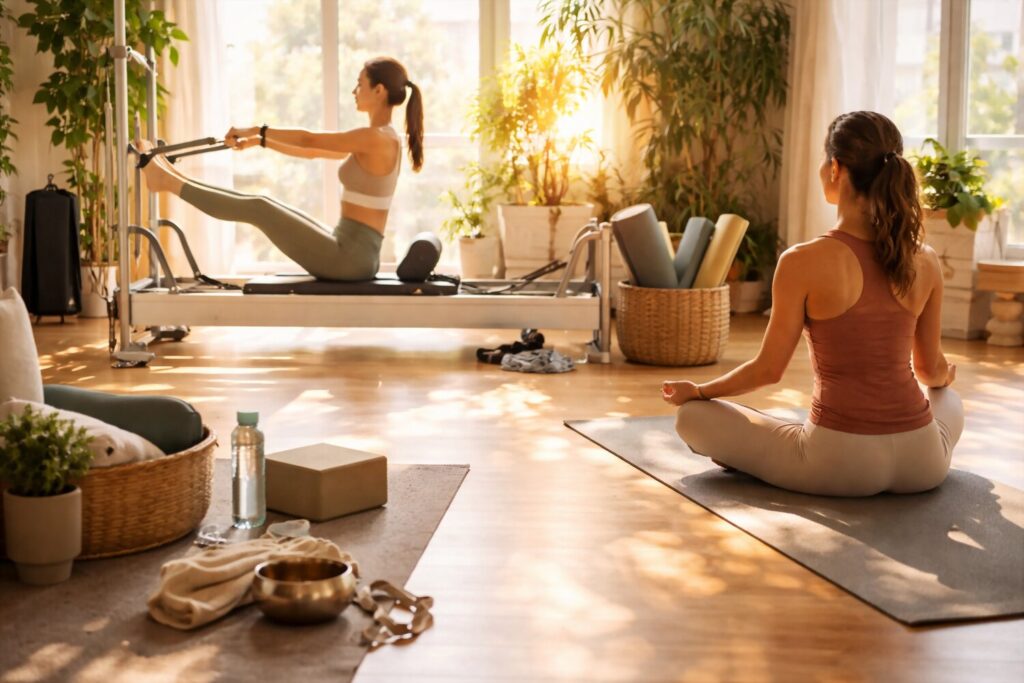
Yoga and Pilates may look similar on the surface, but their origins reveal two completely different philosophies. Yoga dates back thousands of years to ancient India, where it was developed as a holistic practice connecting the body, mind, and breath. It wasn’t originally designed as a “workout” in the modern sense—it was part of a broader lifestyle focused on awareness, discipline, and inner balance.
Pilates, on the other hand, is a much more recent creation. It was developed in the early 20th century by Joseph Pilates, who designed the method to improve strength, posture, and body control. His approach was influenced by anatomy, rehabilitation techniques, and physical conditioning. Unlike yoga, which evolved through spiritual traditions, Pilates was built with a strong emphasis on biomechanics and functional movement.
Key Philosophical Differences
- Yoga
- Focuses on unity between mind and body
- Incorporates breathing techniques and mindfulness
- Often includes elements of stillness and reflection
- Pilates
- Centers on controlled movement and muscle engagement
- Prioritizes core strength and alignment
- Emphasizes precision and technique in every exercise
These philosophical differences shape how each practice feels. Yoga often encourages slowing down, tuning inward, and moving with intention tied to breath. Pilates, by contrast, feels more like a structured system where each movement has a specific physical purpose, often targeting deep stabilizing muscles that aren’t always activated in everyday activity.
Understanding where each method comes from helps explain why people experience them so differently. One is rooted in centuries of tradition and internal awareness, while the other is grounded in modern movement science and physical efficiency.
The Core Difference: Stretching Your Soul vs. Strengthening Your Core
At a glance, Pilates and yoga can look almost identical—slow movements, controlled breathing, and a focus on form. But once you step into each practice, the core difference becomes clear: yoga leans toward expanding the body and calming the mind, while Pilates zeroes in on building deep, functional strength, especially through the core.
Yoga is often described as a practice that connects movement with breath in a way that encourages awareness. Poses are designed to lengthen muscles, improve mobility, and create space in the body. While strength is certainly involved, it’s typically balanced with flexibility and a sense of flow. The experience can feel fluid, sometimes even meditative, as transitions between poses are just as important as the poses themselves.
Pilates takes a more targeted and structured approach. Every movement is intentional, often slow and precise, with a strong emphasis on engaging the core muscles—the abdominals, lower back, hips, and pelvic floor. Rather than flowing through sequences, Pilates focuses on controlled repetitions that build stability and support for the entire body. The result is a kind of strength that translates into better posture and more efficient movement in everyday life.
How They Feel in Practice
| Aspect | Yoga | Pilates |
|---|---|---|
| Movement Style | Flowing, continuous sequences | Controlled, deliberate repetitions |
| Primary Focus | Flexibility, balance, breath | Core strength, alignment, stability |
| Mind-Body Element | Strong emphasis on mindfulness | Focus on concentration and control |
| Physical Sensation | Stretching, lengthening | Muscle activation and strengthening |
What makes this distinction important is how it shapes results. Someone drawn to improving flexibility and finding a sense of calm may naturally gravitate toward yoga. Meanwhile, someone interested in strengthening their core and refining movement patterns may find Pilates more aligned with their goals. Despite their overlap, the internal experience of each practice can feel surprisingly different.
Body Transformation Goals: What Do You Want to Change?
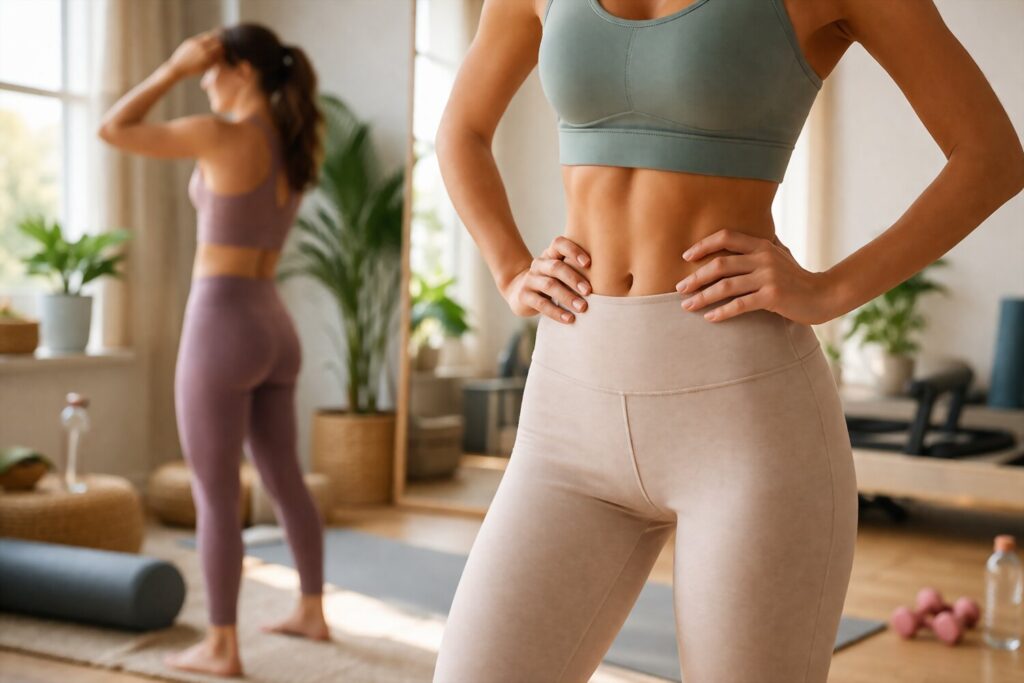
When people compare Pilates and yoga, one of the biggest questions is what kind of physical results they can expect. The truth is, both practices can influence how the body looks and feels—but they do so in different ways. Understanding these differences helps clarify why someone might feel drawn to one over the other.
Pilates is often associated with visible toning, especially around the core. Because it emphasizes controlled resistance and muscle engagement, it can create a tighter, more supported feeling through the abdomen, back, and hips. Over time, this can translate into improved posture and a more defined silhouette, even without high-impact movement. The changes tend to be subtle but functional, meaning they support how the body moves day to day.
Yoga, by contrast, tends to focus more on lengthening and balancing the body. Many styles involve holding poses that stretch multiple muscle groups at once, which can lead to increased flexibility and a more elongated appearance. While strength is still part of the equation—especially in more dynamic styles—the visual effect often feels less about “tightening” and more about creating openness and ease in movement.
Common Goals and How Each Practice Aligns
- Improving posture
- Pilates: Targets deep stabilizing muscles that support alignment
- Yoga: Encourages awareness of body positioning through poses
- Building muscle tone
- Pilates: Focuses on controlled resistance and repetition
- Yoga: Builds strength through bodyweight holds and transitions
- Increasing flexibility
- Pilates: Improves mobility gradually through controlled range of motion
- Yoga: Directly emphasizes stretching and lengthening muscles
- General body awareness
- Pilates: Develops precision and control in movement
- Yoga: Enhances connection between breath, movement, and focus
What’s often overlooked is that transformation doesn’t happen in just one dimension. Some people notice changes in how they sit, stand, or move long before they see visual differences. Others are more focused on how their body feels—less tension, more stability, or improved coordination. Pilates and yoga both contribute to these outcomes, but they prioritize different pathways to get there.
Mental Health Impact: Calm Mind or Laser Focus?
Beyond physical benefits, Pilates and yoga are often chosen for how they affect mental well-being. In a world filled with constant notifications, long work hours, and mental overload, both practices offer a structured way to disconnect and reset. However, they influence the mind in noticeably different ways.
Yoga is widely associated with relaxation and emotional balance. Many styles incorporate slow breathing, intentional pauses, and moments of stillness that naturally reduce mental noise. The combination of movement and breath can create a calming rhythm, making it easier to shift attention away from daily stressors. For many people, yoga becomes less about the poses and more about the mental space it creates.
Pilates, while also mindful, tends to engage the brain differently. Instead of encouraging stillness, it demands concentration. Each movement requires precision, coordination, and awareness of muscle engagement. This level of focus can act as a mental reset, pulling attention away from distractions and placing it entirely on the task at hand. The result is often described as a feeling of clarity rather than calm.
How Each Practice Affects the Mind
| Aspect | Yoga | Pilates |
|---|---|---|
| Mental State | Relaxation, calmness | Focus, alertness |
| Breathing Role | Deep, rhythmic, often meditative | Controlled, supports movement |
| Emotional Impact | Helps release tension and promote balance | Encourages control and mental discipline |
| Attention Style | Inward, reflective | Precise, task-oriented |
It’s interesting how two similar-looking practices can create such different internal experiences. One slows things down and softens the edges of a busy mind, while the other sharpens attention and builds a sense of control. Depending on what someone feels they’re missing—peace or focus—either approach can feel like exactly what they need in that moment.
Calories Burned & Physical Intensity: Which Is the Better Workout?
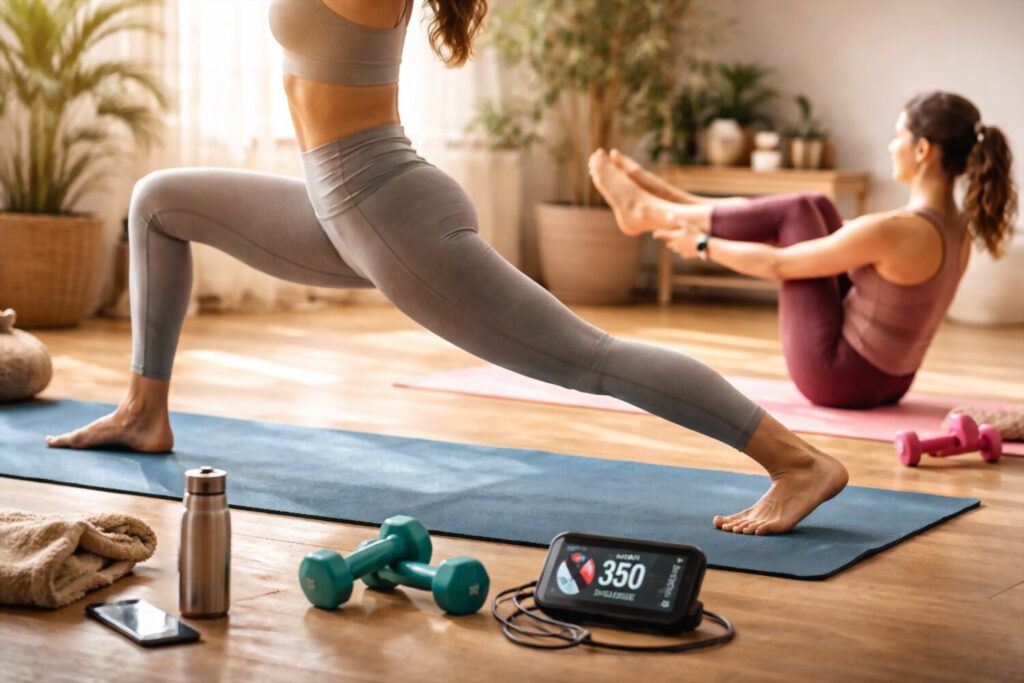
When people evaluate Pilates and yoga as workouts, intensity and calorie burn often come to mind first. While both practices are considered low-impact, they don’t always feel “easy.” The level of physical effort depends heavily on the style, pace, and how the movements are performed.
Yoga can range from very gentle to highly demanding. Slower styles focus on stretching and breathing, creating a light physical load, while faster-paced styles involve continuous movement that elevates heart rate and builds endurance. In those more dynamic sessions, yoga can feel surprisingly athletic, especially when holding challenging poses or transitioning quickly between them.
Pilates typically maintains a steady, controlled intensity. It doesn’t rely on speed or momentum but instead builds effort through precision and muscle engagement. Even small movements can feel intense because they target deep muscles that aren’t usually activated during everyday activity. This can create a strong “burn” sensation, particularly in the core and lower body.
Intensity Breakdown at a Glance
- Yoga
- Can vary from very low to moderately high intensity
- Dynamic styles increase heart rate and stamina
- Often alternates between effort and recovery
- Pilates
- Consistent, moderate intensity throughout the session
- Focuses on muscle fatigue rather than cardiovascular effort
- Emphasizes control over speed
It’s worth noting that calorie burn isn’t the only way to measure effectiveness. Both Pilates and yoga challenge the body in ways that go beyond simple energy expenditure. One may feel more physically demanding in terms of movement, while the other feels intense because of sustained muscle engagement.
In the end, intensity is less about which practice is “harder” and more about how each one challenges the body differently. Pilates concentrates effort into controlled strength, while yoga can shift between relaxation and exertion depending on the style.
Flexibility vs. Strength: The Trade-Off You Need to Know
One of the clearest distinctions between Pilates and yoga shows up in how they develop the body: flexibility versus strength. While both practices include elements of each, they prioritize them differently, which leads to noticeably different physical outcomes over time.
Yoga is widely recognized for improving flexibility. Many poses are designed to stretch muscles through extended ranges of motion, often held for longer periods. This approach encourages the body to gradually release tension and increase mobility. Over time, movements that once felt restricted may start to feel more fluid, and posture can appear more open and relaxed.
Pilates, in contrast, focuses more on building strength—especially in the deep, stabilizing muscles that support the spine and joints. Rather than pushing the body into extreme ranges, Pilates emphasizes controlled movement within a safe range of motion. This helps develop strength that supports everyday activities, from sitting and standing to more complex physical tasks.
How Each Practice Shapes the Body
| Focus Area | Yoga | Pilates |
|---|---|---|
| Flexibility | High emphasis, frequent stretching | Moderate, integrated into movement |
| Strength | Built through bodyweight holds | Strong focus on core and stabilization |
| Muscle Length | Encourages elongation and openness | Maintains length while building support |
| Movement Style | Expansive and flowing | Controlled and precise |
What’s interesting is that this isn’t really a trade-off in the strict sense—it’s more about emphasis. Yoga tends to open the body, while Pilates reinforces it. Some people notice they feel looser but less stable with only stretching, while others feel strong but tight without enough mobility work.
This is why the idea of combining both practices has gained attention. When flexibility and strength develop together, the body often feels more balanced. Each method fills in gaps the other might leave, creating a more complete approach to movement without relying on extremes.
Injury Prevention & Rehabilitation: What Experts Recommend
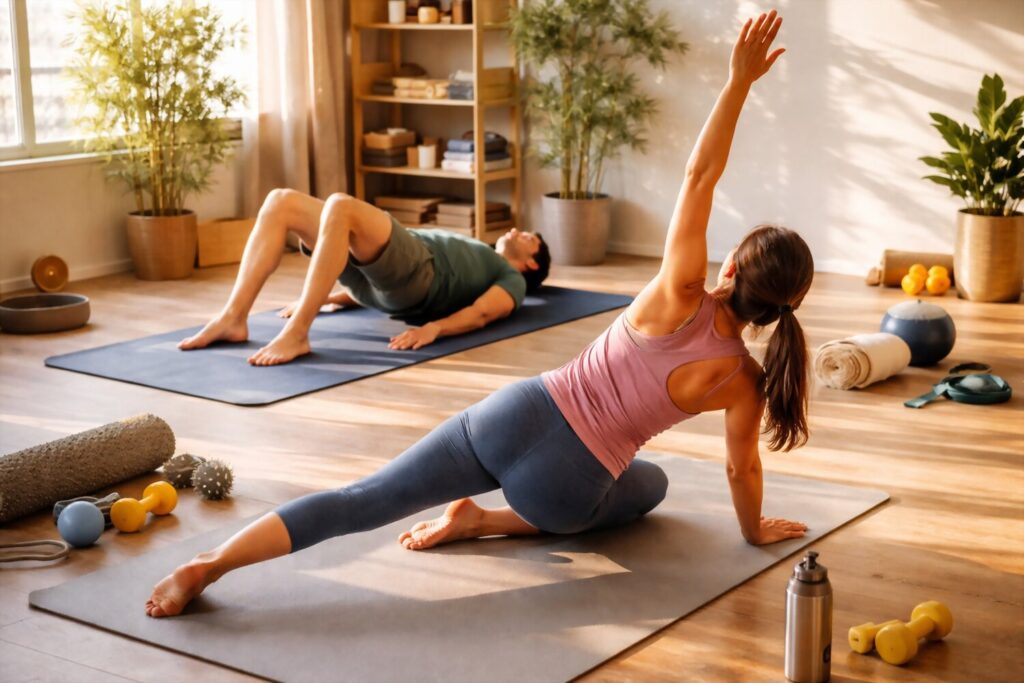
One of the less talked-about reasons people turn to Pilates or yoga is not transformation, but protection—protecting joints, improving movement patterns, and supporting recovery after physical strain. Both practices are widely used in this context, but they approach the body from slightly different angles.
Pilates has a strong reputation in rehabilitation settings because of its focus on controlled, low-impact movement. Exercises are often designed to strengthen the muscles that stabilize the spine, hips, and shoulders—areas that tend to be involved in common discomfort or imbalance. The emphasis on alignment and precision helps retrain how the body moves, which can reduce unnecessary strain during everyday activities.
Yoga contributes in a different but complementary way. Its focus on flexibility and joint mobility can help reduce stiffness that builds up from repetitive movements or long periods of inactivity. Many poses gently move joints through their natural range, which supports circulation and overall mobility. In addition, the slower pace of certain styles allows for more awareness of how the body feels during movement.
How They Support Injury Prevention
- Pilates
- Builds deep muscular support around joints
- Reinforces proper alignment and posture
- Focuses on controlled, repeatable movement patterns
- Yoga
- Improves flexibility and joint mobility
- Encourages body awareness through slow transitions
- Helps release tension that may contribute to imbalance
What stands out is that both practices prioritize low-impact movement, making them accessible to a wide range of people. Instead of pushing the body to extremes, they emphasize gradual progression and awareness, which can play a role in reducing the likelihood of overuse or strain.
While they differ in method, Pilates and yoga share a common principle: the body functions best when strength and mobility work together. Each offers a different pathway toward that balance, which is why both are often included in routines focused on long-term physical well-being.
Equipment, Cost & Accessibility: What You’ll Actually Need
One of the reasons Pilates and yoga have become so popular is how accessible they are. Unlike many fitness trends that require expensive memberships or complex setups, both practices can be adapted to fit different budgets, spaces, and lifestyles. Still, there are some key differences in what each one typically involves.
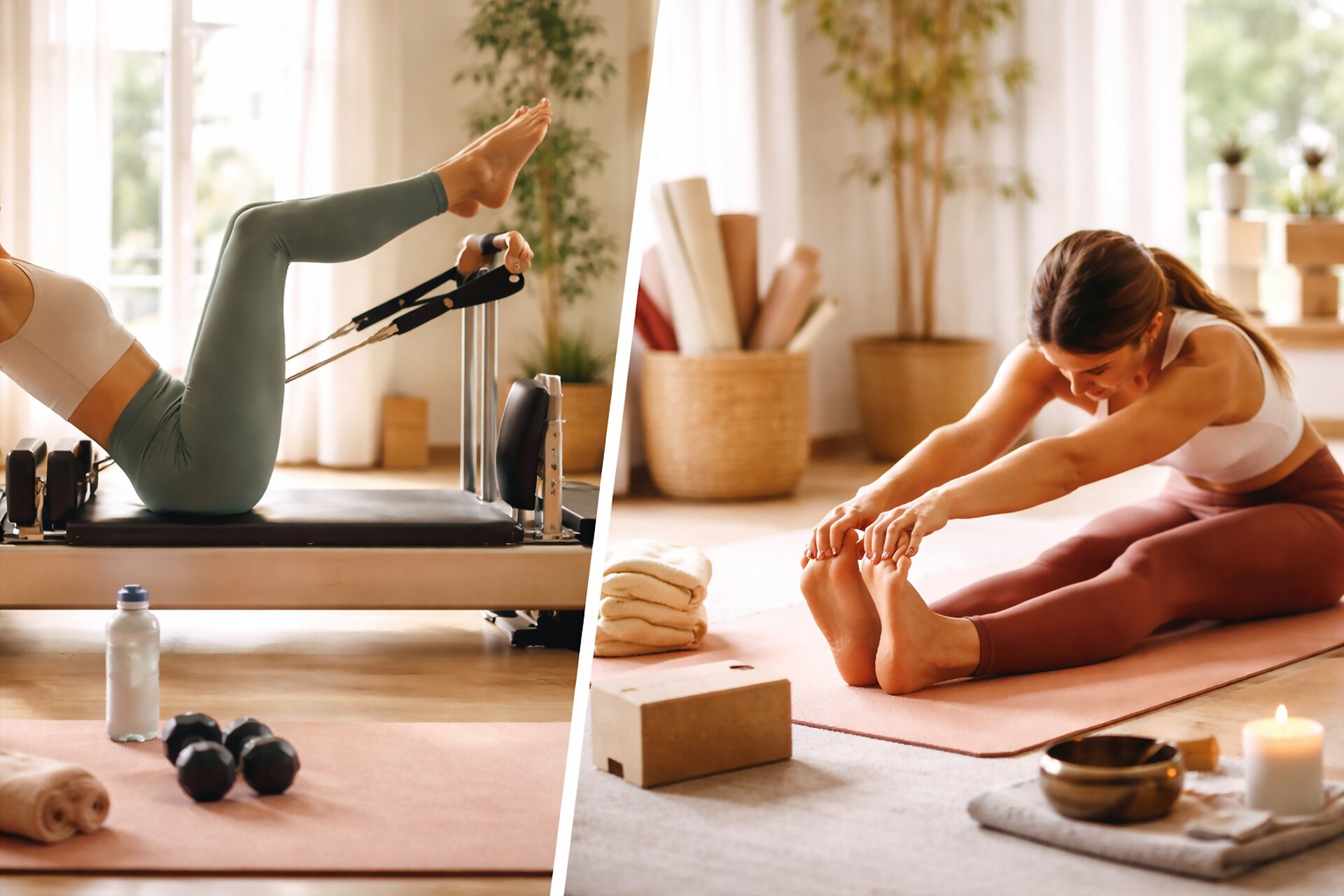
Yoga is often seen as the more minimal option. In many cases, all that’s needed is a mat and enough space to move comfortably. Some people choose to add props like blocks or straps, but these are optional and mainly used to support certain poses. Because of this simplicity, yoga is easy to practice almost anywhere—at home, in a park, or in a studio setting.
Pilates can be just as simple—or significantly more equipment-based, depending on the format. Mat Pilates requires very little, similar to yoga. However, studio Pilates often involves specialized machines like reformers, which use springs and resistance to guide movement. These machines add variety and intensity, but they also make studio sessions more structured and sometimes more expensive.
Quick Comparison: What You Need
| Category | Yoga | Pilates |
|---|---|---|
| Basic Setup | Mat, optional props | Mat or specialized equipment |
| Space Required | Small, flexible | Small for mat; more for equipment setups |
| Cost Range | Low to moderate | Low (mat) to higher (studio sessions) |
| Accessibility | Easy to practice anywhere | Depends on format (home vs. studio) |
Accessibility isn’t just about cost—it’s also about convenience. Yoga’s simplicity makes it easy to integrate into daily routines, even with limited time or space. Pilates offers similar flexibility at the mat level but introduces a more guided, equipment-based experience for those who prefer structure.
What makes this aspect interesting is how it shapes the overall experience. A minimal setup can feel freeing and informal, while a more structured environment can feel focused and intentional. Both approaches appeal to different preferences, which is why accessibility looks slightly different for each practice.
Personality Match: What Your Preference Says About You
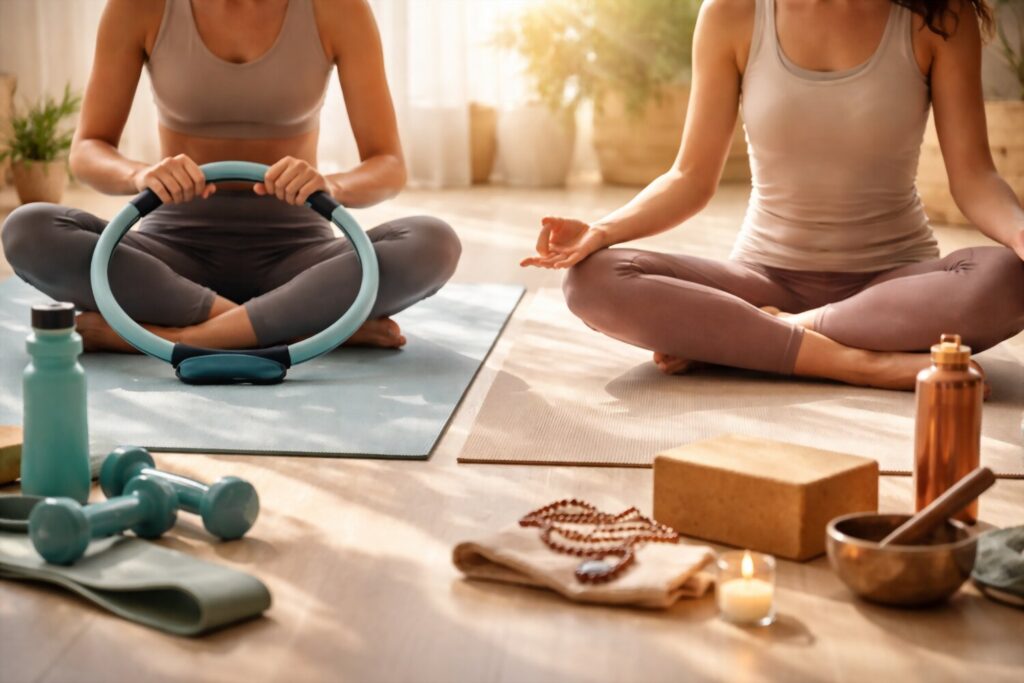
Choosing between Pilates and yoga isn’t always just about physical goals—it often reflects personal preferences, mindset, and even how someone approaches daily life. The structure, pace, and atmosphere of each practice tend to attract different types of personalities, which is part of what makes the choice feel surprisingly personal.
Some people are naturally drawn to the fluid, open-ended nature of yoga. The idea of moving with breath, slowing down, and creating space—both physically and mentally—can feel intuitive. Others may find that same openness less appealing and prefer something more defined, where each movement has a clear purpose and measurable progression, which is where Pilates often stands out.
Which One Feels More Like You?
- You might gravitate toward yoga if you:
- Enjoy slowing down and being present in the moment
- Like movement that feels expressive rather than structured
- Appreciate variety in pace and style
- Are drawn to a more reflective or inward-focused experience
- You might lean toward Pilates if you:
- Prefer clear structure and step-by-step progression
- Enjoy focusing on technique and precision
- Like feeling muscles engage in a targeted way
- Are motivated by measurable improvement in strength and control
What’s interesting is that these preferences often mirror how people approach other areas of life. Someone who enjoys flexibility and exploration may feel at home in yoga, while someone who values efficiency and structure may connect more with Pilates.
Of course, personality isn’t fixed, and preferences can shift over time. What feels appealing during a busy, high-stress period might be completely different from what feels right during a calmer phase. This makes the choice less about labeling yourself and more about recognizing what resonates in the moment.
Can You Combine Pilates and Yoga? (The Hybrid Trend Going Viral)
In recent years, the idea of choosing between Pilates and yoga has started to shift. Instead of viewing them as competing practices, many people are blending both into a single routine. This hybrid approach has gained traction because it captures the strengths of each method without forcing a strict preference for one over the other.
What makes this combination appealing is how naturally the two complement each other. Pilates focuses on building strength and stability, particularly in the core, while yoga emphasizes flexibility and fluid movement. When practiced together, they can create a more balanced physical experience—one that supports both control and mobility without leaning too heavily in one direction.
Why the Combination Works So Well
| Element | Pilates Contribution | Yoga Contribution |
|---|---|---|
| Strength | Deep core and muscle stabilization | Bodyweight strength through poses |
| Flexibility | Controlled range of motion | Extended stretching and mobility |
| Movement Quality | Precision and alignment | Flow and coordination |
| Mental Aspect | Focus and concentration | Relaxation and mindfulness |
Another reason this trend is gaining attention is variety. Doing the same type of movement repeatedly can start to feel predictable, while combining Pilates and yoga introduces different rhythms, challenges, and sensations. One session might feel structured and strength-focused, while another feels slow and restorative.
This blended approach also reflects a broader shift in how people think about fitness. Instead of following rigid categories, there’s a growing interest in creating routines that feel adaptable and personalized. Pilates and yoga, when combined, offer that flexibility—both physically and in how they fit into different lifestyles.
The Final Verdict: Which One Should You Choose Today?
After exploring the differences between Pilates and yoga, the answer isn’t as simple as picking a winner. Both practices offer meaningful benefits, but they serve different purposes depending on what someone values most in their movement routine. The real decision comes down to priorities—whether that’s strength, flexibility, mental clarity, or a mix of all three.
Some people are naturally drawn to one approach right away. Others try both and notice how each one creates a different experience in the body and mind. What stands out is that neither practice is limited to a single outcome. Pilates can improve awareness just as yoga can build strength—the difference lies in emphasis, not exclusivity.
A Simple Way to Compare Your Direction
- Choose Pilates if you’re more interested in:
- Structured, goal-oriented movement
- Building core strength and stability
- Precision and controlled muscle engagement
- Choose Yoga if you’re more interested in:
- Flexibility and fluid movement
- Slowing down and creating mental space
- A more varied, adaptable pace
- Consider both if you value:
- A balanced approach to strength and mobility
- Variety in your routine
- A combination of focus and relaxation
What makes this decision unique is that it doesn’t have to be permanent. Preferences evolve, routines change, and what feels right today may shift over time. The flexibility of both Pilates and yoga allows them to fit into different phases of life without requiring a strict commitment to one path.
In the end, the choice isn’t about which practice is better—it’s about which one feels more aligned with what you’re looking for right now.