Common Yoga Myths That Stop People from Starting
Many people feel curious about yoga. They see friends practicing, read about the benefits, or hear that it can reduce stress and improve health. Yet millions never try it.
Why?
Often the reason isn’t lack of interest. It’s misinformation.
Over time, a number of myths about yoga have spread through media, word of mouth, and social assumptions. These myths make yoga seem intimidating, unrealistic, or irrelevant to everyday life.
The truth is far simpler: yoga is one of the most adaptable wellness practices in the world.
In this article, you will discover:
- The most common myths that prevent people from starting yoga
- Why these beliefs are inaccurate or misleading
- What yoga actually looks like in real life
- How beginners can approach yoga with confidence
If you’ve ever thought “Yoga isn’t for me,” keep reading. You might discover that it’s more accessible than you imagined.
Why Yoga Feels Intimidating to Beginners
Starting something new always brings uncertainty. With yoga, the intimidation often comes from what people see online or in advertisements.
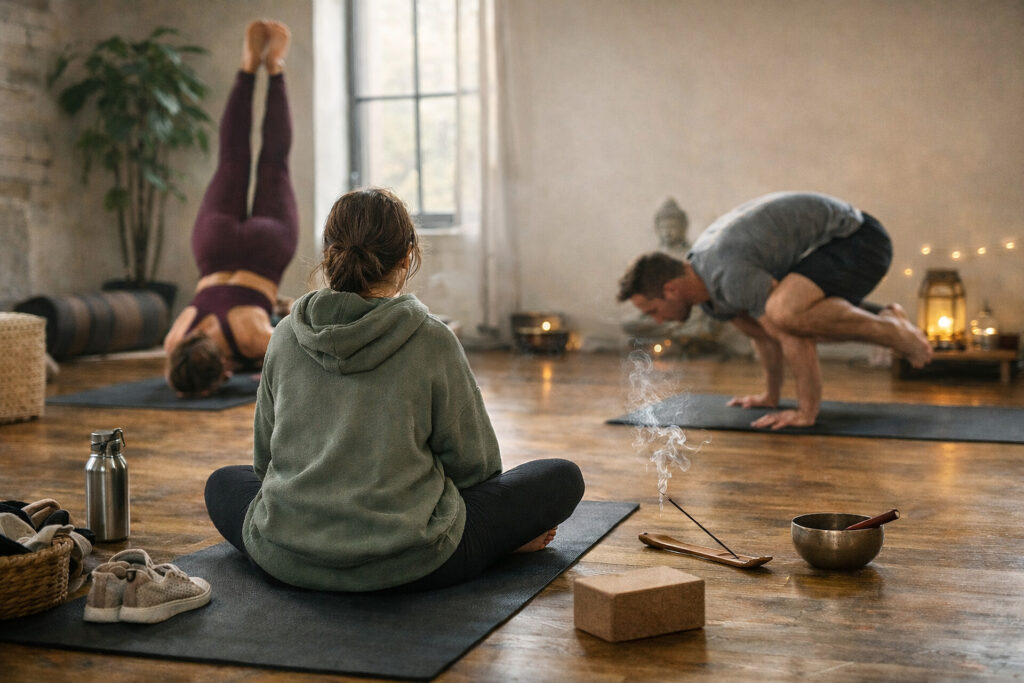
Images frequently show:
- Extremely flexible poses
- Advanced practitioners balancing on their hands
- Serene environments that seem far removed from daily life
For beginners, these images can create a false impression: that yoga requires special abilities before you even begin.
In reality, yoga was never designed for perfect poses or performance. Traditionally, it focuses on awareness, breathing, and gradual development of strength and mobility.
Understanding this difference is the first step toward removing the mental barriers that keep many people from starting.
Let’s explore the myths that cause the most hesitation.
Myth #1: You Need to Be Flexible to Start Yoga
This is the most common myth about yoga—and the most misleading.
Many people believe they must already be flexible before attending their first class. They imagine bending deeply or touching their toes with ease.
But flexibility is not a requirement. It’s often a result of practice.
Think of yoga the same way you might think of learning a language or starting a new sport. You don’t begin with mastery. You begin with curiosity and patience.
Most beginners actually start with limited mobility. That’s normal.
Yoga gradually helps improve flexibility through gentle stretching and controlled movement. Over time, muscles and connective tissues adapt.
For example:
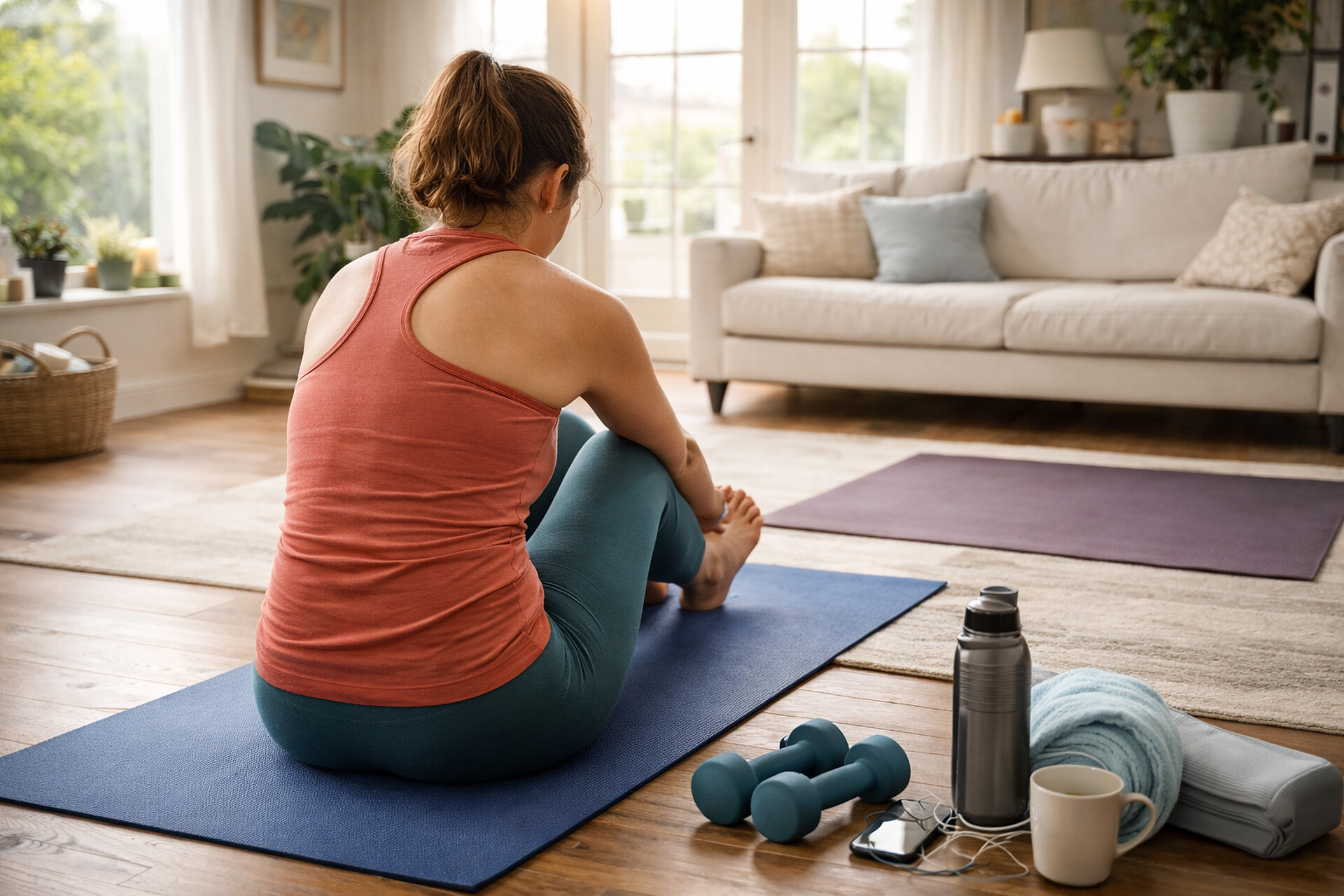
- A person who cannot touch their toes might start with bent knees.
- Someone with tight hips may use supportive props like blocks or cushions.
- Certain poses can be modified to reduce strain.
The goal is not to force flexibility. The goal is to move comfortably within your current range.
Many experienced yoga teachers repeat a simple idea:
“Yoga isn’t about touching your toes. It’s about what you learn on the way down.”
Once people understand this, the fear of “not being flexible enough” often disappears.
Myth #2: Yoga Is Only for Young or Athletic People
Another common misconception is that yoga is designed mainly for fit, athletic, or young individuals.
This belief is reinforced by media images showing slim, highly conditioned practitioners performing advanced poses.
But yoga is practiced by people of all ages and body types.
In fact, many yoga programs are specifically designed for:
- Older adults
- People recovering from injury
- Beginners with limited fitness experience
- Individuals seeking gentle movement
Some forms of yoga move slowly and focus on breathing. Others emphasize relaxation or balance.
For example:
- Chair-based yoga allows people to practice without getting on the floor.
- Gentle yoga reduces strain on joints.
- Restorative yoga focuses on deep relaxation.
Research has shown that yoga can support mobility, balance, and mental well-being across many age groups. These benefits are often why people begin practicing in the first place.
The idea that yoga belongs only to athletic people simply doesn’t reflect reality.
Yoga adapts to the practitioner—not the other way around.
Myth #3: Yoga Is Only About Stretching
To someone watching from the outside, yoga may appear to be a series of stretches.
But that view captures only part of the practice.
Yoga combines several elements:
- Movement
- Breathing
- Focused attention
- Relaxation
Together, these elements influence both the body and the mind.
Physically, yoga can help develop:
- Strength
- Balance
- Coordination
- Joint mobility
Many poses require controlled engagement of muscles. Holding certain positions builds stability and endurance.
Mentally, yoga encourages awareness of breathing and body sensations. This mindful attention can help people notice tension, stress, or fatigue earlier.
Because of this combination, many practitioners describe yoga as a practice that supports both physical and mental well-being.
Stretching may be one part of yoga, but it is far from the whole picture.
Myth #4: Yoga Is Too Slow to Be Effective Exercise
Some people assume yoga cannot provide meaningful physical benefits because the movements appear slow.
This assumption overlooks how muscle engagement works.
Many yoga poses involve isometric contraction, meaning muscles stay engaged while holding a position. This type of contraction can build strength and stability.
For example, poses that support body weight—such as planks or standing balance positions—activate multiple muscle groups at once.
Even slower classes can challenge:
- Core muscles
- Leg strength
- Postural stability
Some styles of yoga also involve continuous movement linked with breathing. These sessions can raise heart rate and create a moderate physical workout.
However, yoga does not aim to replace every form of exercise. Instead, it can complement other activities by improving mobility, balance, and recovery.
Many athletes include yoga in their training routines for exactly this reason.
Slow movement does not mean ineffective movement.
Myth #5: Yoga Is Only About Spirituality
Another reason people avoid yoga is the belief that it requires adopting certain spiritual beliefs.
While yoga has historical roots in philosophical traditions, modern practice often focuses primarily on physical movement, breathing, and relaxation.
Many classes emphasize:
- Stress reduction
- Physical mobility
- Mind-body awareness
Participation does not require following a specific belief system.
People approach yoga for many different reasons:
- Physical fitness
- Mental clarity
- Stress management
- Recovery from long hours of sitting
Each person engages with the practice in their own way.
Some may appreciate its philosophical aspects. Others simply enjoy the physical and mental benefits.
Yoga is flexible enough to accommodate both perspectives.
Myth #6: You Need Expensive Equipment
Newcomers sometimes assume they must purchase a full set of specialized equipment before trying yoga.
In reality, the basic requirements are minimal.
Most beginners only need:
- Comfortable clothing that allows movement
- A yoga mat or soft surface
Some studios use additional items such as blocks, straps, or cushions. These tools are not luxury accessories. They are simply supports that make poses easier and safer.
Many classes provide these items, and similar household objects can often serve the same purpose.
For example:
- A folded blanket can replace a cushion.
- A belt can function as a strap.
- Books can act as blocks.
The simplicity of yoga is one of its strengths. It can be practiced in small spaces and does not require complex equipment.
Myth #7: Yoga Classes Are Too Intimidating
Walking into a new environment can feel uncomfortable, especially if you believe everyone else will be more experienced.
Many beginners worry that they will look awkward or perform poses incorrectly.
However, most yoga classes are designed to welcome newcomers.
Teachers typically encourage students to:
- Move at their own pace
- Modify poses when needed
- Rest whenever necessary
It’s also common for people in the same class to have very different levels of experience.
Some may be attending their first session. Others may have practiced for years. Each person focuses primarily on their own practice.
If group classes still feel intimidating, beginners can start with:
- Online beginner sessions
- Short home practices
- Introductory workshops
Confidence tends to grow naturally once the first step is taken.
Myth #8: You Must Clear Your Mind Completely
Another misunderstanding is that yoga requires the ability to completely stop thinking.
Many beginners worry they won’t be able to relax because their mind is too busy.
In reality, the goal of yoga is not to eliminate thoughts. The goal is to notice them without getting lost in them.
During practice, people often focus on:
- Breathing rhythm
- Body movement
- Physical sensations
When attention drifts, it gently returns to the present moment.
This process is normal and happens repeatedly.
Even experienced practitioners experience wandering thoughts. The practice simply helps build awareness over time.
So if your mind feels busy, you’re not failing. You’re experiencing exactly what most people experience when they begin.
What Yoga Actually Looks Like for Beginners
Once the myths are removed, yoga becomes far less intimidating.
A typical beginner session might include:
- Gentle warm-up movements to loosen muscles and joints
- Simple poses practiced slowly with breathing
- Short balance or strength exercises
- Guided relaxation at the end
Sessions often last between 20 and 60 minutes.
Beginners may pause, adjust positions, or skip movements that feel uncomfortable. This flexibility allows each person to adapt the practice to their own needs.
Progress usually happens gradually.
Some people notice improved mobility within weeks. Others experience better posture or reduced tension from sitting long hours.
The key is consistency rather than perfection.
How to Start Yoga Without Overthinking It
If the idea of starting yoga still feels overwhelming, simplify the process.
Focus on a few practical steps.
1. Start Small
A full class is not necessary at first. Even ten minutes of gentle movement can introduce the basics.
Short sessions make it easier to build a habit.
2. Choose Beginner-Friendly Content
Look for sessions specifically labeled “beginner,” “gentle,” or “slow flow.” These classes explain movements clearly and progress gradually.
3. Listen to Your Body
Yoga encourages awareness rather than pushing through discomfort.
If something feels painful or strained, modify the movement or rest.
4. Be Patient With Progress
Flexibility, strength, and balance improve gradually.
Expect small improvements over time rather than instant results.
5. Focus on the Experience
Instead of worrying about doing poses perfectly, pay attention to breathing, posture, and how your body feels.
This mindset makes practice more enjoyable and sustainable.
Key Takeaways
Many people hesitate to try yoga because of misconceptions. Once these myths are addressed, the practice becomes far more approachable.
Here are the most important points to remember:
- You do not need to be flexible to start yoga.
- Yoga is practiced by people of all ages and body types.
- It involves more than stretching—it combines strength, balance, breathing, and awareness.
- Slow movement can still provide meaningful physical benefits.
- Practicing yoga does not require specific beliefs.
- You need very little equipment to begin.
- Beginner-friendly environments and modifications are common.
- A busy mind is normal and part of the learning process.
Understanding these truths removes many of the barriers that prevent people from trying yoga.
Final Thoughts
Every practice begins with a first step, and yoga is no different.
For many people, the hardest part is not the poses—it’s overcoming the beliefs that say they’re not ready.
But yoga was never meant to be exclusive or intimidating. At its core, it is simply a way to move, breathe, and pay attention to your body.
You don’t need special skills.
You don’t need perfect balance.
You don’t even need flexibility.
You only need curiosity.
If the myths have held you back until now, consider letting them go. Start with a few minutes, move gently, and see how it feels.
You might discover that yoga was never out of reach after all.