Meal Prep Containers: Glass vs Plastic vs Steel (Decision Guide)
The Hidden Impact of Your Container Choice
Most people treat meal prep containers as a simple accessory—just something to hold food. In reality, the material you choose quietly influences multiple aspects of your daily routine, from how your meals taste to how long your containers last. It’s not just about storage—it’s about performance over time.
Different materials behave differently under real-world conditions. Some retain odors, others resist them. Some maintain the original flavor of your meals, while others can subtly alter it after repeated use. Weight, durability, and surface integrity also play a role, especially when containers are handled frequently or transported throughout the day. These differences don’t show up immediately—but they become obvious after weeks of consistent use.
Key factors influenced by container material:
- Flavor preservation and odor retention
- Resistance to staining and discoloration
- Durability under repeated handling
- Weight and ease of carrying
- Longevity and replacement frequency
There’s also a psychological aspect. A container that looks clean, feels solid, and doesn’t carry lingering smells can make meal prep feel more organized and reliable. On the other hand, visible wear or retained odors can subtly discourage consistency, even if the food itself is fine.
Over time, the container becomes part of your routine infrastructure—not just a passive tool. Choosing the right material isn’t about preference alone; it shapes how sustainable, efficient, and enjoyable your meal prep system becomes.
Glass vs Plastic vs Steel: The 60-Second Breakdown
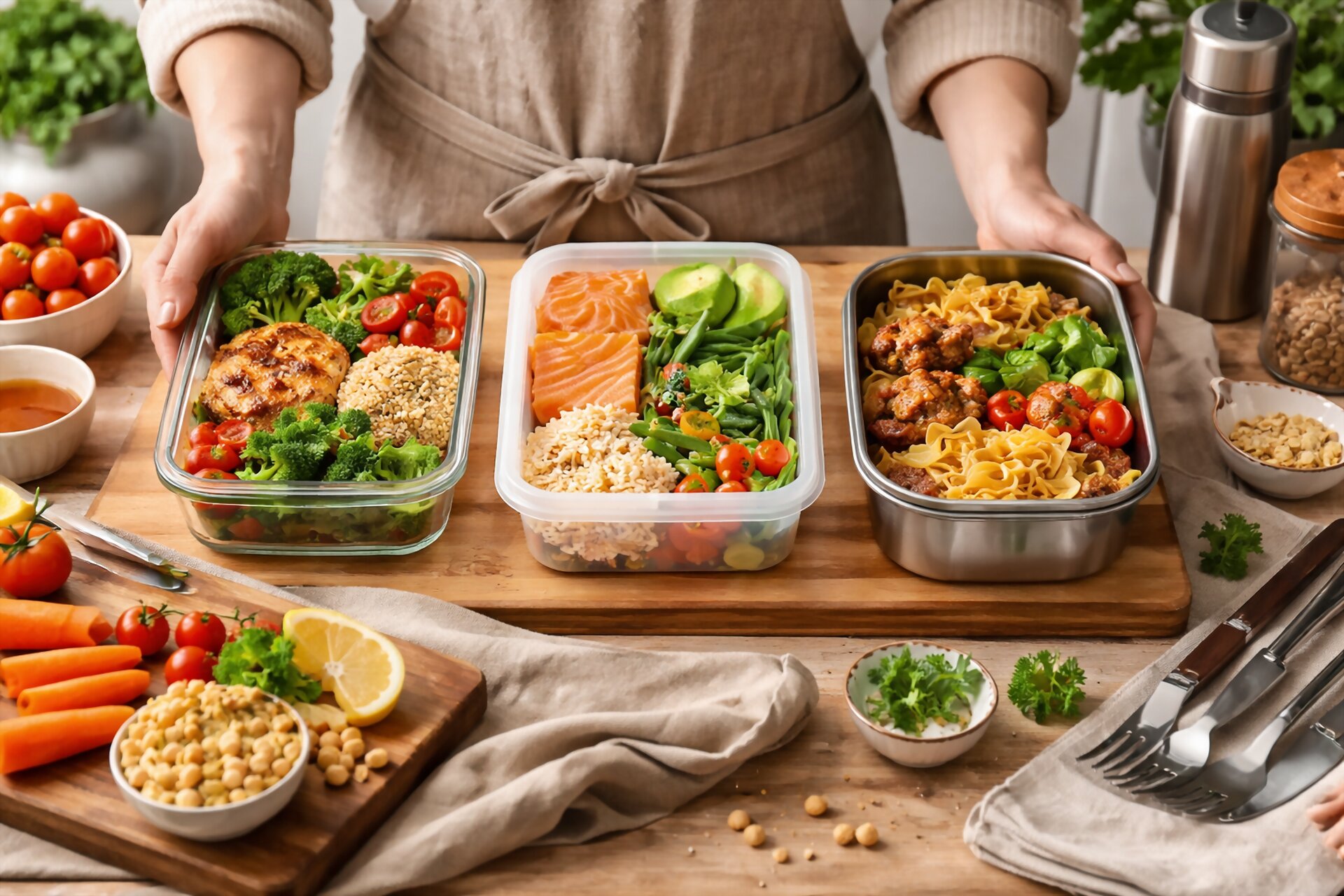
If you only have a minute, here’s the core difference: each material optimizes for a different priority. Glass leans toward purity and stability, plastic toward convenience and weight, and steel toward durability and longevity. None of them is universally “better”—they simply perform differently depending on how they’re used.
Glass is known for being non-porous, which means it doesn’t absorb flavors or odors easily. It maintains clarity over time and typically resists staining better than most alternatives. However, it is heavier and can be more vulnerable to breakage under impact. Plastic, on the other hand, is lightweight and easy to carry, making it a common choice for daily transport. Over time, it may show signs of wear such as scratches, cloudiness, or retained odors, especially with frequent use. Stainless steel stands out for its structural strength and resistance to corrosion, offering long-term reliability without staining, though it doesn’t provide visibility into the contents.
Quick Comparison
| Feature | Glass | Plastic | Stainless Steel |
|---|---|---|---|
| Weight | Heavy | Light | Medium |
| Durability | Moderate | Moderate | High |
| Odor Retention | Very Low | Moderate | Very Low |
| Stain Resistance | High | Low–Moderate | High |
| Visibility | Clear | Clear/Cloudy | Opaque |
| Longevity | High (if intact) | Variable | Very High |
The decision often comes down to trade-offs. Some users prioritize transparency and cleanliness, others focus on portability, while some value resilience above all. Understanding these core differences makes it easier to align the material with real-life use patterns rather than assumptions.
Mineral water is often sold in glass bottles because glass helps preserve the water’s natural purity and taste. Unlike plastic, glass is non-reactive and does not release chemicals or absorb odors, so the water keeps its original flavor and mineral composition. It also maintains carbonation better in sparkling mineral water and is considered a more environmentally friendly packaging option since it can be reused and fully recycled.
Learn more here: What Is Mineral Water? Everything You Need To Know
Taste Test Reality: Which Material Keeps Food Tasting Fresh?
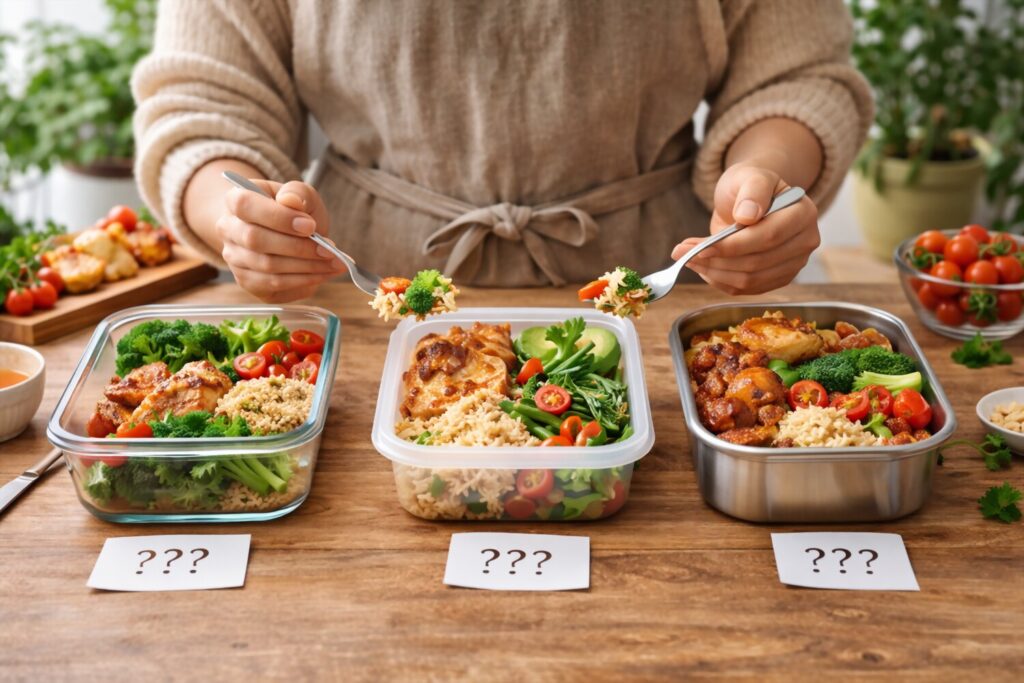
Flavor preservation is one of the least discussed—but most noticeable—differences between container materials. Over time, even subtle changes can affect how enjoyable a meal feels, especially when the same containers are used repeatedly throughout the week.
Glass is often recognized for its neutrality. Because it is non-porous, it does not absorb oils, acids, or aromas from food. This means yesterday’s garlic-heavy dish is far less likely to influence today’s fruit or salad. The surface remains stable even after repeated use, which helps maintain the original taste profile of stored meals. This consistency becomes more noticeable over time, particularly with strongly seasoned foods.
Plastic behaves differently due to its structure. Many types of plastic are slightly porous at a microscopic level, allowing them to absorb and retain small amounts of odor and flavor. This doesn’t always show up immediately, but repeated exposure to sauces, spices, or oils can lead to subtle flavor transfer. Over time, this can create a “blended” scent inside the container that affects how fresh new meals taste, even if the food itself is properly prepared.
Stainless steel sits somewhere in between in terms of sensory experience. It does not absorb flavors or odors like plastic, and it resists staining effectively. However, it can occasionally retain surface aromas temporarily if not aired out, especially after storing strongly scented foods. Unlike glass, it does not offer visibility, which can slightly affect perception—seeing food often enhances how fresh it feels.
How materials interact with taste over time
- Glass: Maintains original flavors with minimal interference
- Plastic: May retain and transfer odors after repeated use
- Steel: Resists absorption but can hold temporary surface aromas
Another subtle factor is how materials handle oils and residues. Smooth, non-porous surfaces tend to release residues more easily, while more absorbent materials may hold onto them longer. This directly influences how “clean” a container feels after use, which in turn affects taste perception.
Over extended use, these small differences accumulate. What starts as a barely noticeable change can gradually shape how meals smell and taste when opened, especially in tightly sealed environments where aromas concentrate.
The Durability Showdown: Drops, Dents, and Daily Use
Durability isn’t just about whether a container breaks—it’s about how it ages under constant, everyday stress. Repeated handling, stacking, transport, and occasional impacts all contribute to wear patterns that differ significantly by material.
Glass is structurally stable but fragile under sudden force. It maintains its shape, doesn’t warp, and resists surface scratches better than most materials. However, when dropped or hit against hard surfaces, it can crack or shatter entirely rather than deform. This “all-or-nothing” failure pattern is important—glass often performs perfectly until the moment it doesn’t. Over time, high-quality glass can remain visually unchanged, but its vulnerability lies in impact events rather than gradual wear.
Plastic handles impact differently. It is flexible, which allows it to absorb shocks without breaking. This makes it resilient in fast-paced environments where containers are frequently dropped or bumped. However, durability in plastic shows up as gradual degradation—scratches, warping, and weakened structure over time. These small changes accumulate and can affect how securely lids fit or how the container holds its shape.
Stainless steel offers a different kind of durability—resistance to both impact and long-term wear. It doesn’t crack or shatter and is highly resistant to deformation under normal use. Instead of breaking, it may dent under significant force, but dents typically don’t affect functionality. Its surface also resists scratching better than plastic, although visible marks can still appear with heavy use.
How each material responds to real-life stress
- Glass: Strong but brittle; resists wear, vulnerable to impact
- Plastic: Impact-resistant but prone to gradual wear and deformation
- Steel: Highly durable; resists both impact and long-term damage
In daily use, durability is less about extremes and more about patterns. Some materials fail suddenly, while others slowly degrade, and that difference shapes how long a container remains reliable.
Weight vs Portability: What Actually Works for Busy Lives
Portability isn’t just about how heavy a container feels in your hand—it’s about how that weight compounds across a full day. A single container might seem manageable, but when combined with a bag, laptop, or gym gear, the difference becomes noticeable.
Glass is the heaviest of the three, and that weight is constant regardless of portion size. It provides a solid, stable feel, which some people associate with quality, but it can quickly become inconvenient when carrying multiple meals. The added bulk also affects how containers fit into bags, especially when space is limited. Over time, this can influence whether someone consistently brings prepared meals or opts for alternatives.
Plastic is at the opposite end of the spectrum. It’s lightweight and easy to carry, even in larger quantities. This makes it particularly practical for people who transport several meals at once or move frequently throughout the day. However, lighter weight can sometimes come with trade-offs in perceived sturdiness, especially as containers age and materials begin to soften or warp slightly.
Stainless steel sits in the middle. It’s lighter than glass but heavier than plastic, offering a balance between portability and structural strength. Its thinner walls often allow for more compact designs, which can make a difference when packing multiple containers into tight spaces. The weight feels more evenly distributed, which some users find easier to carry over longer periods.
How weight impacts daily use
- Glass: Heavier; stable but less convenient for transport
- Plastic: Very light; easiest to carry in bulk
- Steel: Moderate weight; balanced for mobility and strength
There’s also a practical aspect tied to movement. Walking, commuting, or even short trips can amplify small differences in weight, especially when repeated daily. Over time, portability isn’t just about comfort—it subtly shapes how consistently containers are used in real routines.
The Long-Term Cost Trap (Most People Get This Wrong)
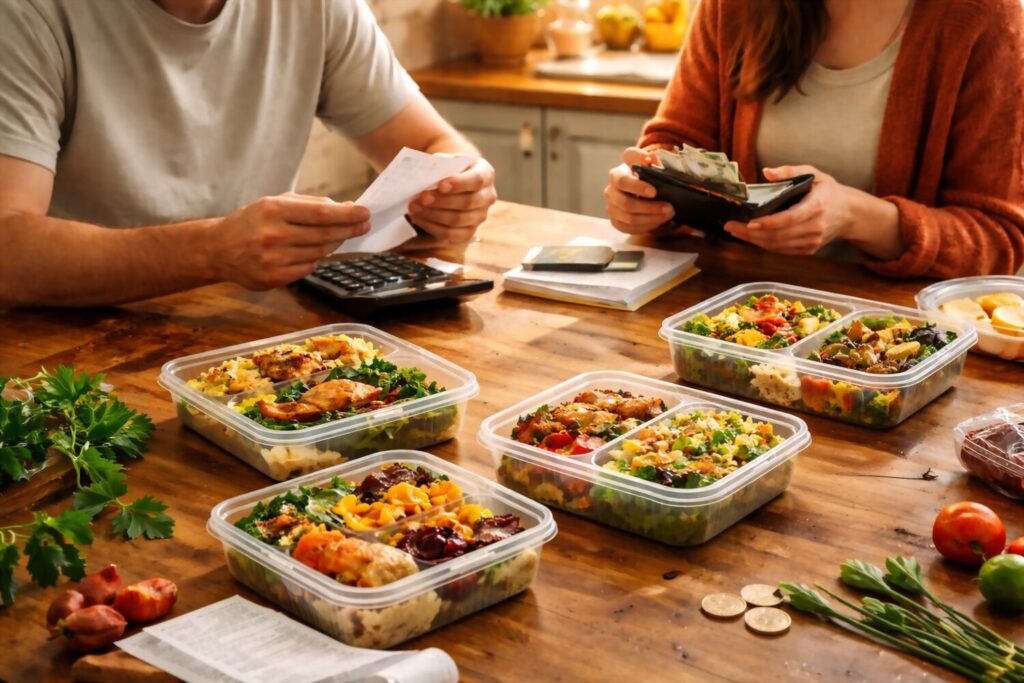
At first glance, container cost seems straightforward—just compare prices and pick the cheapest option. But the real cost unfolds over time, and that’s where most people miscalculate.
Plastic containers typically have the lowest upfront price, which makes them appealing for bulk purchases. However, they often experience gradual wear: surface scratches, lingering odors, and reduced structural integrity. These changes don’t always make them unusable immediately, but they can lead to more frequent replacements. Over a year or two, the cumulative cost of replacing multiple plastic containers can quietly exceed expectations.
Glass sits in a higher initial price range, but its cost behavior is different. It doesn’t degrade in the same way plastic does—there’s no gradual loss of clarity or odor buildup under normal use. If it remains intact, it can last for years without needing replacement. The main cost risk comes from breakage, which tends to be sudden rather than progressive. This creates an unpredictable replacement pattern rather than a steady one.
Stainless steel usually has the highest upfront cost, but also the longest usable lifespan. It resists both structural wear and surface degradation, meaning it can remain functional and visually consistent over extended periods. Instead of replacing containers due to wear, replacement is more often tied to loss or extreme damage.
Cost patterns over time
- Plastic: Low initial cost, higher replacement frequency
- Glass: Medium initial cost, low wear, occasional breakage risk
- Steel: High initial cost, minimal replacement over time
There’s also a hidden layer to cost that isn’t immediately visible—how materials age affects perceived value. A container that looks worn may be replaced sooner, even if it still functions. Over time, cost isn’t just about durability; it’s about how long a container feels worth keeping.
Health Factor: What You Should Actually Be Paying Attention To
Health concerns around food containers are often oversimplified. It’s not just about the material itself, but how that material behaves over time, under repeated use, and in contact with different types of food.
Glass is chemically stable and non-reactive. It does not interact with acidic or oily foods, and its surface remains unchanged even after long-term use. Because it is non-porous, it doesn’t trap residues or microscopic particles that could affect future meals. This stability is one of the reasons it’s often associated with a “clean” storage experience.
Plastic is more complex. Not all plastics are the same, and their performance depends heavily on quality, formulation, and wear over time. As plastic surfaces develop scratches, they can become more prone to retaining residues and odors. While modern food-grade plastics are designed for safety, their condition after extended use becomes a more relevant factor than their initial state. The interaction between surface wear and repeated contact with food is where most differences appear.
Stainless steel is highly inert and resistant to corrosion, especially in food-related environments. It does not absorb substances or degrade in ways that affect food contact under normal conditions. However, its performance can depend on the specific alloy and surface finish, which influence how resistant it is to staining or minor surface changes.
What actually matters in everyday use
- Material stability over time, not just when new
- Surface condition, including scratches and wear
- Resistance to absorbing residues or odors
- Consistency in repeated food contact
Another overlooked factor is how easily a material returns to a “neutral state” after use. A surface that doesn’t retain traces from previous meals helps maintain separation between different foods over time.
In practice, health-related differences are less about dramatic risks and more about long-term consistency, material integrity, and how surfaces evolve with repeated use.
Storage Efficiency: Space-Saving Secrets Nobody Talks About
Storage efficiency isn’t just about how many containers you own—it’s about how well they fit together when not in use. Small design differences can create surprisingly large impacts on cabinet space over time.
Glass containers are typically thicker and heavier, which limits how compact they can be stacked. Many are designed to nest, but the weight and rigidity often mean fewer units fit into a tight space. Lids can also add complexity, especially when they don’t stack neatly with the base. Over time, this creates fragmented storage where containers and lids occupy separate areas, reducing overall efficiency.
Plastic containers tend to perform well in this category. Their lighter structure allows for more flexible designs, including deep nesting and thinner walls. Sets are often built with uniform sizing, making it easier to stack multiple units vertically without wasted space. However, as containers warp or lose shape with use, that precise stacking ability can diminish, leading to less organized storage.
Stainless steel containers vary depending on design, but many prioritize durability over compact nesting. Some models stack cleanly, while others don’t nest at all due to rigid construction. Their consistent shape, however, helps maintain organization over time since they don’t deform like plastic.
What affects storage efficiency most
- Wall thickness and shape consistency
- Ability to nest or stack securely
- Lid design and compatibility
- Long-term shape retention
One overlooked detail is how lids integrate into the system. A container may stack well on its own, but poorly designed lids can double the required space.
Over time, storage efficiency becomes less about initial design and more about how well containers maintain their shape and stacking ability after repeated use.
Odor & Stain Battle: The Real Winner After 30 Days of Use
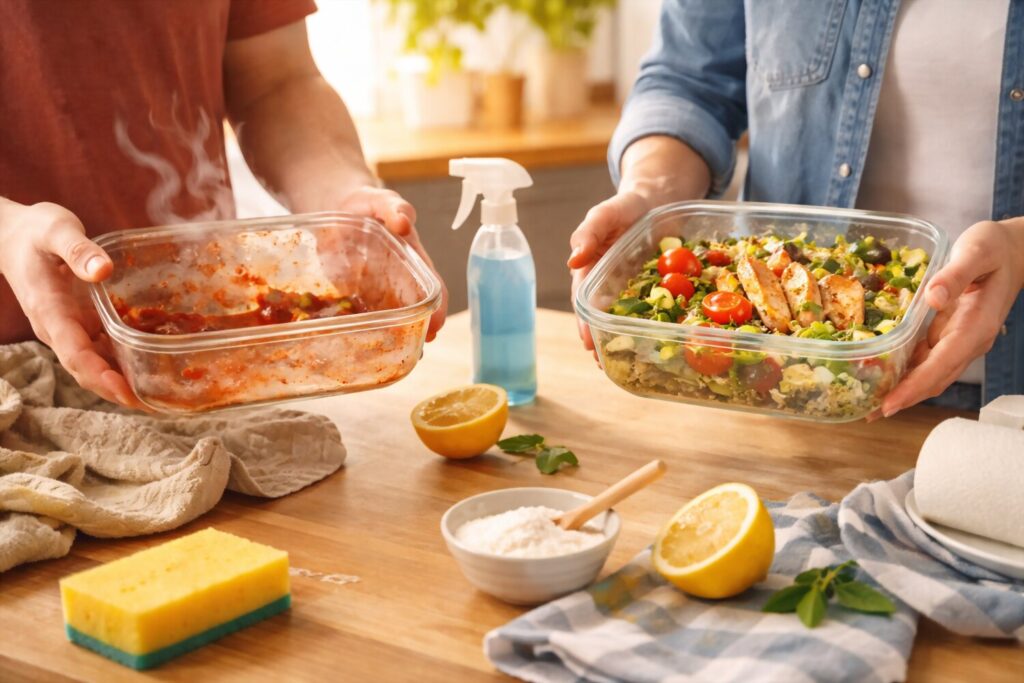
At the start, most containers look and smell identical. The real differences show up after repeated use—especially with foods rich in oils, spices, or pigments.
Glass tends to remain the most unchanged over time. Its non-porous surface resists both staining and odor retention, even after extended use with strong ingredients. What you notice after 30 days is consistency: minimal discoloration, no lingering smells, and a surface that still looks close to new. This stability makes changes easy to spot—because there usually aren’t many.
Plastic tells a different story. Even when cleaned thoroughly, microscopic scratches can trap pigments and odors. Over time, this leads to visible staining—often a yellow or reddish tint—and a faint residual smell that doesn’t fully disappear. These effects build gradually, not all at once, which makes them easy to overlook until they become obvious.
Stainless steel resists staining very well and does not absorb odors in the same way plastic does. However, it can temporarily hold onto strong aromas on its surface, especially in enclosed conditions. Unlike plastic, these odors typically fade rather than accumulate.
What changes after repeated use
- Glass: Minimal change in color or smell
- Plastic: Gradual buildup of stains and odors
- Steel: No staining, occasional temporary odor
Small surface changes become more noticeable over time, shaping how clean and fresh a container feels with continued use.
Eco Footprint: Which Option Is Actually Better Over Time?
Sustainability is often framed too simply—reusable equals good, disposable equals bad. In reality, the environmental footprint of a container depends on its full lifecycle: production, usage duration, and eventual disposal. Looking at just one stage can lead to misleading conclusions.
Glass has a high production footprint due to the energy required to manufacture and transport it. It’s heavy, which increases emissions during shipping, and it requires high temperatures to produce. However, this initial impact is spread over a potentially long lifespan. Glass does not degrade with normal use, and it can be recycled repeatedly without losing quality. Its environmental efficiency improves significantly the longer it stays in use.
Plastic has a much lower production and transportation footprint. It’s lightweight, requires less energy to produce, and is widely available. However, its long-term environmental performance depends heavily on how long it’s used. Frequent replacement reduces its overall efficiency. Recycling rates vary widely, and not all plastic containers are processed into new products. Over time, the advantage of low initial impact can be offset by shorter lifespan and inconsistent recycling outcomes.
Stainless steel has one of the highest upfront environmental costs. Its production is resource-intensive and requires significant energy input. But like glass, it is extremely durable and can remain in use for many years without degrading. Steel is also highly recyclable, and much of it is already produced using recycled material. Its long-term footprint becomes more favorable when used consistently over extended periods.
Lifecycle impact comparison
| Factor | Glass | Plastic | Stainless Steel |
|---|---|---|---|
| Production Energy | High | Low | Very High |
| Transport Impact | High (heavy) | Low (lightweight) | Medium |
| Lifespan Potential | Long | Short–Medium | Very Long |
| Recycling Efficiency | High | Variable | Very High |
| Degradation Over Time | Minimal | Moderate | Minimal |
Another layer often overlooked is usage behavior. A material with a higher initial footprint can become more sustainable if used consistently over time, while a lower-impact material can lose its advantage if replaced frequently. Durability, reuse patterns, and retention all shape the real environmental outcome.
Sustainability, in this context, is less about the material itself and more about how long it remains part of a working system.
Best Choice for Different Lifestyles
There isn’t a universal “best” container—what works well depends heavily on how containers fit into daily routines. The same material can feel ideal for one lifestyle and inconvenient for another.
For busy professionals, portability and consistency tend to matter most. Containers that are lightweight and easy to carry across multiple locations often integrate more smoothly into a fast-paced schedule. Over time, even small inconveniences—extra weight, bulkiness, or awkward stacking—can influence whether containers are used consistently or left behind.
Fitness-focused meal preppers often prioritize durability and repeat use. Containers are handled frequently, packed in bulk, and exposed to a wide range of foods. Materials that maintain structure and resist wear over time tend to align better with this type of routine, where consistency and reliability are key.
Families with kids face a different set of conditions. Containers are used more intensively, often with less predictable handling. Durability, ease of organization, and resistance to visible wear all play a role. A container that maintains its shape and appearance over time can simplify daily use across multiple people.
Minimalists typically focus on longevity and simplicity. Fewer items, used more frequently, place more emphasis on materials that don’t degrade or require replacement. The goal is not variety, but consistency across repeated use.
Lifestyle-based patterns
- Busy professionals: Portability and convenience
- Fitness routines: Durability and repeat use
- Families: Practicality and resilience
- Minimalists: Longevity and consistency
The “best” option shifts depending on how containers are used, not just what they’re made of.
Hybrid Strategy: Why One Material Might Not Be Enough
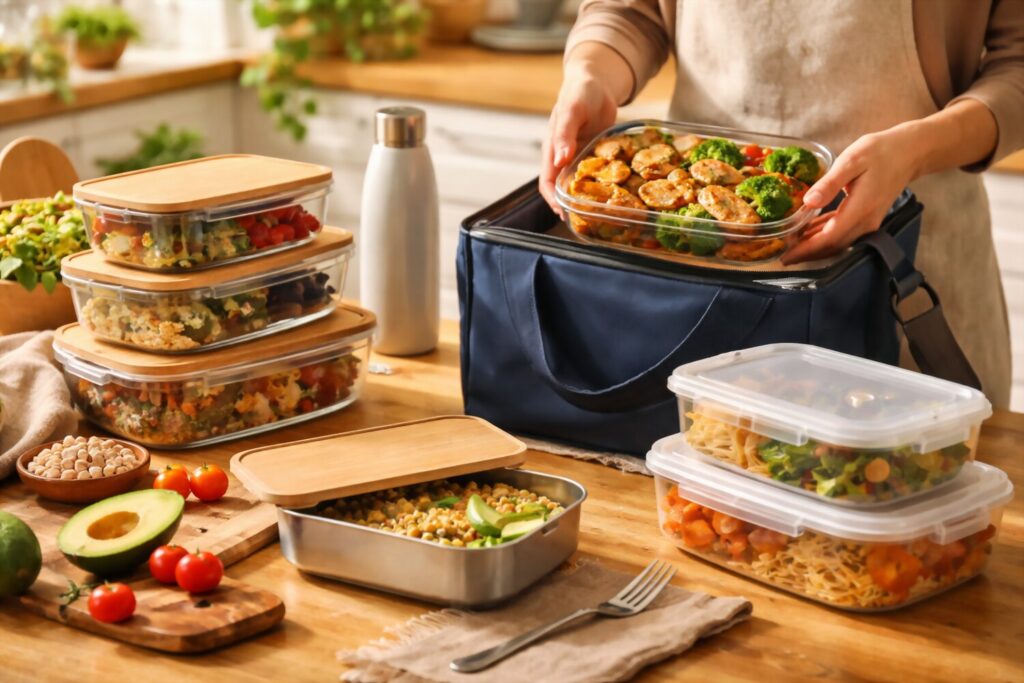
Many people assume they need to choose one “best” material and stick with it. In practice, container use is rarely that simple. Different situations place different demands on storage, transport, and durability.
A single material can excel in one area but fall short in another. Glass offers consistency and neutrality, plastic provides portability, and steel delivers long-term resilience. Instead of forcing one option to handle every scenario, combining materials allows each to be used where it performs best. Over time, this approach can create a more flexible and efficient system without over-relying on any single type.
This is where a hybrid setup becomes practical. Rather than thinking in terms of replacement, it becomes about role distribution. Containers are no longer interchangeable—they serve specific functions based on their strengths. That shift changes how they are used day to day.
How a hybrid approach typically works
- Glass: Used for meals where flavor consistency and surface stability matter
- Plastic: Used for lightweight transport or high-volume carrying
- Steel: Used for durability-focused scenarios and long-term reliability
Another advantage is adaptability. As routines change—work schedules, activity levels, or storage needs—the mix of materials can shift without requiring a complete replacement of containers.
Over time, a hybrid system reduces the pressure on any single material to perform perfectly in every situation. Instead, it creates a balanced setup where each type supports a specific part of the routine.
Common Mistakes People Make When Choosing Containers
Many issues with meal prep containers don’t come from the material itself—but from how people choose and use them. Small oversights can lead to frustration over time.
One common mistake is focusing only on price. Lower upfront cost can seem efficient, but it often ignores how containers perform after weeks or months of use. Another frequent issue is assuming all containers of the same material behave the same. Differences in thickness, design, and build quality can significantly affect durability and performance.
People also tend to overlook how containers fit into their actual routine. A container might look ideal on its own, but feel inconvenient when carried daily or stored in limited space.
Frequent selection mistakes
- Choosing based only on initial cost
- Ignoring long-term wear and aging
- Overlooking size and stacking compatibility
- Assuming all materials perform equally across brands
Another subtle mistake is prioritizing appearance over function. A container that looks good initially may not maintain that appearance with repeated use, which can influence how often it gets used.
Final Verdict: Which One Should You Choose?
There’s no single winner—only the best fit for how containers are actually used. The decision becomes clearer when priorities are defined, not generalized.
Glass stands out for stability, consistency, and minimal long-term change. Plastic excels in portability and ease of transport, especially in high-volume use. Stainless steel delivers durability and long-term reliability with minimal degradation. Each material solves a different problem, and that’s where the real distinction lies.
Instead of comparing materials in isolation, it helps to look at what matters most in daily use. Small trade-offs—weight, wear, or visibility—tend to shape the experience more than major specifications.
Quick decision lens
- Prioritize consistency and clean surfaces → Glass
- Prioritize lightweight and flexibility → Plastic
- Prioritize durability and longevity → Steel
In practice, most outcomes aren’t determined by the material alone, but by how well it aligns with routine. The more closely a container matches real usage patterns, the more effective it becomes over time.