How To Start Yoga At Home: A Step-By-Step Guide
Starting yoga at home can feel exciting—and a little intimidating. You might wonder where to begin, what you need, or whether you’re “doing it right.” That’s normal. The good news is this: yoga is one of the most flexible practices you can start on your own, at your own pace, and in your own space.
This guide will walk you through everything you need to begin yoga at home with confidence. You’ll learn how to set up your space, choose a simple routine, stay consistent, and avoid common beginner mistakes. No pressure. No hype. Just clear, practical steps you can actually follow.
By the end, you’ll know exactly how to roll out your mat—and keep coming back to it.
What Yoga Really Is (and What It Isn’t)
Before you start, it helps to clear up a few misconceptions.
Yoga is not about:
- Touching your toes
- Being flexible
- Holding perfect poses
- Looking calm all the time
Yoga is about:
- Paying attention to your body
- Moving with intention
- Breathing with awareness
- Building strength, mobility, and balance over time
At its core, yoga is a practice of connection—between movement and breath, effort and ease, body and mind. You don’t need a certain body type, fitness level, or personality to begin. You just need a willingness to try.
Why Practice Yoga at Home?
Practicing at home offers benefits that studios can’t always provide.
You control the pace
There’s no pressure to keep up with others. You can pause, repeat, or rest whenever you need.
It fits your schedule
Ten minutes in the morning or a short session before bed still counts. Consistency matters more than duration.
It builds self-awareness
Without mirrors or comparison, you learn to listen to your body instead of judging it.
It’s cost-effective
You don’t need expensive memberships or gear to get started.
Home yoga isn’t a lesser version of “real” yoga. For many people, it becomes the most sustainable way to practice.
Step 1: Set a Clear, Honest Intention
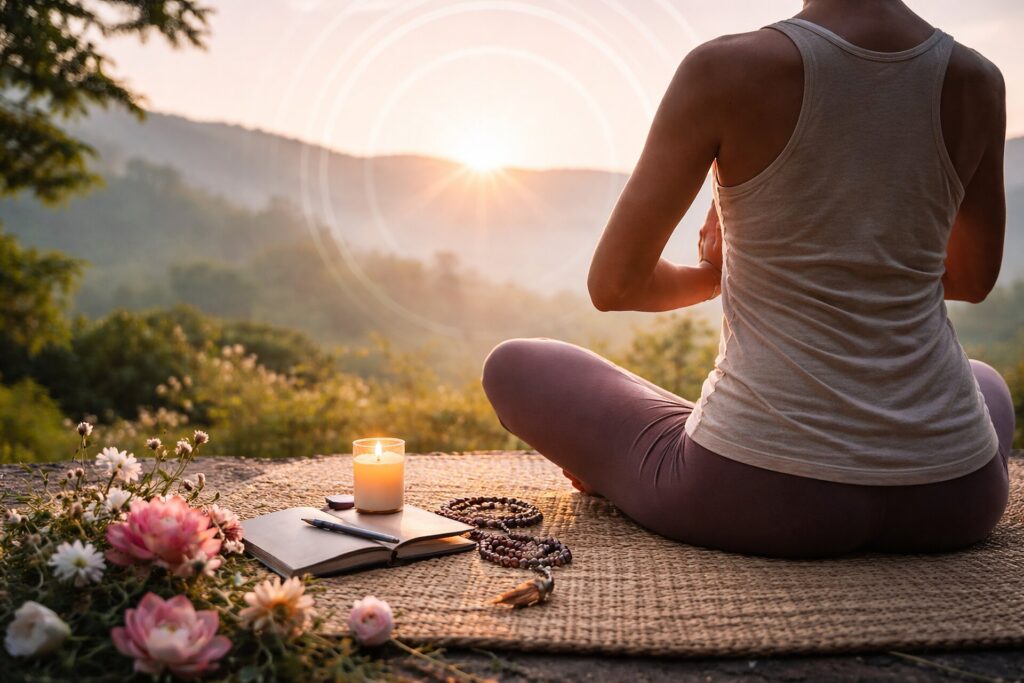
Before you think about poses, ask yourself one simple question:
Why do I want to practice yoga?
Your answer doesn’t need to sound impressive. It just needs to be true.
Common reasons include:
- Reducing stiffness or back pain
- Managing stress
- Improving balance or mobility
- Building a gentle movement habit
- Creating quiet time in a busy day
Write your reason down. Keep it somewhere visible. On days when motivation dips, this reminder matters.
Avoid setting goals like “I’ll practice every day for an hour.” Start with something realistic, such as:
- “I’ll practice 3 times a week”
- “I’ll move for 10 minutes”
- “I’ll show up, even if it’s messy”
Yoga rewards honesty more than ambition.
Step 2: Create a Simple, Welcoming Space
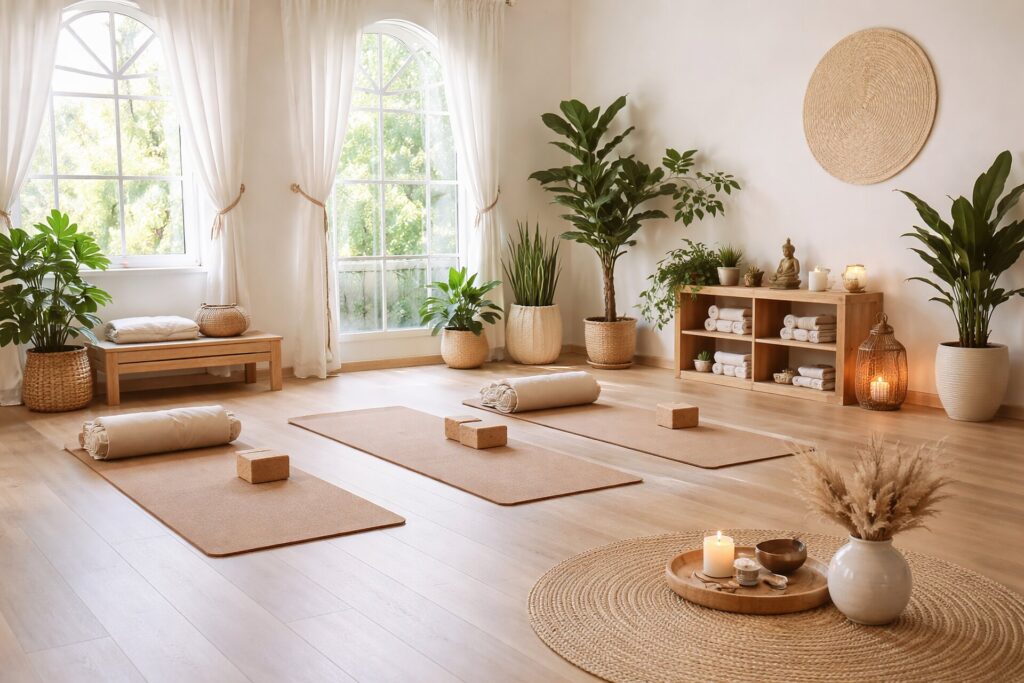
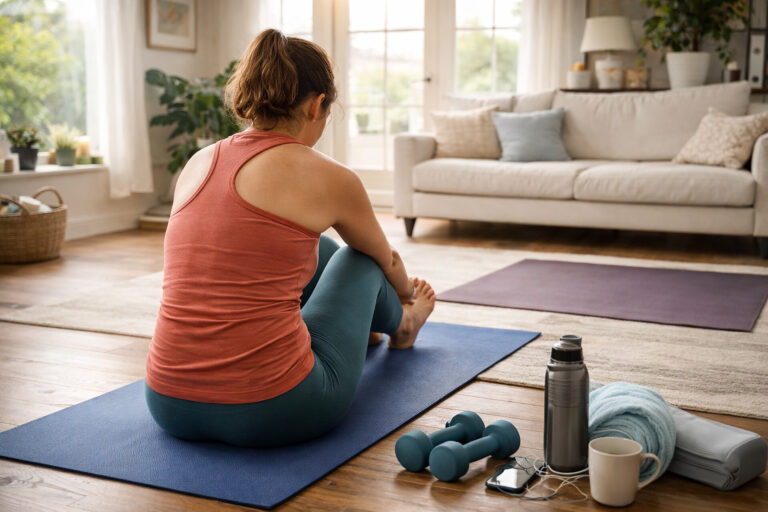
You don’t need a dedicated yoga room. You need a small area where you can move without distraction.
Choose the space
Look for:
- Enough room to stretch your arms and legs
- A flat, non-slip surface
- Minimal clutter
This might be a corner of your bedroom, living room, or even outdoors.
Keep it calm
You don’t need candles or decor, but a few small choices help:
- Soft lighting
- Comfortable temperature
- Phone notifications turned off
The goal is to signal to your brain: this time is different.
Make it easy to start
Leave your mat or towel visible. When setup takes less effort, you’re more likely to practice.
Step 3: Gather the Bare Essentials
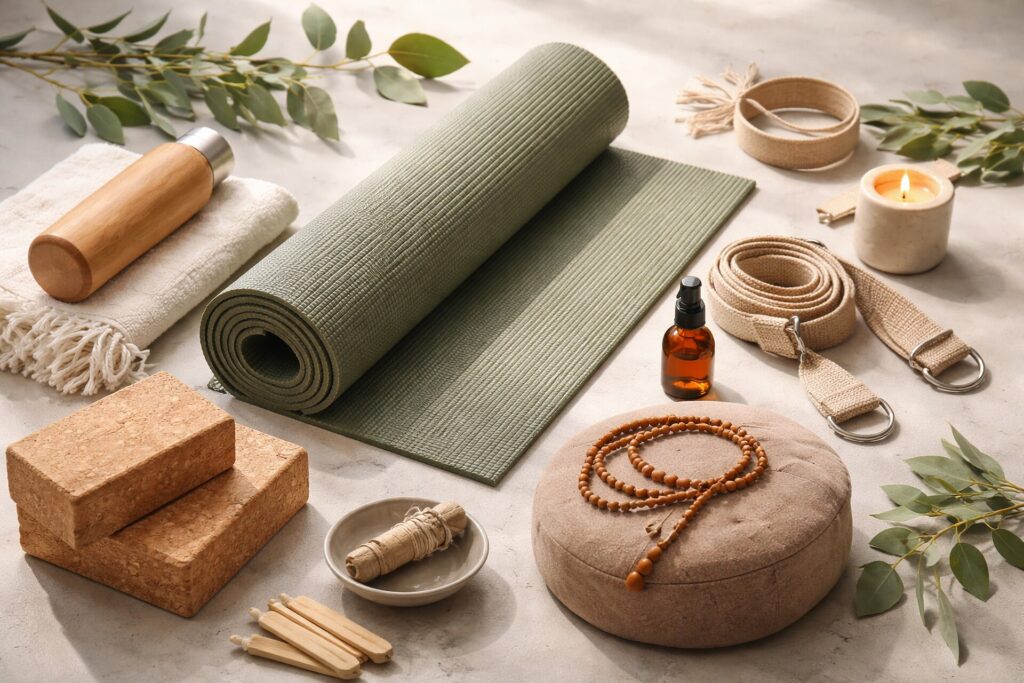
Yoga is refreshingly low-maintenance.
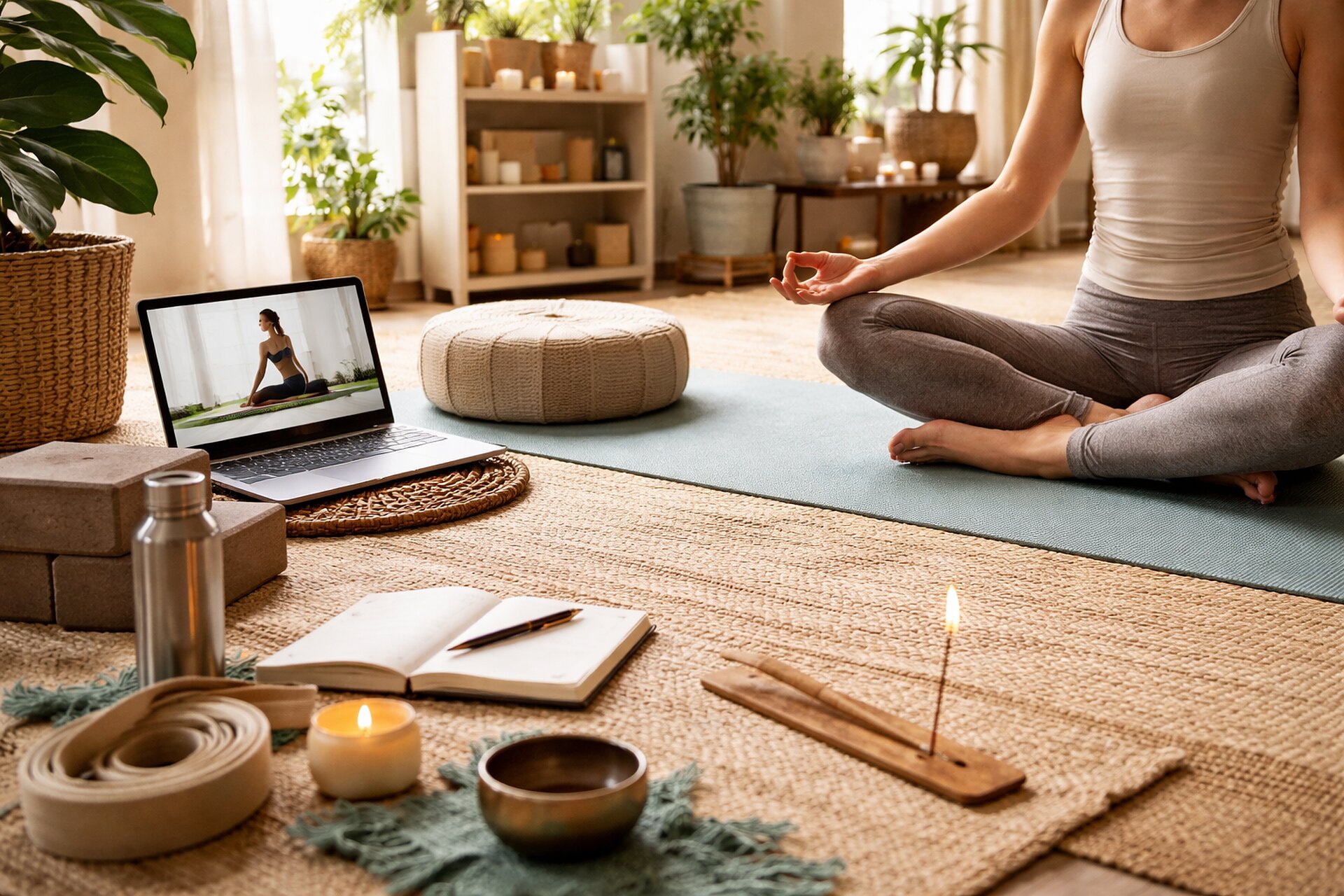
Here’s what you actually need:
A mat or non-slip surface
A yoga mat helps with grip and comfort, but a towel on carpet works in the beginning.
Comfortable clothing
Wear clothes that let you move and breathe easily. They don’t need to be tight or stylish.
Optional props
If you have them, great. If not, improvise.
- A pillow or folded blanket for support
- A belt or scarf for gentle stretching
- A chair for balance
Props are tools, not signs of weakness. They make yoga more accessible, not less.
Step 4: Start with the Breath
Many beginners rush into poses and overlook the most important part of yoga: breathing.
Your breath:
- Anchors your attention
- Regulates your nervous system
- Guides your movement
Try this simple breathing practice
- Sit or lie down comfortably.
- Place one hand on your chest, one on your belly.
- Inhale slowly through your nose.
- Feel your belly rise.
- Exhale slowly, letting the belly soften.
- Repeat for 1–2 minutes.
If your mind wanders, that’s okay. Gently bring it back to the breath. This skill—returning without judgment—is yoga.
Step 5: Learn a Few Foundational Poses
You don’t need dozens of poses to get started. A small, reliable set goes a long way.
Here are beginner-friendly poses you can practice safely at home:
Mountain Pose
Teaches posture and awareness.
- Stand tall
- Feet grounded
- Shoulders relaxed
- Breathe steadily
Child’s Pose
A resting pose you can return to anytime.
- Knees down
- Hips toward heels
- Forehead resting
- Slow breathing
Cat–Cow
Gently warms the spine.
- Move with your breath
- Inhale to arch
- Exhale to round
Downward-Facing Dog
Builds strength and flexibility.
- Bend knees if needed
- Focus on length, not straight legs
Seated Forward Fold
Encourages release.
- Fold from hips
- Keep spine long
- Stop before strain
Move slowly. If something hurts, back off. Yoga should feel challenging at times, but never sharp or painful.
Step 6: Build a Short, Repeatable Routine
Consistency beats complexity.
A simple beginner routine might look like this:
- 2 minutes of breathing
- 5 minutes of gentle movement
- 3 minutes of rest or relaxation
That’s it.
Repeat the same routine for a week or two. Familiarity builds confidence. Once it feels natural, you can add variety.
Example 15-minute flow
- Seated breathing
- Cat–Cow
- Downward-Facing Dog
- Low lunge (both sides)
- Seated fold
- Short relaxation
You don’t need to “feel the burn” for yoga to be effective. Subtle changes add up.
Step 7: Listen to Your Body—Not Your Ego
One of yoga’s hardest lessons is learning when not to push.
At home, this matters even more.
Pay attention to:
- Sharp pain (stop)
- Tingling or numbness (adjust)
- Holding your breath (slow down)
Yoga is not about forcing your body into shapes. It’s about exploring sensation with curiosity.
Progress in yoga often looks like:
- Better awareness
- Improved breathing
- Feeling calmer afterward
Flexibility and strength come later.
Step 8: Make It a Habit Without Pressure
The biggest challenge isn’t learning poses. It’s showing up consistently.
Here’s how to make yoga stick:
Start small
Five minutes is enough. Seriously.
Tie it to an existing habit
Practice after waking up or before bed.
Lower the bar
On tired days, just sit and breathe.
Track consistency, not performance
A simple checkmark on a calendar works.
Missing a day doesn’t mean you failed. It means you’re human.
Step 9: Use Guidance Wisely
Practicing at home doesn’t mean practicing alone.
Guided resources can help you:
- Learn proper alignment
- Stay motivated
- Explore new styles safely
Choose beginner-friendly guidance that:
- Explains movements clearly
- Encourages rest and modification
- Emphasizes awareness over appearance
If something feels rushed or aggressive, it’s okay to move on. Yoga should support your well-being, not compete with it.
Step 10: Expect Plateaus—and Keep Going
Some days yoga will feel amazing. Other days it won’t.
This is normal.
You might notice:
- Limited flexibility
- Restless thoughts
- Lack of motivation
These are not signs you’re doing it wrong. They’re part of the process.
Yoga isn’t about constant improvement. It’s about meeting yourself where you are—again and again.
Common Beginner Questions (Answered Honestly)
“How often should I practice?”
Aim for 2–4 times a week. More isn’t always better. Consistency matters more than frequency.
“How long until I see results?”
You may feel subtle benefits—like better sleep or reduced tension—within weeks. Physical changes take longer and vary by person.
“Can I do yoga if I’m not flexible?”
Absolutely. Yoga helps build flexibility. You don’t need it to start.
“What if I’m doing it wrong?”
There’s no perfect way to practice. Move slowly, listen to your body, and prioritize comfort and breath.
How Yoga Grows With You
Over time, your home practice may evolve.
You might:
- Increase session length
- Explore different styles
- Focus more on breathing or relaxation
- Use yoga as stress support rather than exercise
There’s no finish line. Yoga adapts as your life changes.
That’s one of its greatest strengths.
Final Thoughts: Start Where You Are
Starting yoga at home doesn’t require confidence, flexibility, or discipline. It requires willingness.
Willingness to pause.
Willingness to breathe.
Willingness to try—without judgment.
Your mat doesn’t care how you look or how much you know. It only asks that you show up.
Start small. Stay curious. Be kind to yourself.
That’s yoga.