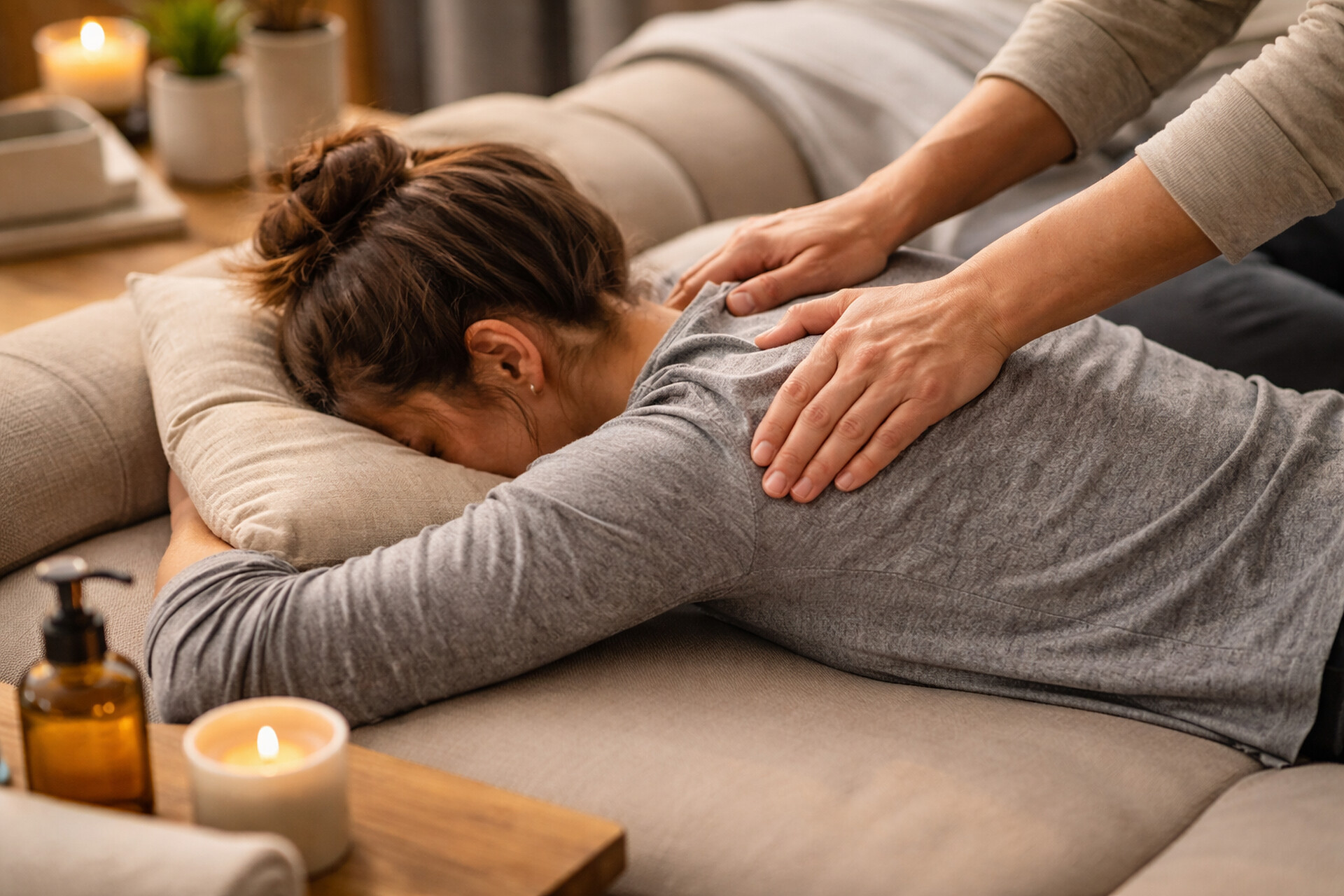
Massage Techniques for Muscle Tension After Work
You finish your workday, but your body doesn’t clock out with you.
Your shoulders feel tight. Your neck aches. Your lower back pulses with a dull stiffness that won’t go away.
If that sounds familiar, you’re not alone.
Long hours at a desk, standing on your feet, lifting, driving, or even dealing with stress can leave muscles tense and fatigued. The good news? You don’t always need a professional appointment to feel better. With the right massage techniques, you can reduce tension, improve circulation, and help your body unwind—right at home.
In this guide, you’ll learn:
- Why muscle tension builds up after work
- How massage helps relieve tightness
- Step-by-step techniques for neck, shoulders, back, hands, and legs
- When to be cautious
- How to turn massage into a simple daily ritual
Let’s start with what’s actually happening inside your body.
Why Muscles Feel Tight After Work
Muscle tension isn’t random. It’s your body responding to stress—physical or emotional.
When you sit or stand in one position for too long, certain muscles stay contracted. Over time, this reduces blood flow and causes stiffness. Stress also triggers the release of hormones that prepare your body for action. If that stress doesn’t resolve, muscles remain partially tightened.
According to the World Health Organization, musculoskeletal discomfort is one of the most common work-related health concerns worldwide. Prolonged posture, repetitive movement, and psychological stress all contribute.
Common areas of tension include:
- Neck and upper shoulders
- Lower back
- Forearms and wrists
- Hips and thighs
- Calves and feet
Massage works because it increases circulation, gently stretches muscle fibers, and signals the nervous system to relax.
Now let’s explore techniques you can use immediately.
Neck and Shoulder Relief
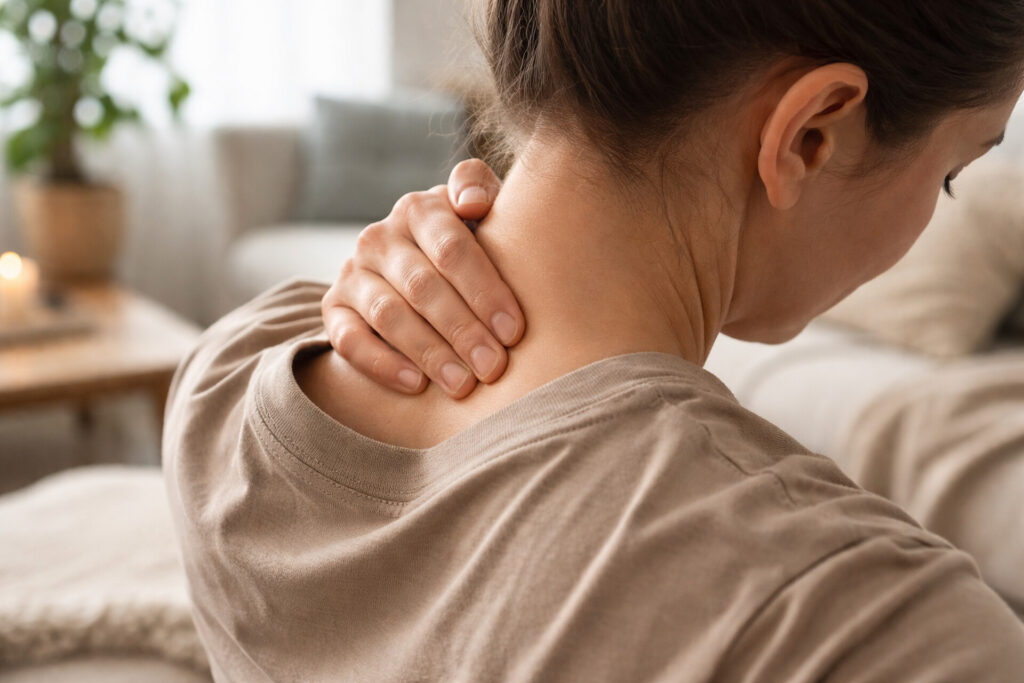
These areas carry more stress than most of us realize. If you work at a computer or frequently look down at a phone, this section is for you.
1. Upper Trapezius Squeeze
This simple technique targets the muscle that runs from your neck to your shoulder.
How to do it:
- Sit upright in a chair.
- Reach across your body with one hand.
- Gently squeeze the muscle between your neck and shoulder.
- Hold for 5–10 seconds.
- Release slowly.
- Repeat 5–8 times, then switch sides.
Keep pressure firm but comfortable. If you feel sharp pain, ease off.
Why it helps:
This muscle tightens during stress and poor posture. Sustained squeezing improves blood flow and reduces stiffness.
Transitioning from static pressure, let’s try movement-based massage.
2. Neck Glide and Press
Steps:
- Place your fingertips at the base of your skull.
- Apply gentle pressure.
- Slowly tilt your head to one side.
- Hold for 10 seconds.
- Repeat on the other side.
This combines pressure with a stretch.
What it does:
It releases small tension points along the side of the neck and helps restore mobility.
Keep breathing slowly. Many people hold their breath without noticing.
Lower Back Tension Relief
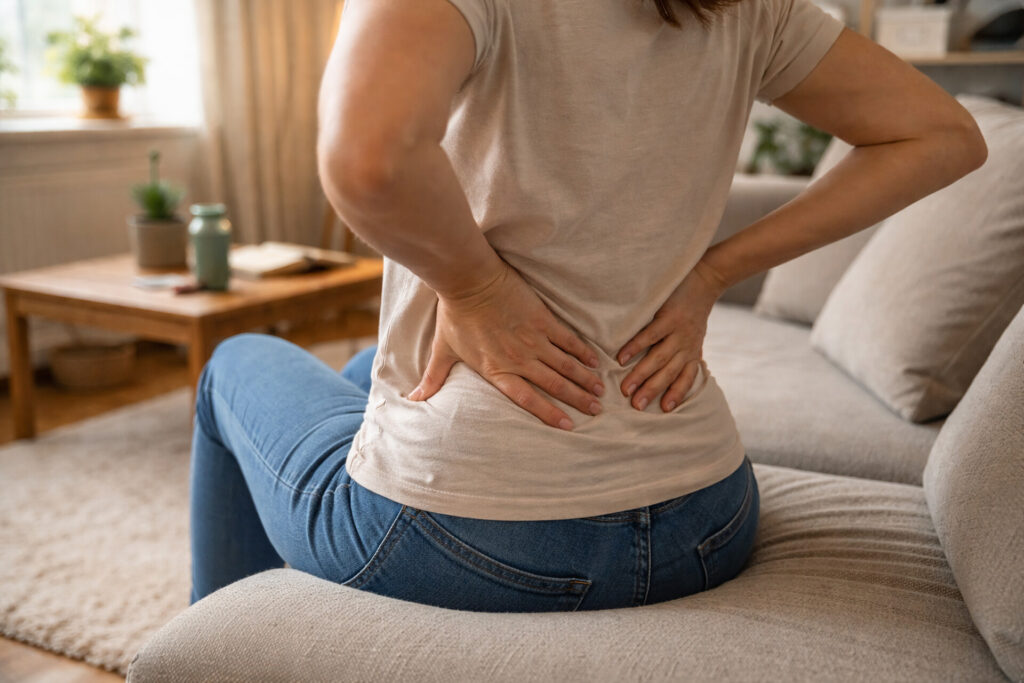
The lower back absorbs strain from sitting, standing, and lifting. Instead of pressing directly on the spine, focus on the muscles beside it.
3. Seated Lower Back Press
How to perform it:
- Sit upright.
- Place your thumbs just above your hips on either side of the spine.
- Press inward gently.
- Hold for 10 seconds.
- Release and repeat 5 times.
You can also lean back slightly into your thumbs to increase pressure.
Tip: Never press directly on the spine.
4. Tennis Ball Wall Release
This technique mimics professional trigger-point therapy.
Instructions:
- Stand against a wall.
- Place a tennis ball between your lower back and the wall.
- Gently lean into it.
- Slowly move up and down to find tight spots.
- Pause on tender areas for 20–30 seconds.
Keep movements slow and controlled.
Why it works:
Sustained pressure helps release tight muscle fibers and improve circulation.
Hands and Forearms: Often Overlooked
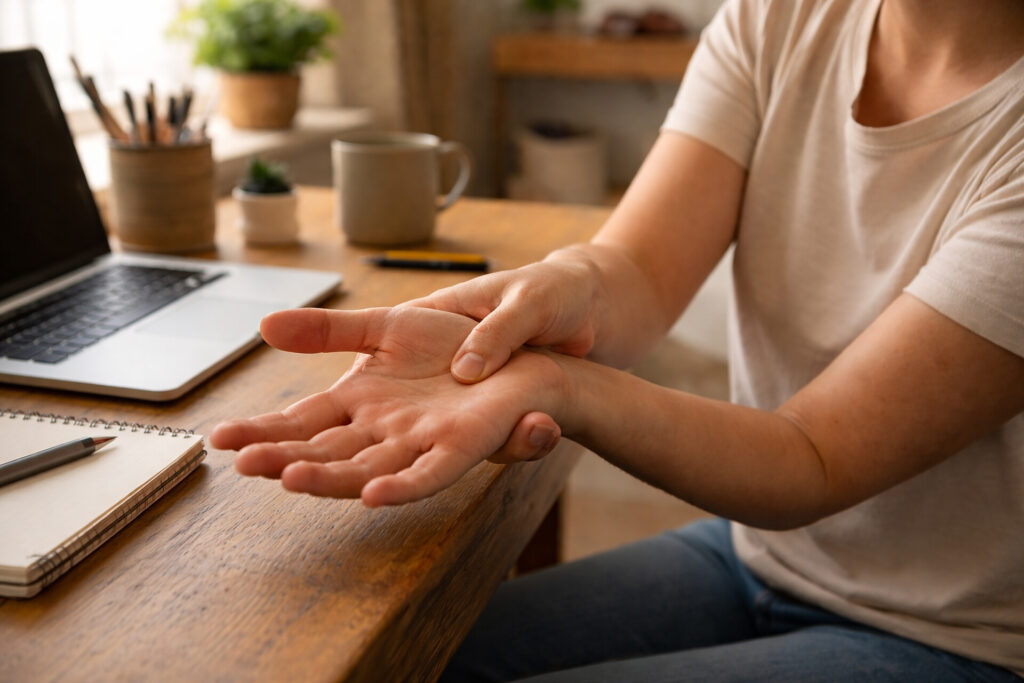
Typing, gripping tools, and repetitive tasks strain your forearms and hands.
5. Forearm Roll Massage
Steps:
- Extend one arm forward.
- Use the opposite hand to squeeze and roll the forearm muscles.
- Move slowly from wrist to elbow.
- Spend 1–2 minutes per arm.
You may feel small tender spots. Apply steady pressure, not sharp force.
6. Palm Pressure Release
How to do it:
- Open your hand.
- Use your thumb to press into the center of your palm.
- Hold for 10 seconds.
- Move to different areas of the palm.
This is especially helpful after long typing sessions.
Legs and Hips After Standing All Day

If your job keeps you on your feet, your lower body deserves attention.
7. Thigh Compression
Steps:
- Sit comfortably.
- Use both hands to squeeze the front of your thigh.
- Work from knee toward hip.
- Repeat for 2–3 minutes per leg.
This encourages circulation and reduces heaviness.
8. Calf Kneading
Instructions:
- Sit with one leg crossed over the other.
- Use both hands to knead the calf muscle.
- Apply rhythmic squeezing motions.
- Continue for 2 minutes.
If your calves cramp often, go slowly and hydrate well.
Breathing: The Missing Piece
Massage works better when combined with controlled breathing.
Try this:
- Inhale slowly for 4 seconds
- Hold for 2 seconds
- Exhale for 6 seconds
Longer exhales signal your nervous system to relax. This enhances the effect of massage.
Without proper breathing, muscles may stay partially guarded.
How Hard Should You Press?
A common question.
Pressure should feel:
- Firm but tolerable
- Slightly uncomfortable at most
- Never sharp or stabbing
Pain does not equal progress.
If a spot feels too sensitive, reduce pressure or shorten duration.
When to Avoid Self-Massage
Massage is generally safe for healthy adults. However, avoid or consult a healthcare professional if you have:
- Recent injuries
- Swelling or inflammation
- Unexplained pain
- Skin infections or open wounds
- Circulatory conditions
If pain persists or worsens, seek medical advice.
Self-care should never replace proper evaluation when needed.
Building a 10-Minute After-Work Routine
Consistency matters more than intensity.
Here’s a simple sequence:
- Neck squeeze – 2 minutes
- Shoulder press and glide – 2 minutes
- Lower back ball release – 2 minutes
- Forearm roll – 2 minutes
- Calf kneading – 2 minutes
Total: 10 minutes.
Done daily, this routine can reduce stiffness and help you transition from “work mode” to “home mode.”
Pair it with calming music or quiet time.
Why Massage Improves Recovery
Massage supports the body in several ways:
- Increases blood flow
- Reduces muscle stiffness
- Enhances flexibility
- Promotes relaxation
- Encourages body awareness
While research continues to explore exact mechanisms, moderate evidence suggests massage can temporarily reduce muscle soreness and improve perceived recovery after physical strain.
It’s not a miracle cure. But it’s a practical tool.
The Emotional Side of Muscle Tension
Not all tension comes from posture.
Deadlines. Difficult conversations. Mental overload.
Stress often settles in the shoulders and jaw. Massage creates a physical signal of safety. That signal can calm your mind.
Many people notice they think more clearly after releasing muscle tension. That’s not coincidence. The body and mind are connected.
Small Habits That Prevent Tension
Massage works best when paired with prevention.
Consider these habits:
- Take short movement breaks every hour
- Adjust chair and screen height
- Keep feet flat when sitting
- Stay hydrated
- Stretch gently before bed
- Manage stress through breathing or mindfulness
You don’t need perfection. Small changes add up.
Making Massage a Ritual, Not a Chore
If self-massage feels like “one more task,” it won’t stick.
Try this:
- Do it while watching a show
- Add it to your wind-down routine
- Keep a tennis ball near your desk
- Set a gentle reminder
Attach it to something you already do.
Over time, your body will expect that release.
Frequently Asked Questions
How long should I massage one area?
1–3 minutes is usually enough for general tension.
Can I massage every day?
Yes, as long as you avoid excessive pressure.
Should I use oils or tools?
They can help but are not required. Clean hands and steady pressure work well.
Will massage fix chronic pain?
It may provide temporary relief. Chronic pain often requires broader evaluation and treatment.
Key Takeaways
- Muscle tension after work is common and manageable.
- Simple techniques can improve circulation and reduce stiffness.
- Pressure should be firm but never painful.
- Consistency matters more than intensity.
- Combine massage with movement and breathing for best results.
Final Thoughts: Give Your Body Permission to Relax
Your body works hard for you all day.
It holds your posture. It absorbs stress. It pushes through deadlines and responsibilities.
Spending ten intentional minutes releasing tension isn’t indulgent—it’s practical. It helps you move better, sleep better, and feel more at ease.
Start small. Pick one technique tonight.
Pay attention to how your body responds.
Relief doesn’t have to be complicated. Sometimes it begins with your own hands and a few quiet minutes at the end of the day.
If this guide helped you, consider sharing it with someone who finishes work feeling the same tight shoulders and heavy legs. Everyone deserves to end the day feeling lighter than they started it.