Aromatherapy Practices for Stress and Sleep Support
Stress and poor sleep have a way of sneaking into daily life. One busy week turns into months of restless nights, tense shoulders, and a mind that refuses to slow down. Many people look for gentle, supportive ways to feel calmer and rest better—without adding more complexity to their routines.
Aromatherapy is one such approach. It uses plant-derived essential oils to support emotional balance, relaxation, and sleep readiness. When practiced thoughtfully, aromatherapy can become a simple, grounding ritual that signals safety and rest to both body and mind.
This article explains how aromatherapy works, how it may support stress relief and sleep, and how to use it safely and effectively. You’ll also learn how to build realistic, sustainable practices that fit into everyday life—no hype, no pressure, just practical guidance.
What Aromatherapy Really Is
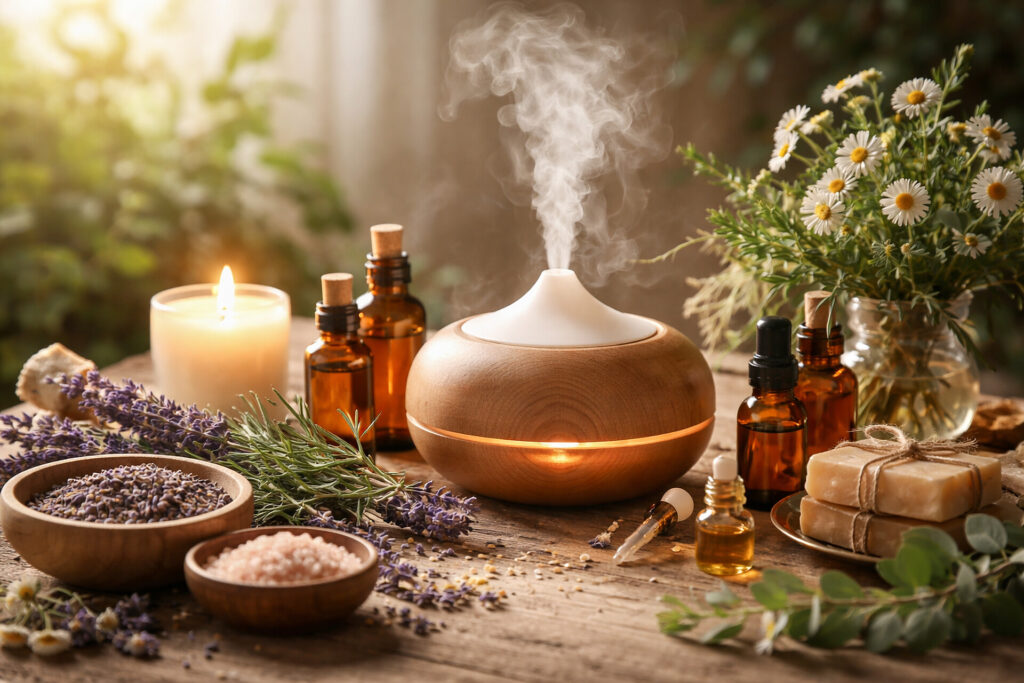
Aromatherapy is the intentional use of essential oils for emotional and physical well-being. These oils are concentrated extracts from flowers, leaves, bark, roots, or peels of plants. Each oil has a unique chemical profile that gives it a distinct scent and potential effects.
The key word here is intentional. Aromatherapy is not about flooding a room with fragrance or chasing instant results. It’s about using scent in a mindful way to influence mood, relaxation, and daily rhythms.
How Aromatherapy Interacts With the Body

When you inhale an aroma, scent molecules travel through the nose and interact with the olfactory system. This system is closely connected to parts of the brain involved in emotion, memory, and stress response, including the limbic system.
Because of this connection, smells can:
- Trigger emotional memories
- Influence feelings of calm or alertness
- Affect perceived stress levels
- Support relaxation before sleep
This pathway explains why a familiar scent can instantly make someone feel safe—or why certain aromas feel grounding after a long day.
Research has shown that some essential oils may influence heart rate, blood pressure, and subjective stress levels through this sensory pathway (Herz, 2009; Buchanan, 2004).
Stress, Sleep, and the Nervous System
To understand how aromatherapy may help, it’s useful to look at stress and sleep through the lens of the nervous system.
Stress Keeps the Body on High Alert
Stress activates the sympathetic nervous system—the “fight or flight” response. This can lead to:
- Muscle tension
- Shallow breathing
- Racing thoughts
- Difficulty winding down
When stress becomes chronic, the body may struggle to return to a relaxed state.
Sleep Requires a Sense of Safety
Sleep is not just about being tired. It requires the nervous system to shift into a calmer mode often referred to as “rest and digest.” If the body doesn’t feel safe or settled, falling asleep and staying asleep can be difficult.
Relaxing scents can act as cues that signal comfort and predictability. Over time, this association may help the body recognize when it’s time to slow down.
Essential Oils Commonly Used for Stress Support
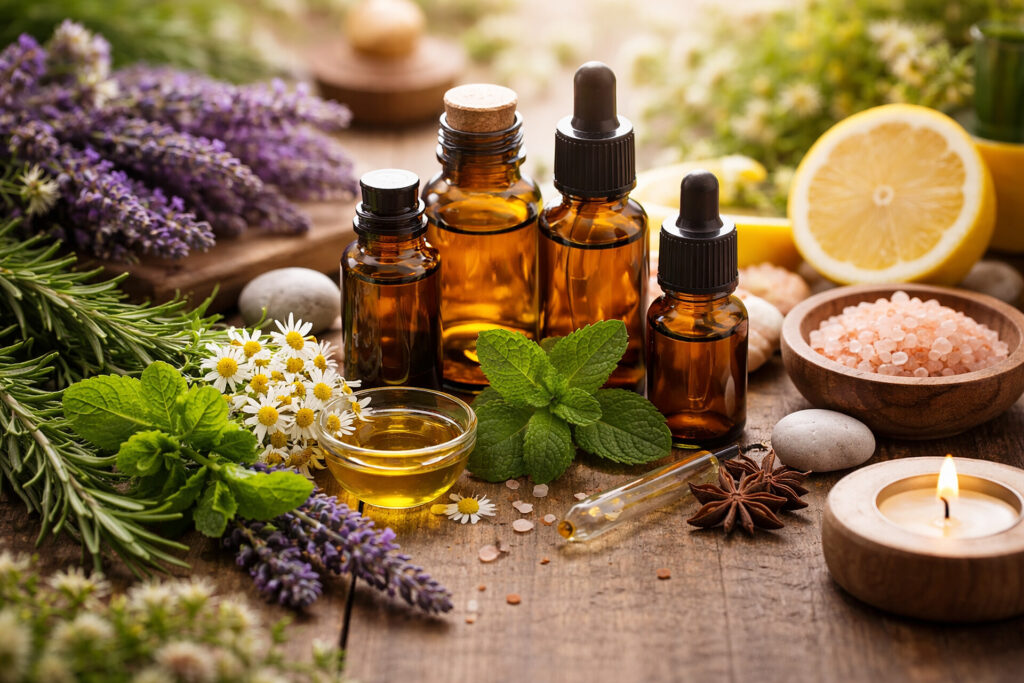
Not all essential oils are the same. Some are more commonly associated with calming and stress-supportive effects.
Below are oils often used in aromatherapy practices focused on relaxation. Individual responses vary, so personal preference always matters.
Lavender
Lavender is one of the most studied essential oils in relation to stress and sleep.
It is commonly described as:
- Soft and floral
- Clean and herbaceous
- Familiar and comforting
Studies suggest lavender aroma may support relaxation and improve perceived sleep quality for some people (Koulivand et al., 2013).
Bergamot
Bergamot has a bright, citrus scent with subtle floral notes.
It is often used to:
- Ease nervous tension
- Lift mood while promoting calm
- Reduce feelings of overwhelm
Unlike some citrus oils, bergamot is often considered soothing rather than energizing.
Chamomile
Chamomile essential oil has a warm, slightly sweet aroma.
It is traditionally associated with:
- Gentle calming effects
- Emotional comfort
- Bedtime rituals
Its scent is often described as reassuring and soft.
Frankincense
Frankincense has a deep, resinous scent.
It is commonly used for:
- Grounding practices
- Slow, deep breathing
- Quiet reflection
Many people find it helpful during meditation or evening wind-down routines.
Ylang Ylang
Ylang ylang has a rich, floral aroma.
It is often associated with:
- Relaxation
- Emotional release
- Slowing the breath
Because it is strong, small amounts are usually enough.
Essential Oils Often Used for Sleep Support
Some oils are used specifically to support the transition into sleep. These scents are generally calming rather than stimulating.
Common choices include:
- Lavender
- Chamomile
- Cedarwood
- Sandalwood
- Sweet marjoram
These oils are often described as warm, soft, or earthy—qualities that many people associate with nighttime comfort.
Methods of Aromatherapy for Stress and Sleep
There is no single “correct” way to practice aromatherapy. The best method is one that feels safe, enjoyable, and easy to maintain.
Inhalation
Inhalation is one of the simplest and most common approaches.
Ways to practice inhalation include:
- Using a diffuser with water and a few drops of essential oil
- Placing a drop on a cotton pad nearby
- Gently inhaling from a personal inhaler
Inhalation allows aroma to reach the olfactory system quickly without direct skin contact.
Topical Use
Essential oils can also be applied to the skin when properly diluted in a carrier oil, such as jojoba or sweet almond oil.
Common areas for stress and sleep routines include:
- Wrists
- Neck
- Shoulders
- Soles of the feet
Dilution is essential to reduce the risk of skin irritation. A typical dilution for adults is about 1–2% essential oil in a carrier oil.
Aromatic Baths
Warm baths can be relaxing on their own. Adding diluted essential oils may enhance the experience.
Tips for safe use:
- Always dilute oils in a dispersing agent before adding to water
- Avoid direct skin contact with undiluted oil
- Keep the scent subtle
Baths are often used as part of an evening wind-down ritual rather than as a daily practice.
Creating a Stress-Relief Aromatherapy Routine
Consistency matters more than complexity. A simple routine practiced regularly is more effective than an elaborate one used once.
Start With a Clear Purpose
Ask yourself:
- Do I want to feel calmer after work?
- Do I want help transitioning into evening rest?
Choose oils and methods that match that intention.
Pair Scent With a Habit
Aromatherapy works best when paired with existing routines, such as:
- Changing clothes after work
- Stretching
- Journaling
- Reading
Over time, the scent becomes associated with relaxation through repetition.
Keep It Short and Gentle
A few minutes is enough. Long sessions are not required.
For example:
- Diffuse a calming oil for 15–30 minutes
- Apply diluted oil during a brief self-massage
- Inhale slowly for a few deep breaths
Building a Bedtime Aromatherapy Practice
Sleep-supportive aromatherapy is about signaling transition, not forcing sleep.
Use Scent as a Cue, Not a Solution
Aromatherapy cannot replace good sleep habits, but it can support them.
Helpful cues include:
- Dimming lights
- Lowering noise
- Reducing screen use
- Using the same scent each night
The goal is to create predictability.
Timing Matters
Introduce calming aromas 30–60 minutes before bedtime. This gives the nervous system time to respond.
Avoid strong or stimulating scents close to bedtime, especially those associated with alertness.
Keep the Bedroom Calm
Use subtle amounts. Strong smells can be distracting rather than soothing.
Many people prefer:
- A short diffusion before bed
- A light topical application earlier in the evening
Safety Considerations You Should Not Skip
Aromatherapy is generally considered low-risk when used properly, but safety always comes first.
Dilution Is Essential
Undiluted essential oils can irritate the skin. Always use a carrier oil for topical application.
Less Is More
Using more oil does not mean better results. Small amounts are often more effective and comfortable.
Be Mindful of Sensitivities
Some people are sensitive to scent.
If you experience:
- Headache
- Nausea
- Skin irritation
- Discomfort
Stop use and reassess.
Special Situations
If you are pregnant, managing a health condition, or using aromatherapy for children, consult a qualified healthcare professional before use.
What Aromatherapy Can—and Cannot—Do
Aromatherapy can support relaxation and emotional comfort. It cannot cure medical conditions or replace professional care.
It may help by:
- Encouraging relaxation
- Supporting stress-management routines
- Enhancing bedtime rituals
It does not:
- Treat sleep disorders
- Eliminate chronic stress on its own
- Work instantly for everyone
Being honest about these limits builds trust and realistic expectations.
The Role of Personal Preference
Scent is deeply personal. What feels calming to one person may be unpleasant to another.
Trust your response.
Ask yourself:
- Do I enjoy this scent?
- Does it feel comforting or grounding?
- Do I look forward to using it?
Enjoyment matters. Aromatherapy works best when it feels welcoming, not forced.
Integrating Aromatherapy Into Daily Life
Aromatherapy does not need to be reserved for moments of crisis. It can be woven into everyday moments.
Examples include:
- A calming scent during evening cleanup
- A grounding aroma during a short break
- A familiar oil during travel or change
These small moments add up and can support emotional resilience over time.
What Research Says, in Simple Terms
Research on aromatherapy suggests potential benefits for relaxation and perceived sleep quality, especially through inhalation. However, results vary, and many studies focus on short-term effects.
Key findings include:
- Certain aromas may influence mood and relaxation
- Lavender has been studied most extensively for sleep-related support
- Individual response and context play a major role
Sources such as Chemical Senses, Evidence-Based Complementary and Alternative Medicine, and Frontiers in Psychology have published peer-reviewed research exploring these effects.
A Gentle Perspective on Stress and Sleep
Stress and sleep challenges are not personal failures. They are often signs that the body needs more support, safety, and consistency.
Aromatherapy is not a fix. It is a tool—a small, sensory reminder to pause, breathe, and soften.
When used with intention, it can:
- Add comfort to daily routines
- Support moments of calm
- Make rest feel more inviting
That alone can be meaningful.
Final Thoughts
Aromatherapy for stress and sleep support is about simplicity, honesty, and care. It invites you to slow down and listen to your own responses rather than chase promises or quick results.
By choosing scents you genuinely enjoy, using them safely, and pairing them with calming habits, you create a practice that respects both your nervous system and your time.
The most effective aromatherapy practice is not the most complex one. It is the one you return to—night after night, breath after breath—because it feels kind, familiar, and supportive.
If this article helped clarify how aromatherapy fits into stress and sleep support, it may help someone else too. Thoughtful, grounded information is always worth sharing.