
How To Build A Sustainable Sleep Routine That Actually Lasts
Sleep advice is everywhere. Go to bed earlier. Avoid screens. Be consistent.
Most people already know these tips—and still struggle to sleep well.
The real challenge isn’t knowing what to do.
It’s building a sleep routine you can stick to on real, messy, unpredictable days.
This article is about that challenge.
You’ll learn how to create a sustainable sleep routine—one that fits your life, adapts when things change, and supports your health over the long term. Not a perfect routine. Not a fragile one. A realistic one.
By the end, you’ll understand:
- Why most sleep routines fail
- How sleep actually works (in plain language)
- How to design a routine that feels natural, not forced
- What to do when your routine breaks
- How to improve sleep without obsessing over it
No hype. No extreme rules. Just practical guidance you can use tonight—and still use months from now.
What “Sustainable Sleep” Really Means

A sustainable sleep routine is one you can maintain without constant effort or stress.
It works even when:
- Your schedule changes
- You travel or socialize
- You have a bad night
- Motivation runs low
Sustainability matters because sleep is not a short-term project.
It’s a daily biological process tied to how your brain and body function.
A routine that only works under ideal conditions will eventually collapse.
A sustainable routine bends instead of breaking.
Think of it like nutrition:
- Extreme diets fail.
- Consistent habits succeed.
Sleep is no different.
How Sleep Works (The Basics You Actually Need)
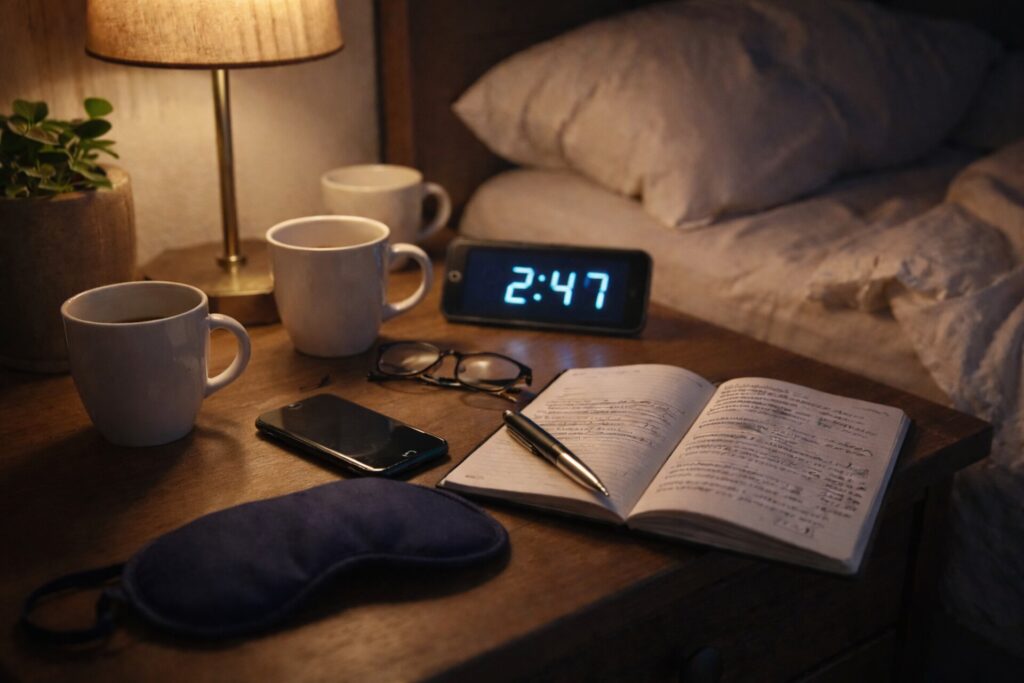
You don’t need a neuroscience degree to improve sleep.
But a few core ideas make everything else easier.
1. Your Body Runs on a Clock
Your body follows an internal timing system often called a circadian rhythm.
This rhythm:
- Tells you when to feel alert
- Signals when to feel sleepy
- Regulates hormones, digestion, and body temperature
The clock resets every day based on cues like:
- Light exposure
- Movement
- Meal timing
- Social activity
Your sleep routine is essentially a way of training this clock.
2. Sleep Pressure Builds While You’re Awake
The longer you stay awake, the stronger your drive to sleep becomes.
This is why:
- Naps can make it harder to fall asleep at night
- Sleeping in late can delay bedtime
- Irregular schedules disrupt sleep quality
Good routines balance:
- Enough wake time to feel sleepy
- Enough consistency to feel stable
3. Sleep Is a Skill, Not a Switch
Sleep isn’t something you force.
It’s something you allow.
Trying too hard—watching the clock, worrying about consequences, chasing perfect conditions—often backfires.
Sustainable routines reduce effort over time.
They make sleep feel automatic again.
Why Most Sleep Routines Fail
Understanding common failure points helps you avoid them.
Unrealistic Expectations
Many routines assume:
- You’ll always go to bed at the same time
- You’ll never wake up at night
- You’ll feel great every morning
That’s not how human sleep works.
Even good sleepers have:
- Occasional insomnia
- Early wake-ups
- Groggy mornings
Expecting perfection creates frustration—and frustration keeps you awake.
Overcomplication
Complex routines look impressive but fall apart fast.
Examples:
- Too many rules
- Strict bedtime rituals
- Long lists of “don’ts”
If your routine feels like a checklist you dread, it won’t last.
Ignoring Your Actual Life
A routine that doesn’t match your:
- Work hours
- Family needs
- Social habits
- Energy patterns
…will constantly clash with reality.
Sustainable sleep routines start with honest self-awareness, not ideals.
Step 1: Define Your Non-Negotiables
Every sustainable routine has a small core that stays consistent.
Start here.
Ask yourself:
- What must stay the same for sleep to work?
- What can stay flexible?
Choose One Anchor Time
The most effective anchor is usually wake-up time, not bedtime.
Why?
- Waking up at a consistent time stabilizes your internal clock
- Bedtime naturally adjusts when wake-up time is steady
Pick a wake-up time you can maintain most days of the week.
Not perfect. Just realistic.
Consistency within 30–60 minutes is often enough.
Identify Your Sleep Window
Instead of a strict bedtime, define a sleep window.
Example:
- “I aim to be in bed between 10:30 and 11:30.”
This:
- Reduces pressure
- Accounts for natural variation
- Still supports consistency
Step 2: Build a Wind-Down Routine That Fits You
Your brain needs signals that the day is ending.
A wind-down routine provides those signals.
But it doesn’t need to be elaborate.
What a Wind-Down Routine Does
It helps:
- Lower mental stimulation
- Reduce stress hormones
- Transition from “doing” to “resting”
Think of it as downshifting, not stopping abruptly.
Keep It Short and Repeatable
Aim for 20–60 minutes.
Choose activities that are:
- Low effort
- Familiar
- Calming for you
Examples:
- Light stretching
- Reading something non-stimulating
- Gentle music
- Writing a short to-do list for tomorrow
- Taking a warm shower
You don’t need all of these.
You need a few that feel easy.
Consistency Matters More Than Content
Doing the same few things in the same order teaches your brain a pattern.
Over time, the routine itself becomes a cue for sleepiness.
That’s sustainability.
Step 3: Design Your Environment for Sleep
Your environment can either support your routine—or quietly sabotage it.
Light: The Strongest Signal
Light tells your brain whether it’s day or night.
Helpful habits:
- Get bright light earlier in the day
- Dim lights in the evening
- Avoid harsh lighting close to bedtime
You don’t need darkness all day.
You need contrast.
Temperature: Slightly Cool Is Better
Sleep generally comes easier when your body temperature drops.
Simple adjustments:
- Use lighter bedding
- Ventilate the room if possible
- Wear breathable sleepwear
Comfort matters more than rules.
Sound and Stillness
Total silence isn’t required.
What matters is:
- Predictability
- Lack of sudden disturbances
Some people sleep better with:
- Soft background noise
- A consistent sound environment
Again, choose what feels natural.
Step 4: Use Your Day to Improve Your Night
Sleep starts long before bedtime.
Morning Light and Movement
Early-day light exposure helps set your internal clock.
Pair it with movement if you can:
- A walk
- Stretching
- Light activity
This doesn’t need to be intense.
It just needs to happen regularly.
Manage Naps Carefully
Naps aren’t bad—but timing matters.
If naps:
- Are long
- Happen late in the day
- Leave you groggy
They may interfere with nighttime sleep.
Short, earlier naps are usually easier to recover from.
Respect Your Energy Cycles
Notice when you naturally feel alert or sleepy.
Fighting these rhythms daily creates friction.
When possible:
- Schedule demanding tasks earlier
- Leave evenings lighter
- Avoid high-stimulation activities close to bed
Step 5: Let Go of Sleep Anxiety
One of the biggest threats to sustainability is worrying about sleep.
Ironically, trying to control sleep often disrupts it.
Accept Variability
Bad nights happen.
They do not mean:
- Your routine failed
- Something is wrong
- Tomorrow is ruined
Your body is resilient.
One rough night rarely causes lasting harm.
Stop Chasing Perfect Sleep
Perfect sleep is not a requirement for health or performance.
Consistency over time matters more than any single night.
When sleep becomes a performance metric, stress increases—and sleep quality drops.
Have a Plan for Wake-Ups
If you wake up and can’t fall back asleep:
- Avoid watching the clock
- Keep lights low
- Do something calm and non-stimulating
The goal isn’t to force sleep.
It’s to stay relaxed until sleep returns.
Step 6: Make Your Routine Flexible, Not Fragile
Sustainable routines adapt.
Plan for Disruptions
Life will interfere.
Instead of resisting:
- Decide in advance how you’ll adjust
- Return to your anchor habits afterward
Examples:
- Travel: keep wake-up time close when possible
- Late nights: wake up at your usual time or slightly later
- Stressful periods: simplify the routine instead of abandoning it
Use the “Minimum Effective Routine”
On hard days, do the bare minimum:
- Wake up around your usual time
- Do one calming activity before bed
- Keep expectations low
Doing something maintains continuity.
Step 7: Track Progress Without Obsession
You don’t need detailed data to improve sleep.
Simple reflection works.
Ask weekly:
- Do I feel more rested overall?
- Is falling asleep easier?
- Am I less stressed about sleep?
Look for trends, not daily scores.
Sustainable sleep feels steadier, not perfect.
Common Questions About Building a Sleep Routine
“How long does it take to see results?”
Some changes help immediately.
Others take a few weeks.
Sleep systems adapt gradually.
Consistency beats speed.
“What if my schedule changes often?”
Focus on:
- A consistent wake-up range
- A repeatable wind-down cue
- Stable daytime habits
Flexibility can still be structured.
“What if I do everything right and still sleep poorly?”
Sometimes sleep issues reflect:
- Stress overload
- Mental health challenges
- Medical factors
A routine supports sleep, but it doesn’t solve everything.
Seeking professional guidance can be a helpful next step if problems persist.
A Simple Example of a Sustainable Sleep Routine
Here’s what a realistic routine might look like:
Morning
- Wake up around the same time most days
- Get some light exposure
- Move a little
Day
- Eat regular meals
- Limit long, late naps
- Notice energy patterns
Evening
- Dim lights gradually
- Wind down with familiar activities
- Aim for a sleep window, not a strict time
Night
- Accept occasional wake-ups
- Stay calm and low-stimulation
- Trust sleep to return
Nothing extreme.
Nothing fragile.
Just repeatable habits that work together.
Final Thoughts: Build for the Long Term
A sustainable sleep routine isn’t about control.
It’s about cooperation—with your body, your mind, and your life.
The best routine:
- Feels doable
- Reduces stress
- Improves over time
- Survives imperfection
If your routine supports you even on bad days, it’s working.
Sleep isn’t something to conquer.
It’s something to support—gently, consistently, and with patience.
Build the routine that fits you.
Then let it carry you forward, one night at a time.