Why Bodyweight Training Outperforms the Gym for Real Results
The Quiet Revolution in Fitness
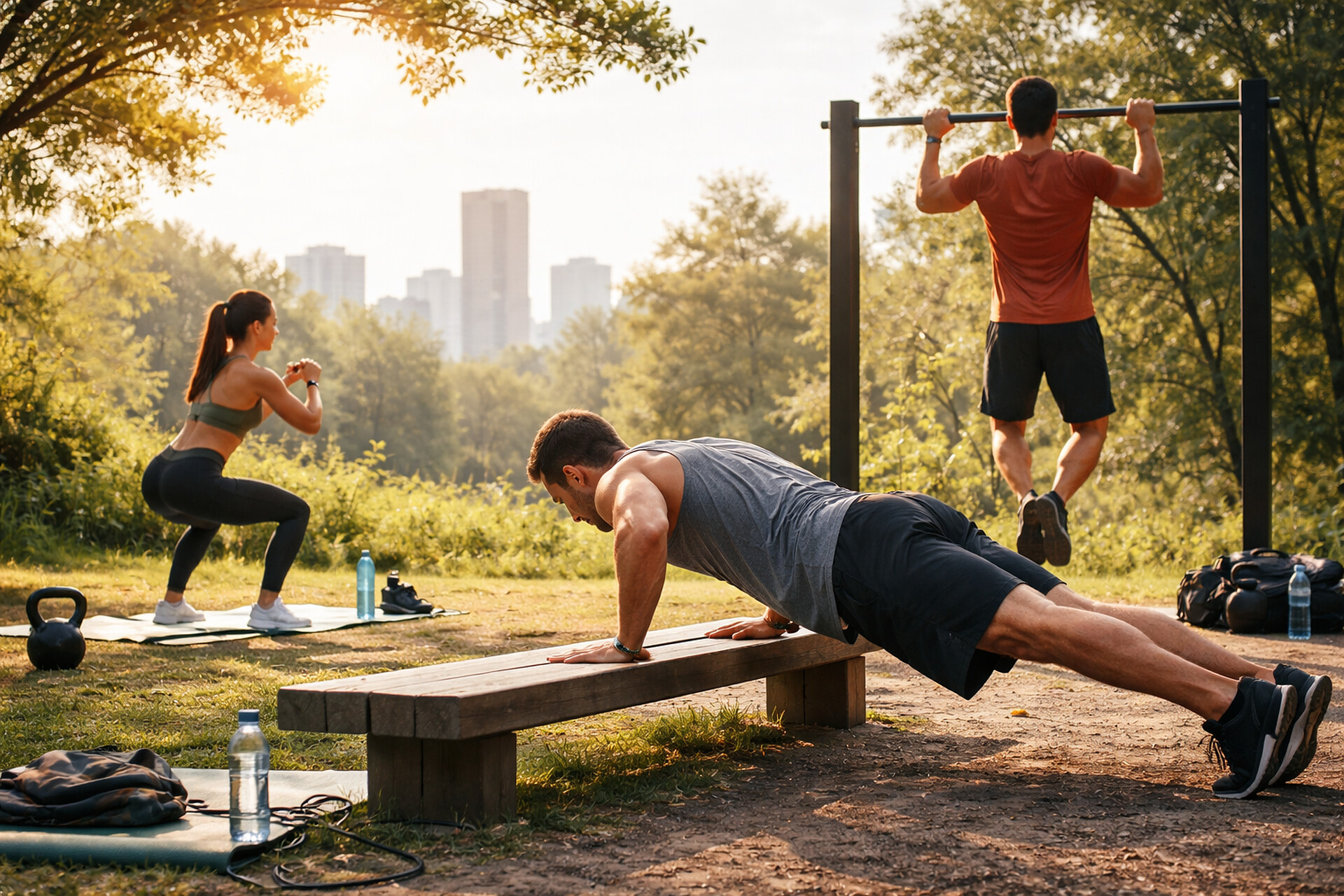
Step into any traditional gym, and you’ll likely see rows of machines, stacks of weights, and people chasing numbers—heavier lifts, more reps, bigger totals. It’s a familiar scene. But step outside that environment—into a park, a living room, or even a small corner of your home—and something different happens. Movement becomes simpler. More intentional. More connected.
Here’s the surprising truth: the most effective training method for real, lasting results doesn’t require machines, memberships, or even much space. It requires your body—and how you choose to use it.
Bodyweight training isn’t just an alternative to the gym. In many ways, it outperforms it. Not because it’s easier—but because it’s smarter, more adaptable, and more aligned with how the human body is designed to move.
Let’s explore why.
What “Real Results” Actually Mean
Before comparing methods, it’s important to define what “real results” truly are.
For many people, results are often reduced to:
- Bigger muscles
- Lower body fat
- Higher numbers on lifts
But real, sustainable fitness goes beyond appearance or isolated performance. It includes:
- Strength that translates to everyday life
- Mobility that prevents injury
- Endurance that supports long-term health
- Consistency that lasts years, not weeks
- Confidence in your own body
Bodyweight training excels in all of these areas because it focuses on how your body functions—not just how it looks.
The Fundamental Advantage: Movement Over Mechanics

Traditional gym training often isolates muscles. Machines guide your motion, stabilize your joints, and limit variability. This can be helpful in certain contexts, but it comes with a trade-off: your body does less of the work.
Bodyweight training flips that equation.
When you perform a push-up, squat, or pull-up, your body must:
- Stabilize itself
- Coordinate multiple muscle groups
- Control balance and positioning
You’re not just training muscles—you’re training movement.
Why This Matters
In real life, your body never operates in isolation. You don’t “activate your quadriceps” when climbing stairs—you move as a system. Bodyweight training mirrors that reality.
This leads to:
- Better coordination
- More efficient movement patterns
- Strength that actually transfers to daily activities
In short, you’re not just getting stronger—you’re becoming more capable.
Strength That Scales With You
A common misconception is that bodyweight training is limited. That once you can do a few push-ups or squats, progress stalls.
The reality is the opposite.
Bodyweight training offers nearly endless progression through:
- Leverage changes (e.g., incline push-ups → decline → one-arm push-ups)
- Range of motion (e.g., partial squats → deep squats → pistol squats)
- Tempo (slower reps increase difficulty)
- Stability demands (adding balance challenges)
Example Progression
A simple push-up can evolve into:
- Incline push-ups
- Standard push-ups
- Decline push-ups
- Archer push-ups
- One-arm push-ups
Each step increases difficulty without requiring external weight.
Why This Outperforms Traditional Loading
In gym training, progression often relies on adding weight. While effective, it can lead to:
- Joint strain
- Plateaus when equipment is unavailable
- Overemphasis on numbers instead of control
Bodyweight progression, by contrast, prioritizes:
- Mastery of movement
- Control under tension
- Functional strength
You’re not just lifting more—you’re moving better.
Mobility and Strength: Built Together, Not Separately
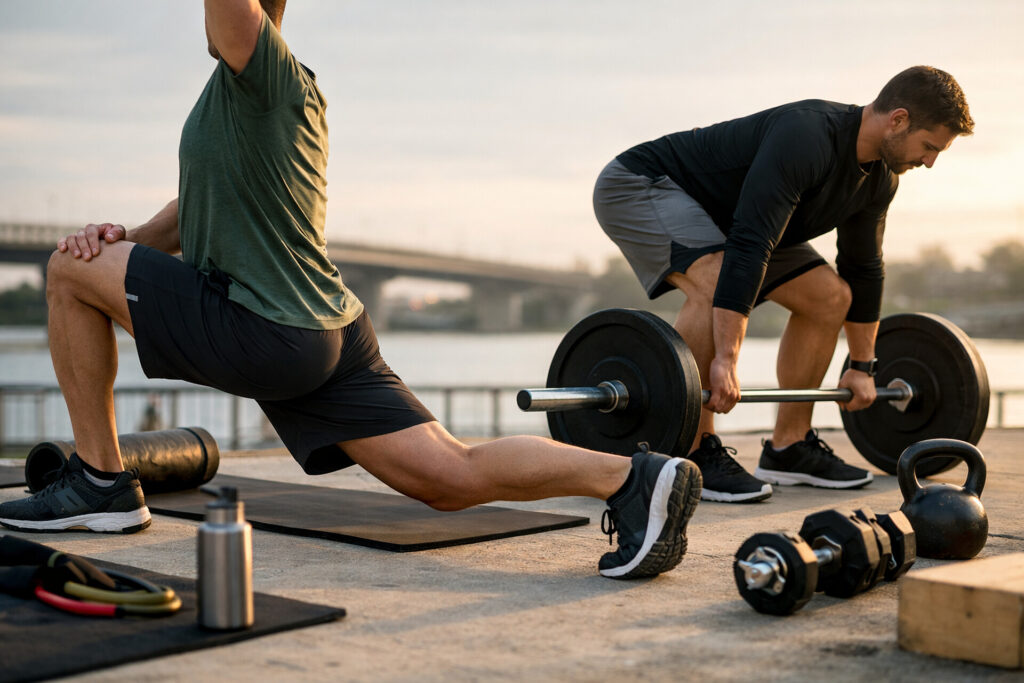
One of the biggest limitations of machine-based training is that it separates strength from mobility.
You might become strong within a fixed range of motion, but struggle outside of it.
Bodyweight training integrates both.
Why Integration Matters
Movements like:
- Deep squats
- Lunges
- Hanging exercises
- Crawling patterns
Require strength through a full range of motion—not just at specific points.
This leads to:
- Improved joint health
- Increased flexibility under load
- Reduced risk of injury
Instead of stretching to fix stiffness later, you build mobility as you train.
The Hidden Power of Relative Strength
Gym culture often emphasizes absolute strength—how much weight you can lift.
Bodyweight training focuses on relative strength—how strong you are compared to your own body weight.
Why Relative Strength Wins
Relative strength determines:
- How easily you move
- How efficiently you perform tasks
- How well you control your body
Someone who can perform multiple pull-ups, pistol squats, and controlled push-ups often demonstrates more functional strength than someone who lifts heavy but lacks control.
Real-Life Translation
Relative strength improves:
- Climbing stairs
- Carrying objects
- Athletic performance
- Balance and coordination
It’s strength you can use—not just display.
Consistency: The Ultimate Advantage
The best workout is the one you can stick to.
This is where bodyweight training quietly dominates.
No Barriers to Entry
With bodyweight training:
- No commute is required
- No equipment is necessary
- No schedule restrictions exist
You can train:
- At home
- Outdoors
- While traveling
This removes one of the biggest obstacles to fitness: friction.
Why This Matters
Many gym routines fail not because they’re ineffective—but because they’re inconvenient.
Bodyweight training:
- Fits into your life
- Reduces excuses
- Encourages daily movement
And consistency beats intensity every time.
Injury Prevention Through Control
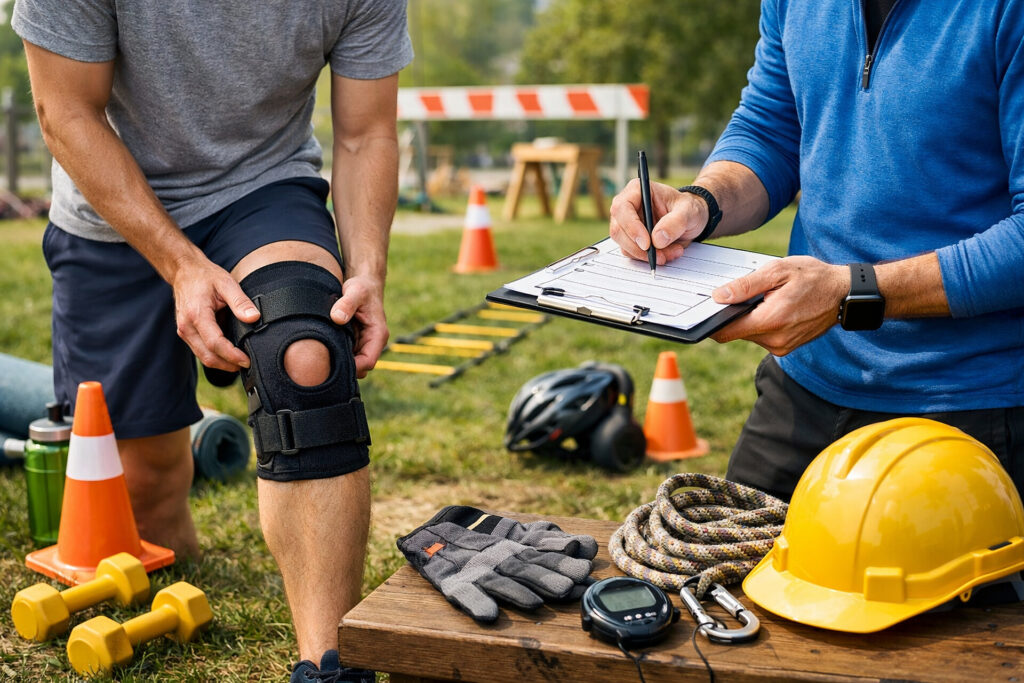
Injury risk often increases when:
- Loads are too heavy
- Form breaks down
- Stabilizing muscles are underdeveloped
Bodyweight training naturally reduces these risks.
Built-In Safety Mechanisms
Your body limits how much load you can handle. You can’t “overload” beyond your structural capacity in the same way you can with external weights.
Additionally, bodyweight exercises:
- Strengthen stabilizers
- Improve joint alignment
- Reinforce proper movement patterns
The Result
You build resilience—not just strength.
And resilience is what keeps you training long-term.
Core Strength That Actually Matters
In many gym routines, core training is an afterthought—added at the end of a workout.
In bodyweight training, the core is involved in almost everything.
Why This Changes Everything
Movements like:
- Planks
- Push-ups
- Pull-ups
- Squats
All require core engagement.
Your core becomes:
- A stabilizer
- A force transmitter
- A foundation for movement
The Outcome
Instead of isolated abdominal strength, you develop:
- Functional core stability
- Better posture
- Improved balance
This translates directly into everyday performance.
Mental Engagement and Body Awareness
Bodyweight training demands attention.
You can’t simply go through the motions. You must:
- Control your position
- Maintain alignment
- Adjust in real time
This builds proprioception—your awareness of your body in space.
Why This Is Powerful
Improved body awareness leads to:
- Better technique
- Faster skill acquisition
- Reduced injury risk
It also creates a deeper connection between mind and body—something often lost in repetitive machine-based workouts.
Efficiency: More Results in Less Time
Many gym sessions are structured around:
- Waiting for equipment
- Isolated exercises
- Long rest periods
Bodyweight training is inherently more efficient.
Full-Body Integration
You can combine movements into circuits:
- Push-ups
- Squats
- Pull-ups
- Planks
This trains:
- Strength
- Endurance
- Coordination
All in one session.
The Benefit
Shorter workouts with greater impact.
You don’t need hours—you need intention.
Adaptability for Every Level
Bodyweight training is often misunderstood as either too easy or too advanced.
In reality, it adapts to any fitness level.
For Beginners
You can start with:
- Wall push-ups
- Assisted squats
- Supported holds
For Advanced Athletes
You can progress to:
- One-arm push-ups
- Pistol squats
- Handstand push-ups
- Advanced calisthenics skills
The same system grows with you.
A Sustainable Approach to Fitness
Many gym-based routines are built around short-term goals:
- Rapid muscle gain
- Aggressive fat loss
- Performance peaks
Bodyweight training encourages sustainability.
Why It Lasts
It emphasizes:
- Movement quality
- Gradual progression
- Long-term consistency
This creates habits—not just results.
The Freedom Factor
There’s something powerful about knowing you can train anywhere.
No reliance on:
- Equipment
- Locations
- External conditions
Your body becomes your gym.
Psychological Impact
This creates:
- Independence
- Confidence
- Flexibility in your routine
You’re no longer tied to a system—you own your fitness.
When the Gym Still Has Value
To be fair, traditional gyms offer benefits:
- Access to heavy resistance
- Variety of equipment
- Structured environments
For certain goals—like maximal strength or specific bodybuilding outcomes—they can be useful.
But for most people seeking:
- Strength
- Health
- Longevity
- Functional fitness
Bodyweight training often provides a more complete solution.
The Real Reason It Outperforms Everything Else
It’s not just about exercises.
It’s about alignment—with how your body is meant to move.
Bodyweight training:
- Respects natural mechanics
- Encourages full-body coordination
- Builds strength through control
It doesn’t force your body into patterns—it teaches your body to move.
How to Get Started
If you’re ready to shift toward bodyweight training, start simple.
A Basic Routine
Perform 2–4 rounds of:
- Push-ups (or incline push-ups)
- Bodyweight squats
- Plank holds
- Lunges
Focus on:
- Controlled movement
- Full range of motion
- Proper form
Progress gradually.
Key Principles
- Quality over quantity
- Consistency over intensity
- Progression over perfection
Final Thoughts: Strength That Stays With You
Fitness isn’t just about what you can do in a controlled environment. It’s about how your body performs in real life—every day, in every situation.
Bodyweight training delivers:
- Strength you can use
- Mobility you can feel
- Confidence you can carry
It removes barriers, simplifies the process, and brings fitness back to its core purpose: improving how you live.
The gym can build strength.
But bodyweight training builds capability.
And in the long run, that’s what truly matters.