
Why Your Core Is the Key to Total Body Strength
Introduction: Strength Starts at the Center
When people think about getting stronger, their minds often jump to arms, legs, or visible muscle groups like the chest and shoulders. The image of strength is often tied to how much weight someone can lift or how defined their muscles appear. Yet beneath all of that lies a far more fundamental truth: real, functional strength begins at the core.
The core is not just about having visible abdominal muscles. It is the central link in the chain that connects your upper and lower body. Every movement you make—whether you are lifting a heavy object, sprinting, bending, twisting, or even standing still—relies on the stability and strength of your core.
Ignoring this central system is like trying to build a house on a weak foundation. No matter how strong the outer structure appears, it will never reach its full potential. By contrast, a strong core enhances nearly every physical ability, from power and endurance to balance and injury resistance.
This article explores why the core is essential for total body strength, how it functions, and how you can develop it effectively. By the end, you will not only understand its importance but also see how it can transform the way you move, train, and live.
Understanding the Core: More Than Just Abs

The term “core” is often misunderstood. Many people equate it solely with the abdominal muscles, particularly the rectus abdominis—the muscle responsible for the “six-pack” appearance. However, the core is far more complex and includes a network of muscles that work together to stabilize and support the body.
These muscles include:
- The rectus abdominis (front of the abdomen)
- The transverse abdominis (deep stabilizing layer)
- The internal and external obliques (sides of the abdomen)
- The erector spinae (along the spine)
- The diaphragm (top of the core)
- The pelvic floor muscles (bottom of the core)
- The glutes and hip stabilizers
Together, these muscles form a cylindrical support system around the spine and pelvis. Their primary role is not to produce flashy movements but to stabilize the body and transfer force efficiently.
Think of your core as a dynamic control center. It coordinates movement between different parts of your body, ensuring that energy flows smoothly from one segment to another. Without it, even the simplest tasks become inefficient and potentially unsafe.
The Core as the Foundation of Strength
Every powerful movement originates from the center of the body. Whether you are throwing a ball, lifting weights, or pushing an object, the force you generate must pass through your core before reaching your limbs.
If your core is weak, this transfer of force becomes inefficient. Energy is lost, movements become less coordinated, and your overall strength output decreases. On the other hand, a strong core acts like a solid bridge, allowing force to move seamlessly through the body.
For example, consider lifting a heavy object from the ground. Your legs generate the initial force, but your core stabilizes your spine and transfers that force upward to your arms. If your core cannot maintain stability, your body compensates in unsafe ways, increasing the risk of injury.
This is why athletes across all disciplines prioritize core strength. It is not about aesthetics—it is about performance. A stronger core allows for greater power, better control, and more efficient movement.
Stability: The Hidden Superpower of the Core

One of the most important functions of the core is stability. While strength often gets the spotlight, stability is what allows strength to be applied effectively.
Stability refers to the ability to maintain control of your body’s position, especially under load or during movement. Your core muscles work continuously to stabilize your spine and pelvis, even when you are not aware of it.
For instance, when you stand on one leg, your core engages to keep you balanced. When you carry groceries, your core prevents your torso from collapsing or twisting excessively. When you run, your core stabilizes your trunk so your limbs can move efficiently.
Without adequate core stability, movements become shaky and inefficient. This not only reduces performance but also places unnecessary stress on joints and tissues.
Developing core stability means training your body to resist unwanted movement, not just create movement. This includes resisting:
- Excessive arching of the lower back
- Uncontrolled rotation
- Side-to-side collapse
By improving stability, you create a solid platform for all other movements, making your entire body stronger and more resilient.
Injury Prevention: Protecting the Spine and Beyond
A strong core plays a critical role in reducing the risk of injury, particularly in the lower back. The spine is a delicate structure that relies heavily on surrounding muscles for support. When the core is weak, the spine becomes vulnerable to excessive strain.
Poor core strength can lead to:
- Improper lifting mechanics
- Increased stress on spinal discs
- Muscle imbalances
- Reduced shock absorption
These issues can contribute to common problems such as lower back pain, strains, and long-term structural issues.
By strengthening the core, you provide better support for the spine. The muscles act as a natural brace, helping to distribute forces more evenly and reduce stress on vulnerable areas.
In addition, a strong core improves movement patterns. When your body moves efficiently, joints are less likely to be placed in compromised positions. This reduces wear and tear over time and supports long-term physical health.
Improved Athletic Performance
Athletes in virtually every sport rely on core strength to perform at their best. Whether the activity involves speed, power, agility, or endurance, the core is always involved.
Consider the following examples:
- Running: The core stabilizes the torso, allowing for efficient stride mechanics.
- Swimming: The core maintains body alignment and reduces drag in the water.
- Weightlifting: The core supports heavy loads and maintains proper posture.
- Tennis or baseball: The core generates rotational power for swings and throws.
In each case, the core acts as the link between the upper and lower body. Without it, movements become disconnected and less effective.
A strong core also enhances coordination and timing. When your body moves as a cohesive unit, you can generate more force with less effort. This translates to better performance and reduced fatigue.
Posture and Everyday Function
Core strength is not just for athletes—it is essential for everyday life. Good posture, for example, depends heavily on the strength and endurance of core muscles.
When your core is weak, it becomes difficult to maintain proper alignment. This can lead to slouching, forward head posture, and excessive curvature of the spine. Over time, these issues can cause discomfort and limit mobility.
A strong core helps you:
- Sit and stand with proper alignment
- Reduce strain on the neck and back
- Move more comfortably throughout the day
Simple daily activities such as bending, reaching, or carrying objects become easier and safer when your core is engaged and functioning properly.
In this sense, core strength is not just about performance—it is about quality of life.
The Role of the Core in Balance and Coordination
Balance is a fundamental aspect of physical ability, and the core plays a central role in maintaining it. Whether you are walking on uneven ground or performing a complex movement, your core is constantly adjusting to keep you stable.
Coordination, similarly, depends on the ability of different muscle groups to work together. The core acts as the hub that connects these groups, ensuring smooth and controlled movement.
When core strength is lacking, balance and coordination suffer. Movements become less precise, and the risk of falls or missteps increases.
Training the core improves your body’s ability to respond to changes in position and maintain control. This is particularly important as people age, but it is beneficial at every stage of life.
Debunking Common Core Training Myths
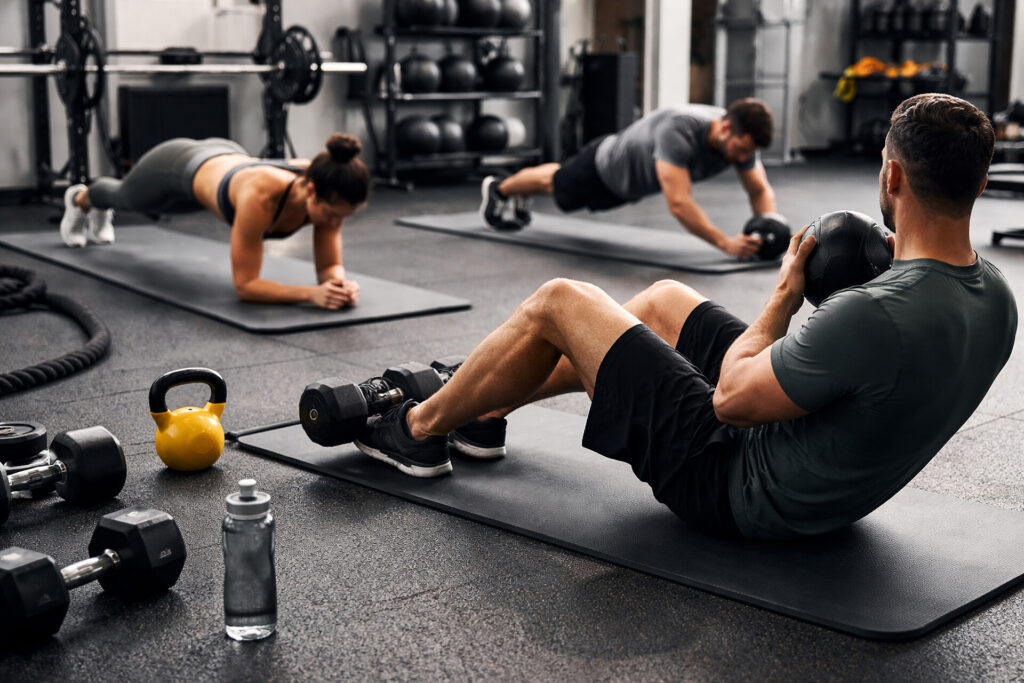
Despite its importance, core training is often misunderstood. Many people focus on exercises that target only the surface muscles, neglecting deeper stabilizing structures.
One common myth is that doing endless crunches is the best way to strengthen the core. While crunches can target certain muscles, they do not address the full complexity of the core system.
Another misconception is that core training should be separate from other exercises. In reality, the core should be engaged in almost every movement, especially compound exercises.
Effective core training emphasizes:
- Stability over excessive movement
- Control over speed
- Integration with full-body exercises
Understanding these principles helps you train smarter and achieve better results.
Building a Strong Core: Practical Strategies
Developing core strength requires a balanced approach that targets both stability and controlled movement. The goal is not just to build muscle but to improve function.
1. Focus on Fundamental Stability Exercises
Exercises such as planks, side planks, and bird dogs are highly effective for building foundational stability. These movements train your core to resist unwanted motion and maintain alignment.
2. Incorporate Anti-Movement Training
Anti-movement exercises challenge your core to resist forces that try to pull your body out of position. Examples include:
- Anti-rotation exercises
- Anti-extension exercises
- Anti-lateral flexion exercises
These movements closely mimic real-life demands and improve functional strength.
3. Use Compound Movements
Exercises like squats, deadlifts, and lunges naturally engage the core. By performing these movements with proper technique, you strengthen the core while also training other muscle groups.
4. Prioritize Control and Technique
Quality matters more than quantity. Performing exercises with proper form ensures that the right muscles are being activated and reduces the risk of injury.
5. Train Consistently
Like any other muscle group, the core requires consistent training. Short, focused sessions performed regularly can lead to significant improvements over time.
Integrating Core Strength into Daily Life
Core training does not have to be limited to structured workouts. You can incorporate core engagement into everyday activities by being mindful of your posture and movement.
For example:
- Engage your core when lifting objects
- Maintain neutral spine alignment while sitting
- Use controlled movements when bending or twisting
These small adjustments reinforce good habits and strengthen the core throughout the day.
The Mind-Body Connection
An often-overlooked aspect of core training is the connection between the mind and the body. Developing awareness of your core muscles allows you to engage them more effectively.
This awareness improves movement quality and enhances overall performance. It also helps you identify and correct imbalances or weaknesses.
Breathing plays a key role in this process. Proper breathing techniques support core activation and improve stability. Learning to coordinate breath with movement can significantly enhance your training.
Long-Term Benefits of a Strong Core
Investing in core strength yields benefits that extend far beyond the gym. Over time, you may notice:
- Improved physical performance
- Reduced risk of injury
- Better posture
- Increased confidence in movement
- Greater overall resilience
These benefits contribute to a more active and capable lifestyle. They also support long-term health and well-being.
Common Mistakes to Avoid

Even with the best intentions, many people fall into habits that limit the effectiveness of their core training. Understanding these common mistakes can help you avoid wasted effort and reduce the risk of injury, allowing you to build real, functional strength.
Focusing Only on Visible Muscles
One of the most widespread mistakes is prioritizing the appearance of the abdominal muscles over their function. Exercises like crunches and sit-ups primarily target surface muscles but often neglect deeper stabilizing layers such as the transverse abdominis.
A well-developed core is not just about aesthetics—it is about stability, control, and coordination. Ignoring the deeper muscles leads to imbalances and limits overall strength development.
Ignoring Proper Form
Poor technique is another major issue. Performing core exercises with incorrect form reduces their effectiveness and can place unnecessary strain on the spine and surrounding structures.
For example, allowing the lower back to arch excessively during planks or using momentum during repetitions undermines the purpose of the exercise. Precision and control should always take priority over speed or volume.
Overtraining the Core
While consistency is important, more is not always better. The core, like any muscle group, requires time to recover and adapt. Excessive training can lead to fatigue, reduced performance, and increased risk of overuse injuries.
A balanced approach that includes rest and variation is essential for long-term progress.
Neglecting Breathing Mechanics
Breathing is a critical but often overlooked component of core function. Improper breathing patterns can reduce core activation and compromise stability.
Holding your breath or breathing shallowly during exercises limits the effectiveness of your training. Learning to coordinate breathing with movement enhances both strength and control.
Treating Core Training as Separate
Another common mistake is isolating core training from the rest of your workouts. The core is involved in nearly every movement, especially compound exercises.
Failing to engage the core during activities like squats, deadlifts, or even daily tasks reduces its functional development. Integrating core activation into all movements leads to better overall results.
Rushing Progress
Many people try to advance too quickly, moving to more complex exercises before mastering the basics. This often results in poor technique and limited gains.
Building a strong foundation with fundamental movements is essential. Progress should be gradual, ensuring that stability and control are maintained at every stage.
Avoiding these mistakes can significantly improve the quality of your training. By focusing on proper technique, balanced development, and functional movement, you create a core that truly supports total body strength.
Conclusion: Strength That Radiates Outward
The core is not just another muscle group—it is the center of all movement. It connects, stabilizes, and empowers every part of your body. Without it, strength is limited and performance is compromised.
By prioritizing core strength, you build a foundation that supports everything else. You move better, feel stronger, and reduce your risk of injury. More importantly, you develop a body that works as a unified, efficient system.
The next time you think about strength, look beyond the surface. True strength does not start in the arms or legs—it begins at the center and radiates outward.
Strengthen your core, and you strengthen your entire body.