
Mobility Training for Beginners: What It Is and How to Start Safely
What Mobility Training Really Means
Mobility training is often confused with stretching, but the two are not the same. Flexibility usually refers to how far a muscle or joint can move when it is lengthened. Mobility, on the other hand, focuses on how well a person can move through a range of motion with control, coordination, and stability.
For beginners, this distinction matters. Someone may be able to stretch into a position passively, such as reaching toward the floor or pulling a knee toward the chest, but that does not always mean they can actively move in and out of that position with strength and control. Mobility training looks at the usable range of motion: the movement a person can access during real-life activities, exercise, or sport.
A mobility session may include slow joint movements, dynamic range-of-motion drills, controlled rotations, and movement patterns that require light muscular effort. The goal is not simply to “loosen up.” It is to help the body explore movement in a more intentional way. This can make mobility training feel different from traditional stretching because it often involves active participation rather than holding a position and waiting for tension to ease.
Mobility also connects closely with body awareness. A beginner may notice that one side feels different from the other, that certain joints move more easily, or that some positions feel unfamiliar. These observations are part of understanding movement, not signs that something is automatically wrong. Mobility training provides a structured way to pay attention to how the body moves without turning every limitation into a problem.
In simple terms, mobility is about controlled movement, not just range. It combines flexibility, strength, coordination, and joint control. That is why it can be useful for people who want to move more comfortably during everyday tasks, prepare their bodies for exercise, or better understand how their joints and muscles work together.
Why Beginners Are Interested in Mobility
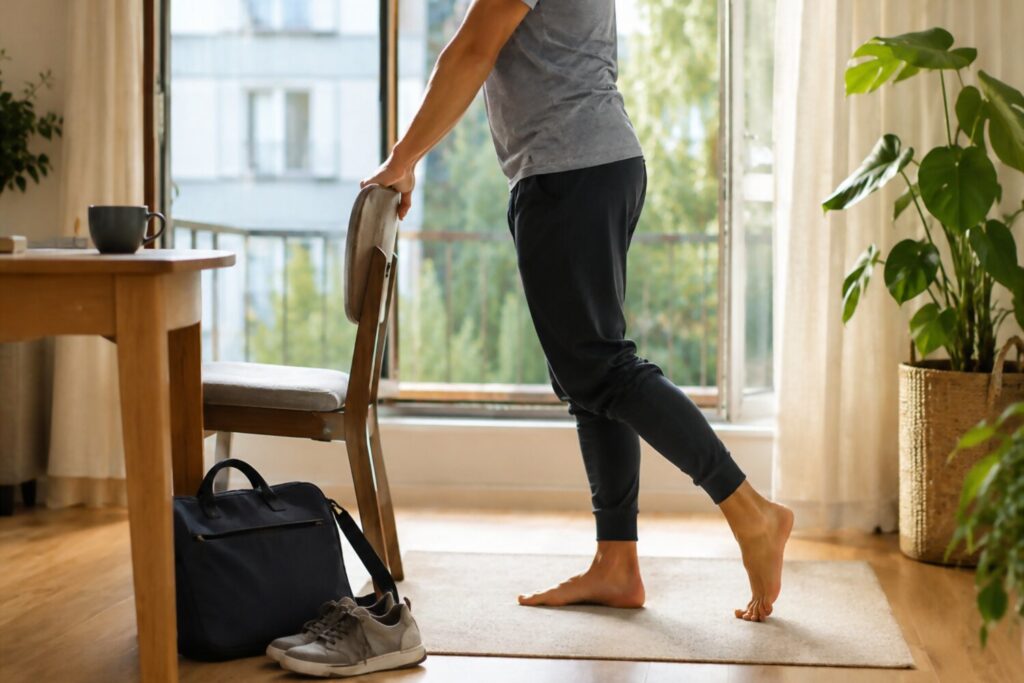
Many beginners become interested in mobility training because they notice a gap between how they want to move and how their bodies actually feel during daily life or exercise. Stiff hips after long periods of sitting, tight shoulders during overhead movements, limited ankle motion during squats, or general discomfort when changing positions can all make movement feel less natural. Mobility training appeals to beginners because it gives these experiences a name and a framework.
One reason mobility has become popular is that it feels practical. It connects directly to ordinary activities: getting up from the floor, reaching into a cabinet, walking up stairs, turning to check behind you, or bending down to pick something up. These are not athletic skills, but they still require joints, muscles, and the nervous system to work together smoothly. When a person starts paying attention to mobility, everyday movement can become easier to understand.
Beginners are also drawn to mobility because it sits between several familiar fitness categories. It may look a little like stretching, feel somewhat like a warm-up, and overlap with strength or balance work. That blend can make it approachable for people who do not identify as athletes but still want to move with more confidence. Mobility training often gives people a way to explore movement without focusing only on speed, intensity, or appearance.
Another common motivation is preparation. Someone starting strength training, yoga, running, recreational sports, or group fitness may realize that certain positions feel restricted or difficult to control. Mobility work helps explain why movement quality matters before, during, and after physical activity. It is not about chasing extreme ranges of motion; it is about understanding how available movement, control, and comfort can influence the way a person participates in activities.
In my view, one of the most valuable parts of mobility training for beginners is that it encourages curiosity rather than comparison. A mobility-focused approach can shift attention away from “How flexible am I?” and toward more useful questions: What movements feel smooth? Where do I feel limited? Can I control this range, or am I only falling into it? That mindset makes mobility training less about performance and more about building a clearer relationship with the body’s movement options.
The Building Blocks of a Mobility Session
A beginner mobility session is usually made up of several types of movement, each serving a different purpose. While routines can vary widely, most mobility work combines joint motion, active control, dynamic movement, and body awareness. Together, these elements help explain why mobility training is more than a quick stretch before exercise.
One common component is controlled joint movement. This may include slow circles, rotations, or bends at a specific joint, such as the shoulders, hips, ankles, wrists, or spine. These movements are often small and deliberate. The purpose is not to force a joint farther, but to explore how it moves through a comfortable range with attention and control.
Another building block is active range of motion. Unlike passive stretching, where an outside force helps move the body into a position, active mobility requires the muscles around a joint to participate. For example, lifting the knee, rotating the shoulder, or flexing the ankle without using the hands for assistance shows how much movement the body can create and manage on its own.
Mobility sessions may also include dynamic patterns that connect several joints at once. Movements such as lunging, reaching, rotating, squatting, or shifting weight from side to side can show how different areas of the body work together. This is important because real-life movement rarely happens at one joint in isolation. Bending to pick something up, stepping over an object, or reaching overhead all involve coordinated movement across multiple areas.
| Component | What It Focuses On | What Readers May Notice |
|---|---|---|
| Joint rotations | How a single joint moves | Smoothness, restriction, or side-to-side differences |
| Active movement | Control within a range | Whether a position can be entered without assistance |
| Dynamic patterns | Coordinated movement | How hips, spine, shoulders, or ankles interact |
| Breath and pacing | Awareness and tension management | Whether movement feels rushed, braced, or relaxed |
| Light strength-based control | Stability in a position | Whether the body can hold or guide a range comfortably |
Breathing and pacing are also part of the picture. Fast, tense, or forced movement can make it harder to notice what is happening. Slower pacing often makes the details clearer: where the body moves easily, where it compensates, and where control feels less familiar. In this sense, mobility training can function as both movement practice and a form of observation.
Some mobility work also includes light strength-based control, such as holding a position briefly or moving in and out of a range with muscular effort. This does not need to resemble heavy strength training to be meaningful. The key idea is that mobility depends not only on how far the body can move, but also on how well it can manage that movement.
Taken together, these building blocks create a practical framework for understanding mobility. A session is not defined by one specific exercise or style. It is defined by the combination of controlled movement, usable range, coordination, and awareness.
Safety Basics: What “Gentle and Controlled” Looks Like
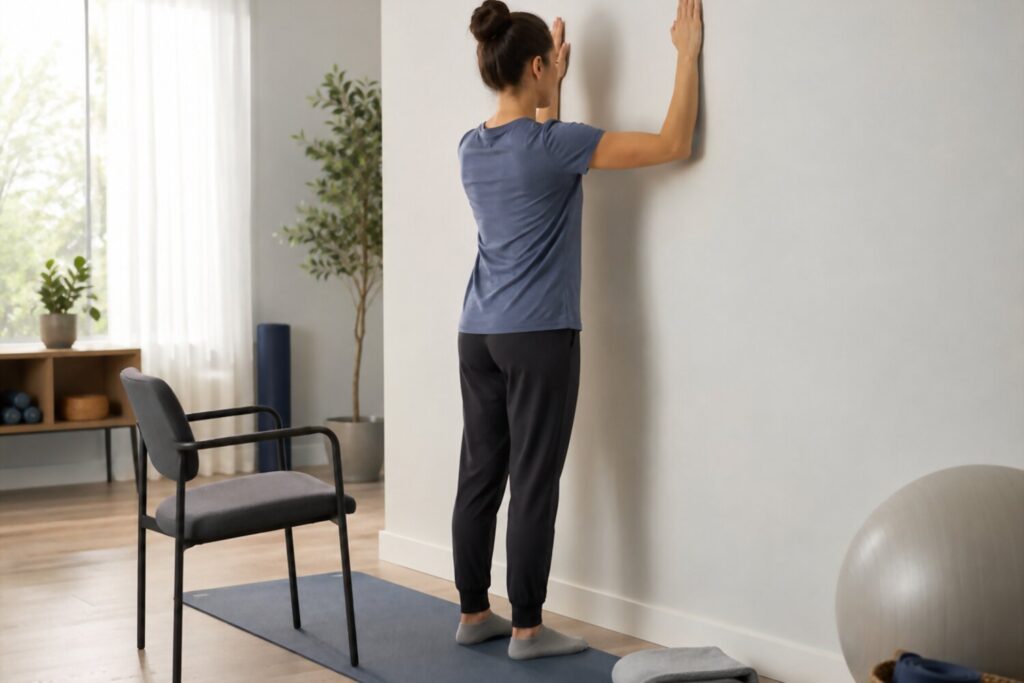
In beginner mobility training, the phrase gentle and controlled is more than a reassuring description. It points to the quality of movement that makes mobility work understandable, sustainable, and easier to observe. A gentle movement is not limp or careless; it simply avoids force, urgency, and unnecessary strain. A controlled movement is not stiff or robotic; it shows that the body can guide a joint or position with awareness.
This distinction is especially important for beginners because mobility training often explores areas that may feel unfamiliar. A joint may move easily in one direction and feel restricted in another. One side of the body may feel smoother, stronger, or more coordinated than the other. These differences are common movement observations, and they are part of why pacing matters.
A gentle and controlled mobility session often has these qualities:
- Movements are performed slowly enough for the person to notice what is happening.
- The range of motion stays within an area that feels manageable rather than forced.
- Breathing remains steady instead of being held during effort.
- The body does not rely on bouncing, yanking, or sudden momentum to reach a position.
- Sensations are treated as information, not as a challenge to push through.
Discomfort and pain are not the same thing. Mild muscular effort, a sense of stiffness, or unfamiliar coordination can appear during mobility work. Sharp pain, pinching, numbness, tingling, dizziness, or symptoms that feel unusual belong in a different category. These signals are not simply “tightness” or lack of discipline; they may indicate that the movement is not appropriate for that person in that moment.
Safety also depends on context. A beginner who has a recent injury, surgery, joint instability, persistent pain, a medical condition, or symptoms that change with movement has a different starting point from someone who is generally healthy and exploring basic movement. In those situations, mobility training is better understood as something that may need individual guidance rather than a one-size-fits-all routine.
The safest framing for beginners is not “go deeper,” but move with clarity. Mobility training is most useful when the focus stays on control, awareness, and reasonable ranges of motion. That approach keeps the session grounded in movement quality instead of intensity, making it easier to understand what the body is doing without turning mobility into a test of toughness.
Beginner Mobility Areas Worth Understanding
For beginners, mobility can feel easier to understand when it is connected to real movements rather than treated as a long list of body parts. The body works as an interconnected system, but several areas tend to receive extra attention in mobility training because they play a visible role in common activities such as walking, reaching, squatting, bending, and turning.
Hips are often discussed because they influence many lower-body movements. Hip mobility can affect how a person changes levels, steps forward, sits down, stands up, or rotates the body. The hips move in several directions, including flexion, extension, rotation, and side-to-side motion, which is why they appear in many mobility routines. Limited or unfamiliar hip movement may show up during squats, lunges, floor positions, or long periods of sitting.
Ankles are another important area, especially for movements that involve balance and the lower body. Ankle motion contributes to walking, climbing stairs, kneeling, squatting, and adjusting to uneven ground. When ankle mobility is limited, the body may rely more heavily on the knees, hips, or trunk to complete a movement. This does not automatically mean something is wrong; it simply shows how one area can influence the way the whole body organizes motion.
Shoulders matter because they connect arm movement with the upper back, chest, and shoulder blades. Reaching overhead, lifting objects, pushing, pulling, carrying groceries, or placing items on a shelf all involve shoulder mobility in different ways. The shoulder is highly mobile by design, so control is especially important. A large range of motion is most useful when the surrounding muscles can guide it smoothly.
The spine is often viewed as one unit, but it includes different regions that move in different ways. The neck, upper back, and lower back all contribute to bending, rotating, extending, and changing posture. Everyday actions such as turning to look behind, reaching across the body, getting out of bed, or carrying a bag involve some degree of spinal movement. Mobility work often highlights the difference between moving from one area and compensating through another.
Wrists may seem less obvious at first, but they become noticeable in activities that place weight through the hands. Floor-based exercises, yoga positions, push-up variations, crawling patterns, and certain strength movements can all reveal how the wrists tolerate extension, pressure, and control. Wrist mobility is also relevant outside exercise, including tasks that involve gripping, typing, lifting, and using tools.
These areas are not separate “problem zones.” They are useful reference points for understanding how movement is shared across the body. For a beginner, the value is not in labeling one joint as tight or weak, but in recognizing how hips, ankles, shoulders, spine, and wrists contribute to ordinary movement. That broader view makes mobility training feel more practical and less mysterious.
How to Think About Progress Without Overdoing It

Progress in mobility training can be easy to misunderstand. Beginners may expect progress to look like dramatic flexibility changes, deeper positions, or the ability to perform advanced movements quickly. In reality, mobility progress is often more subtle. It may show up as smoother movement, better control, less hesitation, or a clearer sense of where the body feels steady and where it feels less coordinated.
A useful way to understand mobility progress is to think beyond how far a joint can move. Range of motion matters, but it is only one part of the picture. The quality of that range also matters: whether the movement feels controlled, whether the body can enter and leave a position without strain, and whether the movement can be repeated with consistency. A person may not appear dramatically more flexible, yet still have made meaningful progress in how they manage movement.
Common signs of mobility progress may include:
- A movement feels smoother or less awkward than it did before.
- One side of the body begins to feel easier to coordinate.
- A familiar position feels more stable or less rushed.
- The person notices fewer compensations, such as excessive shifting or bracing.
- Transitions between positions feel more controlled.
- There is greater awareness of what feels comfortable, limited, or unfamiliar.
Progress can also vary by joint, activity, and individual history. Someone may notice changes in shoulder control before hip mobility, or feel more confident in everyday movements before noticing differences during exercise. Factors such as training background, daily posture habits, stress, sleep, prior injuries, and overall activity level can all influence how mobility work feels from week to week. This variation is normal and helps explain why mobility is better understood as a long-term movement skill rather than a quick transformation.
Overdoing mobility work can happen when progress is measured only by intensity or depth. Pushing farther, holding positions aggressively, or treating every restriction as something to overcome can turn mobility training into a strain-based practice rather than a control-based one. For beginners, the more meaningful question is not always, “Can this go farther?” but “Can this move with control and awareness?”
The most grounded view of progress is steady and realistic. Mobility training is not about forcing the body into ideal shapes. It is about developing a better relationship with movement: noticing patterns, building control, and understanding how different areas of the body contribute to daily activities and exercise. When progress is viewed this way, mobility becomes less about chasing extremes and more about learning how movement works.
Frequently Asked Questions
Is mobility training the same as stretching?
Not exactly. Stretching usually focuses on lengthening muscles or holding a position, while mobility training focuses on controlled movement through a usable range of motion. Mobility may include stretching-like elements, but it also involves coordination, joint control, and active muscular effort.
Why does mobility matter for beginners?
Mobility matters because many everyday movements require more than flexibility alone. Reaching overhead, getting up from the floor, squatting, walking, turning, and carrying objects all involve joints and muscles working together. For beginners, mobility training offers a clearer way to understand how movement happens across the body.
Does mobility training have to be intense?
Mobility training is often low intensity, especially for beginners. The emphasis is usually on movement quality, body awareness, and control rather than speed, depth, or difficulty. A session can feel focused and active without feeling exhausting.
What areas of the body are commonly included in mobility work?
Common areas include the hips, ankles, shoulders, spine, and wrists. These regions often receive attention because they contribute to many daily and exercise-related movements. However, mobility is not limited to isolated body parts; it is also about how different areas coordinate with one another.
What does progress in mobility look like?
Progress may appear as smoother movement, better control, more confidence in familiar ranges, or a clearer sense of how the body moves. It does not always look like dramatic flexibility changes. For many beginners, meaningful progress is subtle and connected to movement quality rather than extreme range.
When does mobility training require extra caution?
Extra caution is relevant when a person has a recent injury, surgery, persistent pain, joint instability, a medical condition, or unusual symptoms during movement. In those cases, mobility training is not simply a general fitness topic; it may require individualized evaluation from a qualified professional.
Conclusion
Mobility training gives beginners a clearer way to understand how the body moves, not just how far it can stretch. It connects flexibility, control, coordination, and body awareness into one practical framework. Whether a person is interested in everyday movement, exercise preparation, or feeling more confident during a Gym session, mobility offers a useful lens for looking at movement quality.
The most important idea is that mobility is not about forcing the body into extreme positions. It is about recognizing usable range, noticing how different joints work together, and understanding the difference between controlled movement and passive flexibility. For beginners, that perspective can make mobility feel less intimidating and more connected to real life.
A safe, beginner-friendly view of mobility centers on patience, clarity, and control. Progress may be subtle, but smoother movement, better awareness, and improved confidence in familiar ranges can all be meaningful signs of development. When mobility is approached as a long-term movement skill, it becomes more than a trend; it becomes a practical part of understanding the body.