How Often Should You Train Gymnastics Strength as a Beginner?
The Beginner’s Sweet Spot: 2–3 Strength Sessions per Week
For most beginners, gymnastics strength training fits best at a frequency of two to three focused sessions per week. This range gives the body repeated exposure to key positions and movement patterns without turning every day into a demanding strength day. Unlike casual bodyweight exercise, gymnastics strength often asks beginners to support, stabilize, and control their body in ways they may not have practiced before.
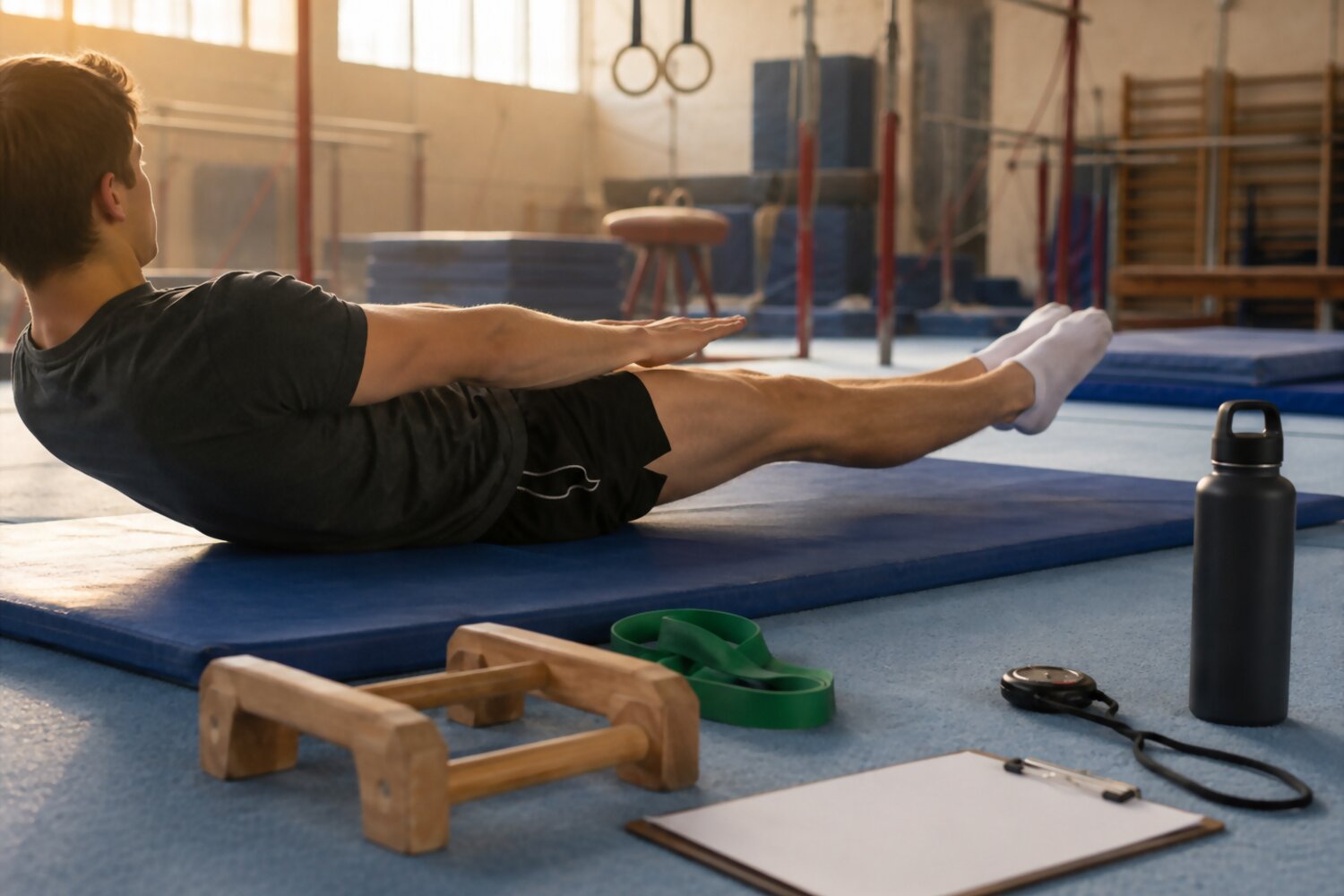
A beginner session might include movements such as hollow-body holds, arch-body work, scapular push-ups, support holds, hanging drills, plank variations, wall handstand preparation, or basic compression exercises. These movements may look simple, but they can create a strong training effect because they require full-body tension, joint control, and precise positioning.
The main reason 2–3 sessions per week works well is that gymnastics strength is as much about quality as it is about effort. Beginners are learning how to create tension, keep the shoulders active, brace the core, point or flex the feet intentionally, and maintain clean alignment. Practicing too infrequently can make it harder to build consistency, while training too often may reduce movement quality if fatigue starts to take over.
Recovery also matters because gymnastics strength places noticeable demand on areas that are easy to overlook, including the wrists, elbows, shoulders, hips, and lower back. Muscles may feel ready before the joints and connective tissues have fully adapted to repeated straight-arm support, hanging, or loaded end-range positions. A few sessions per week allows time for both strength development and technical learning to progress together.
A typical beginner rhythm might look like this:
- Two sessions per week: A simple starting point for new athletes, adults returning to training, or anyone balancing gymnastics strength with other workouts.
- Three sessions per week: A steady rhythm for building skill familiarity, body control, and foundational strength.
- More frequent training: Usually better reserved for shorter, lower-intensity practice days rather than repeated hard strength sessions.
The goal at this stage is not to rush toward advanced skills. It is to build a reliable base: controlled positions, consistent tension, stable shoulders, strong core engagement, and enough recovery to keep practice productive. In that sense, the “sweet spot” is not just about the number of sessions on the calendar. It is about creating a schedule that supports clean movement, repeatable effort, and gradual adaptation.
Why Gymnastics Strength Is Different From Regular Strength Training
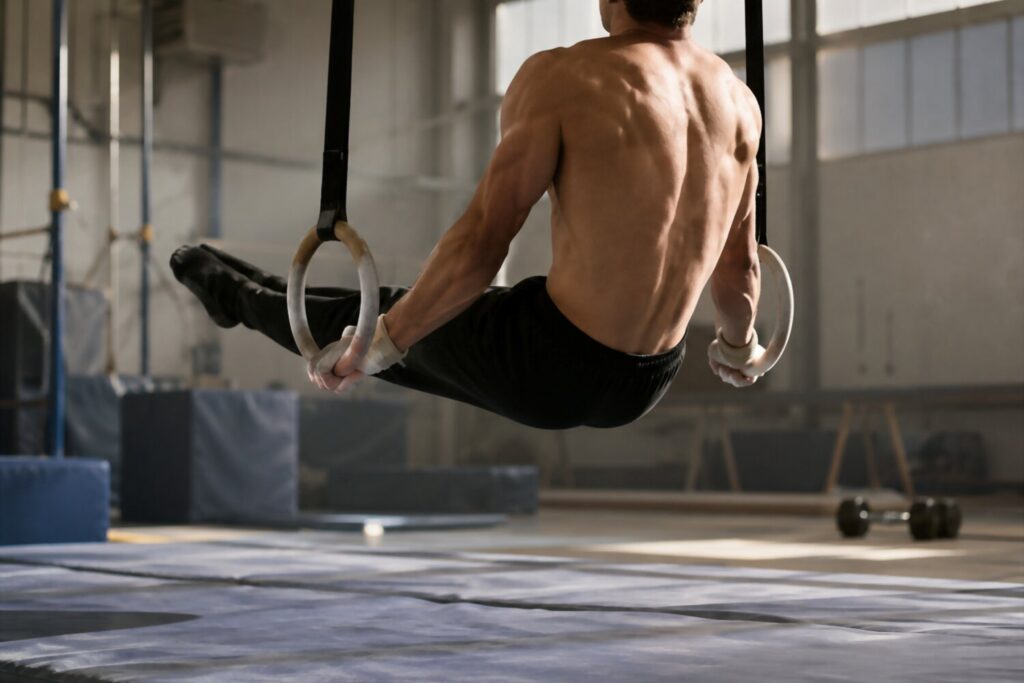
Gymnastics strength training has a different feel from many traditional strength workouts because it is built around body control, leverage, tension, and position. Instead of simply moving an external weight from one point to another, the athlete often has to organize the entire body as one connected unit. A basic hollow-body hold, support hold, or hanging drill can become demanding because the arms, shoulders, core, hips, and legs all have to work together.
One of the biggest differences is the role of straight-arm strength. In many common strength exercises, the elbows bend and extend repeatedly, as in push-ups, rows, or presses. Gymnastics strength often includes positions where the arms stay straight while the shoulders, upper back, chest, and core create stability. This can make exercises such as support holds, plank leans, hanging shapes, and early lever progressions feel unfamiliar, even to someone who already has general fitness experience.
Gymnastics strength also depends heavily on joint positioning and active range of motion. It is not only about being flexible or strong in isolation. The body has to create strength while maintaining shapes such as a tight hollow, an open shoulder angle, a compressed hip position, or a controlled overhead line. These details are part of what makes gymnastics strength both challenging and technical.
Another important difference is that progress is often measured by the quality of a position, not just by more repetitions or heavier resistance. A beginner may improve by holding a cleaner line, keeping the shoulders more stable, reducing unnecessary movement, or controlling the body with less tension in the wrong places. These changes can be subtle, but they matter because gymnastics strength skills rely on precision.
Common areas that make gymnastics strength unique include:
- Scapular control: learning how the shoulder blades move during hanging, pushing, and support positions.
- Core tension: using the midsection to connect the upper and lower body.
- Balance and alignment: keeping the body organized in positions such as handstand preparation or plank variations.
- Compression strength: lifting or folding the body through the hips while maintaining control.
- Wrist and shoulder loading: supporting bodyweight in positions that may be new for beginners.
This is why a gymnastics strength session may not always look intense from the outside, but still feel demanding to the person doing it. Small changes in body angle, arm position, or shoulder engagement can significantly change how difficult an exercise feels. For beginners, understanding this difference helps set realistic expectations: the training is not just about working harder, but about learning how to produce strength with accuracy, stability, and control.
What a Beginner Week Could Look Like
A beginner gymnastics strength week works best when it has a clear rhythm. The goal is not to fill the calendar with as many hard sessions as possible, but to create enough repeated practice for positions to become familiar. A well-structured week usually balances strength work, technical practice, mobility, and recovery, so the body has time to learn and adapt.
For a beginner, a “session” does not need to be long or complex. It might include basic pushing strength, hanging strength, core shapes, shoulder preparation, wrist preparation, and simple mobility work. The most useful weekly plan is often the one that can be repeated consistently while keeping movement quality high.
Here are a few beginner-friendly examples:
| Weekly frequency | What it may look like | Best fit |
|---|---|---|
| 2 days per week | Two full-body gymnastics strength sessions with rest days between them | New beginners, busy schedules, or people doing other training |
| 3 days per week | Three moderate sessions spread across the week, such as Monday, Wednesday, and Friday | Beginners who want steady practice without training daily |
| 4 days per week | Two strength-focused days plus two lighter technique or mobility days | Beginners who recover well and keep the extra days lower in intensity |
A two-day schedule can be surprisingly effective for a new beginner. Each session can cover the major foundations: hollow-body work, basic support strength, scapular control, hanging drills, plank variations, and mobility. Because the sessions are spread apart, there is usually enough time to return to the next workout with better focus and less lingering fatigue.
A three-day schedule creates more frequent exposure to the same skills and positions. This can help beginners become more comfortable with details such as keeping the ribs down in hollow holds, maintaining active shoulders in support positions, or controlling the pelvis during plank and compression work. The sessions do not need to be identical; one day might emphasize pushing and core, another might focus on hanging and pulling shapes, and another might combine lighter skill practice with mobility.
A four-day schedule can work when the extra sessions are not simply more hard strength training. For example, two days may include focused strength work, while the other two emphasize wrist preparation, shoulder mobility, handstand line drills, easy core activation, or low-intensity technique practice. In this format, the lighter days support skill familiarity without adding the same level of fatigue as a full strength session.
A simple beginner week might look like this:
- Monday: Full-body gymnastics strength
- Tuesday: Rest or light mobility
- Wednesday: Full-body gymnastics strength
- Thursday: Rest
- Friday: Technique, core, and mobility
- Saturday: Rest or easy general activity
- Sunday: Rest
This kind of structure gives beginners a practical way to build consistency while respecting the demands of gymnastics strength. The important idea is that the week should have contrast: some days are more focused and physically demanding, while others are lighter or restful. That contrast helps keep the training sustainable and allows beginners to practice with better control, cleaner positions, and more reliable energy.
How Hard Should Each Session Be?
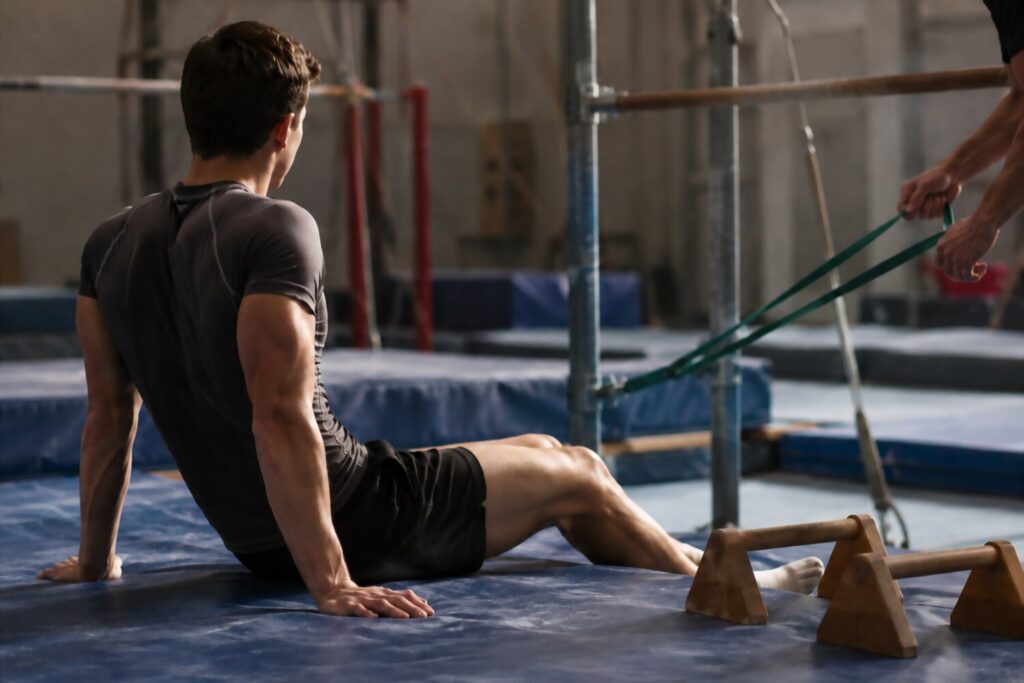
A beginner gymnastics strength session should feel focused and challenging, but still controlled. The purpose is not to exhaust the body at all costs. It is to build strength while keeping positions clean, stable, and repeatable. In gymnastics strength, a difficult-looking exercise performed with poor alignment often provides less value than a simpler variation performed with clear control.
For beginners, intensity is usually best understood through movement quality. A session is likely in the right range when the athlete can maintain steady breathing, keep the shoulders active, control the core position, and repeat the exercise without major form breakdown. Effort matters, but it should not come at the expense of joint position, body line, or coordination.
This is especially important because many beginner gymnastics strength exercises involve unfamiliar demands. A plank lean, support hold, hollow-body hold, or hanging shape may feel manageable at first, then quickly become difficult as the body tries to maintain tension. Fatigue can show up as bent elbows during straight-arm work, shrugged or unstable shoulders, an arched lower back, shaking that changes the position, or a loss of control during the final seconds of a hold.
A practical way to think about session difficulty is to separate productive effort from forced effort:
- Productive effort: The exercise feels challenging, but the body position stays organized.
- Forced effort: The athlete is fighting to finish while alignment, control, or comfort noticeably deteriorates.
- Too easy: The movement feels casual and does not require much focus, tension, or coordination.
- Too hard: The position cannot be held cleanly, or the athlete has to compensate from the start.
Gymnastics strength often rewards leaving a small margin of control. This means a beginner may stop a set while the position still looks solid rather than waiting until everything collapses. For example, a clean 15-second hollow hold can be more useful than a 30-second hold where the lower back lifts, the shoulders drop, and the legs lose tension. The same idea applies to support holds, wall handstand drills, hanging work, and compression exercises.
The right session intensity should also match the goal of the day. A strength-focused session may feel more demanding and include longer rests between efforts. A technique or mobility-focused session may feel lighter, with more attention on positioning and range of motion. Both types of sessions can support progress, but they create different levels of fatigue.
For beginners, “hard enough” usually means the workout requires attention, effort, and patience without turning every set into a maximum attempt. The best early sessions build confidence in the basics: strong shapes, stable shoulders, controlled breathing, and the ability to repeat good positions from one set to the next.
Recovery Signs: When to Train, Rest, or Scale Back
Recovery plays a major role in beginner gymnastics strength because the training asks the body to manage tension, balance, and joint control at the same time. A beginner may feel muscle fatigue after a session, but the more important picture is how the body performs over the next day or two. Good recovery usually shows up as steadier movement, better focus, and the ability to repeat clean positions without feeling unusually stiff or worn down.
In gymnastics strength, the wrists, elbows, shoulders, hips, and lower back often give useful feedback. These areas are involved in support holds, hanging drills, plank variations, hollow-body work, wall handstand preparation, and compression exercises. Mild tiredness after training can be normal, but lingering discomfort, reduced control, or a noticeable drop in coordination can indicate that the current workload is outpacing recovery.
A well-recovered beginner often notices signs such as:
- Positions feel more familiar: Hollow holds, planks, and support shapes become easier to organize.
- Movement quality stays consistent: Form looks similar from the first set to the last.
- Energy feels steady: The session requires effort, but does not feel unusually draining from the start.
- Joints feel prepared: Wrists, elbows, and shoulders do not feel irritated before basic work begins.
- Focus is easier to maintain: The athlete can pay attention to alignment, breathing, and control.
On the other hand, the body may show signs that the training frequency or intensity is too high for the moment. These signs are not always dramatic. Sometimes they appear as small changes: a support hold feels shaky earlier than usual, the shoulders lose position quickly, or a hollow-body hold becomes harder to control even though it was manageable the previous week.
Common signs that recovery may be lagging include:
- Lingering joint discomfort that carries into the next session
- Repeated form breakdown during exercises that were previously controlled
- Heavy fatigue at the beginning of a workout rather than near the end
- Loss of body tension in basic shapes, especially through the core and shoulders
- Unusual soreness that interferes with normal movement quality
- Declining motivation or focus when training has recently become more frequent or intense
One useful way to understand recovery is to separate normal training fatigue from accumulated fatigue. Normal fatigue tends to fade and still allows movement quality to return. Accumulated fatigue builds across sessions and makes basic positions feel less reliable. For beginners, this distinction matters because gymnastics strength depends heavily on precision. When recovery is poor, the body often compensates by changing angles, shifting load into uncomfortable areas, or rushing through positions.
The most productive beginner training rhythm usually creates a sense of repeatability. The athlete can return to the same foundational shapes, recognize what good control feels like, and build confidence over time. Recovery is not separate from progress; it is part of the process that allows strength, coordination, and technical awareness to develop together.
How to Increase Frequency Safely Over Time
Increasing gymnastics strength frequency is less about adding more workouts as quickly as possible and more about understanding whether the body is adapting well to the current rhythm. For beginners, progress usually comes from repeated exposure to high-quality positions: cleaner hollow holds, steadier support work, stronger shoulder control, better hanging shapes, and more consistent core tension. Once those basics feel more reliable, training frequency may gradually become easier to expand.
A common mistake is adding too many changes at once. Frequency is only one training variable. Exercise difficulty, total sets, hold duration, rest periods, and session intensity all affect how demanding the week feels. A beginner who moves from two to four days per week while also choosing harder exercises and longer holds has not made one change—they have changed the entire workload.
A more realistic progression might look like this:
- Start with 2 days per week: The focus is on learning positions, building consistency, and noticing how the body responds.
- Move toward 3 days per week: The added day can provide more practice without requiring every session to be intense.
- Add lighter practice before adding harder training: Extra days often work best when they emphasize technique, mobility, wrist preparation, shoulder control, or easy core work.
- Keep strength days distinct from skill-practice days: Not every gymnastics session has to create the same level of fatigue.
The key idea is to increase only one major variable at a time. For example, a beginner might keep the same exercises and sets while adding one shorter session during the week. Another option is keeping the same weekly frequency but slightly increasing hold times or improving exercise quality. These approaches create a clearer picture of what the body is actually adapting to.
It also helps to think of frequency in terms of training purpose. A full strength session might include harder support holds, pulling drills, core work, and longer rest periods. A lighter practice session might involve handstand line work against a wall, shoulder mobility, basic compression shapes, and controlled movement practice. Both can belong in a beginner week, but they do not place the same demand on recovery.
As frequency increases, the signs of good adaptation are usually practical and easy to observe: positions feel more stable, warm-ups feel smoother, energy stays consistent across the week, and form does not fall apart from session to session. If basic shapes begin to feel less controlled, or if the wrists, elbows, or shoulders feel irritated before training even starts, the current schedule may be too dense for that stage.
For beginners, the most productive long-term approach is patient and structured. Advanced gymnastics strength skills are built from many weeks and months of small improvements, not sudden jumps in workload. A gradual increase in frequency can support progress when it preserves the qualities that matter most: clean alignment, stable joints, repeatable effort, and enough recovery to keep each session useful.
Key Takeaways
Beginner gymnastics strength training works best when it is built around consistency, control, and recovery, rather than simply adding more sessions. The early stage is about learning how the body should feel in basic positions and developing enough strength to repeat those positions with quality.
- Most beginners fit well within 2–3 focused sessions per week. This frequency provides regular practice without making recovery an afterthought.
- Gymnastics strength is highly technical. Progress depends on body tension, joint control, alignment, and position quality—not just effort.
- More training is not always better. A cleaner, shorter session can be more productive than a longer session filled with compensation and fatigue.
- Recovery signs matter. Stable energy, consistent form, and comfortable joints are useful indicators that the current rhythm is working.
- Frequency should increase gradually. Adding more days, harder exercises, longer holds, and extra sets all at once can make the workload harder to evaluate.
- Beginner progress often looks subtle. Better shoulder stability, cleaner hollow-body shapes, smoother handstand preparation, and improved control are meaningful improvements.
The most reliable beginner approach is patient and structured. Gymnastics strength develops through repeated exposure to strong basic shapes, thoughtful pacing, and enough recovery to keep movement precise. Early success is not defined by rushing into advanced skills, but by building the foundation that makes those skills possible later.