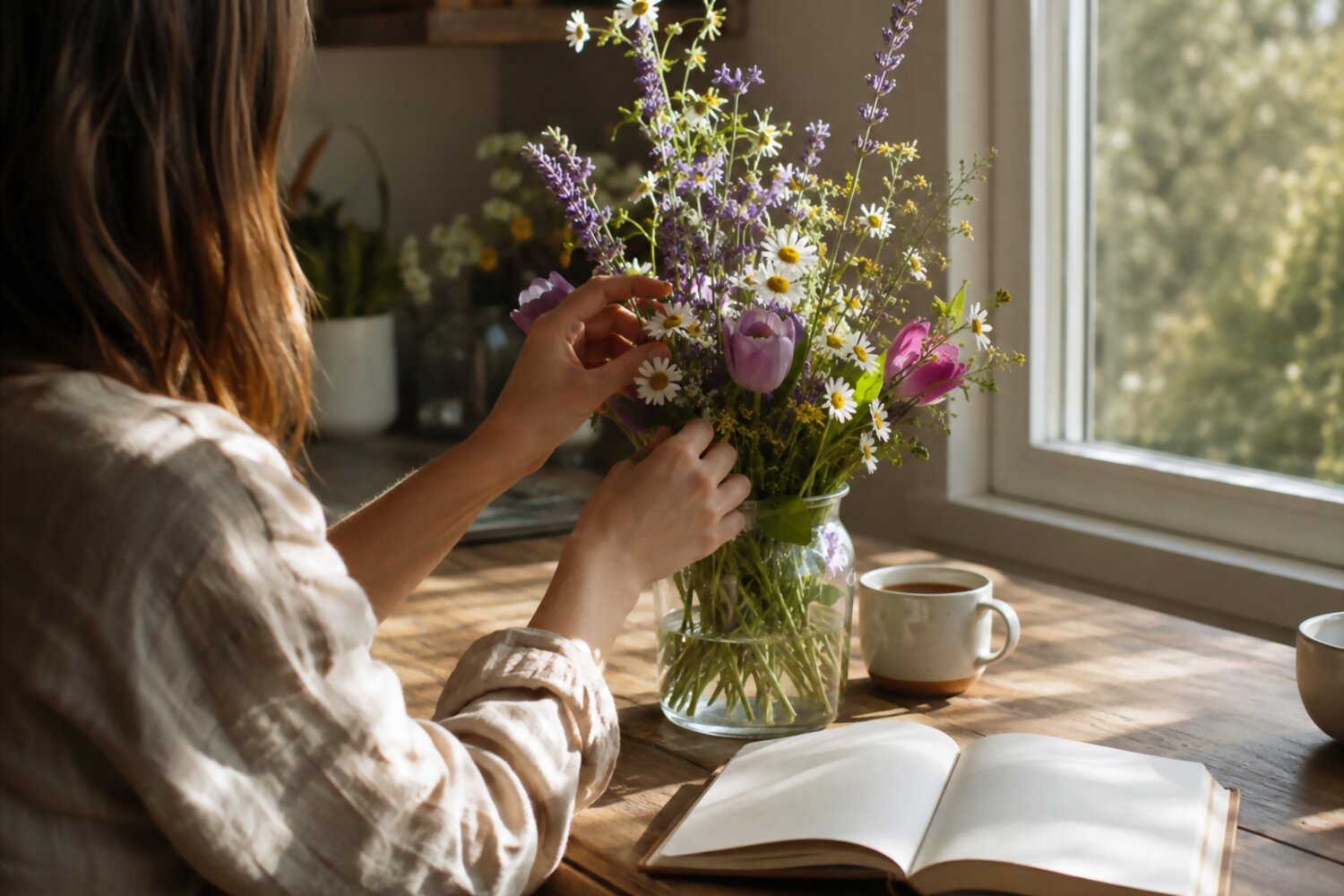
Do Flowers Really Make You Happier? The Science Behind Floral Therapy
The Everyday Happiness Question: Why Flowers Feel Emotionally Powerful
A vase of fresh flowers can change the feeling of a room almost instantly. The space may look brighter, more cared for, and more alive. For many people, flowers are tied to small but memorable emotional moments: a thoughtful gift, a spring walk, a favorite scent, a color that recalls childhood, or the simple pleasure of seeing something beautiful in an ordinary place.
That emotional response is not difficult to understand. Flowers combine several sensory cues at once: color, shape, fragrance, texture, and natural variation. Unlike many decorative objects, they also feel temporary and seasonal. A blooming stem quietly reminds us that beauty can be brief, which may be part of why people notice flowers so quickly and remember them so vividly.
Still, it is important to separate a pleasant emotional lift from an overstatement. Flowers do not “create happiness” in a guaranteed or clinical sense. A bouquet will not erase stress, solve loneliness, or replace professional mental health support. What flowers may do, more realistically, is influence the immediate environment in ways that many people experience as comforting, cheerful, or meaningful.
In my view, that is where the real interest lies. The question is not whether flowers are magical mood changers. The better question is: Why do natural beauty, sensory detail, and personal meaning seem to affect how we feel? Floral therapy begins with this everyday observation. Flowers are familiar, accessible, and emotionally expressive, which makes them a useful lens for exploring the connection between environment and mood.
This article looks at that connection with a balanced perspective. Rather than treating flowers as a cure-all, it examines what science, psychology, and lived experience can tell us about why flowers often feel uplifting—and where the evidence should be interpreted with care.
What Research Can Actually Say About Flowers and Mood
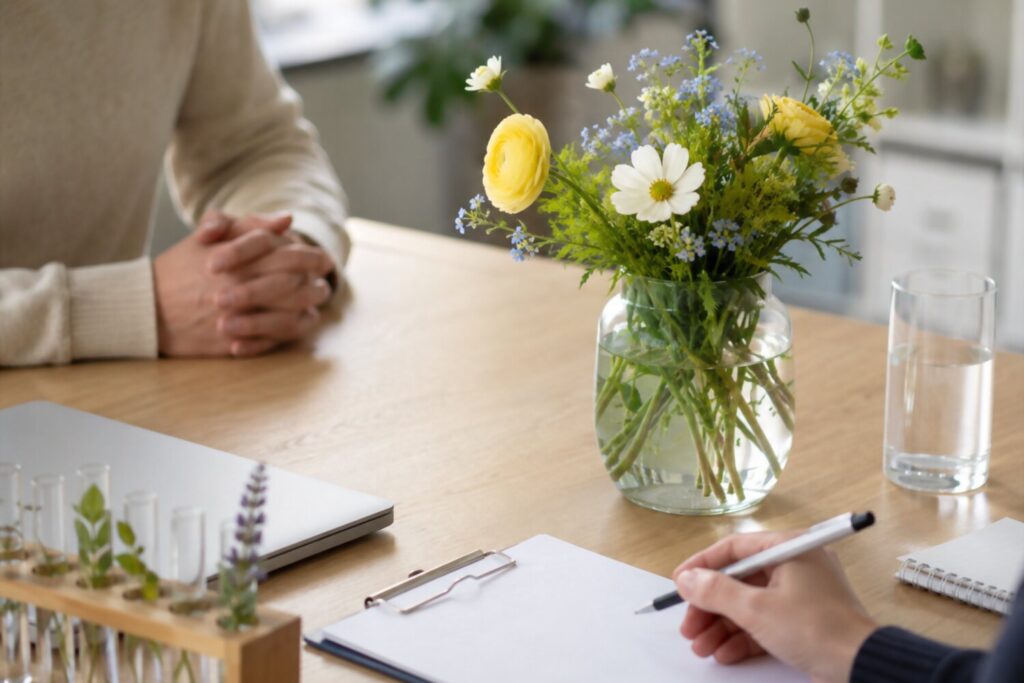
The science behind flowers and happiness is interesting, but it works best when it is described with care. Flowers are often discussed as if they have a direct, predictable effect on mood. In reality, the evidence is more nuanced. Research on flowers, plants, and natural elements suggests that they can be associated with positive emotional responses, more pleasant indoor environments, and a stronger sense of connection to nature. However, that is not the same as proving that flowers reliably make every person happier in every situation.
A helpful way to understand the research is to separate immediate emotional response from long-term mental well-being. A person may feel a quick lift when seeing a colorful bouquet, noticing a fresh scent, or receiving flowers from someone thoughtful. That moment can be real and meaningful. But a short-term improvement in mood is different from a lasting change in mental health. Good science treats those as separate questions.
Much of the evidence around flowers overlaps with broader research on nature exposure, biophilic design, indoor plants, and sensory environments. These areas explore how natural features may influence attention, comfort, stress perception, and emotional tone. Flowers fit naturally into that conversation because they bring color, organic shape, fragrance, and seasonal change into everyday spaces.
| What research may suggest | What it does not prove |
|---|---|
| Flowers can be linked with pleasant emotions and positive first impressions. | Flowers cause happiness in a guaranteed way. |
| Natural elements may make indoor spaces feel warmer or more inviting. | Flowers work the same for every person or setting. |
| Color, scent, and personal meaning may influence emotional response. | A specific flower, color, or arrangement has a universal psychological effect. |
| Flowers may support a more enjoyable atmosphere. | Flowers are a replacement for professional mental health care. |
This distinction matters because happiness is not a single, simple measurement. Researchers may study mood, satisfaction, perceived stress, social response, or environmental preference, and each of those tells a slightly different story. A study that finds people respond positively to flowers in one setting does not automatically prove that flowers create deep or lasting happiness. It may show that flowers make a space feel more appealing, that they encourage positive social interpretation, or that they act as a pleasant sensory cue.
There is also the question of context. A flower arrangement in a bright kitchen, a workplace lobby, or a quiet reading corner may be experienced differently depending on the person, the setting, the season, and the meaning attached to the flowers. Someone who associates a certain scent with a happy memory may respond differently from someone who finds that scent overwhelming. Cultural background, personal taste, allergies, and even the freshness of the flowers can shape the experience.
In my view, the most trustworthy interpretation is this: flowers may contribute to happiness, but they are usually one part of a larger emotional environment. They can make a room feel cared for, add sensory richness, and create a moment of attention. Those effects are modest, personal, and context-dependent, but they are still worth examining.
The phrase floral therapy is most useful when it is framed as a supportive wellness concept rather than a medical claim. Flowers can be part of how people experience beauty, calm, memory, and connection. The science does not need to exaggerate that role to make it meaningful. A careful reading of the evidence points to something both simple and valuable: flowers may not transform emotional health on their own, but they can influence how a space feels and how a moment is experienced.
The Psychology of Color, Scent, Texture, and Memory
Flowers are emotionally interesting because they rarely affect just one sense at a time. A single arrangement can offer color, fragrance, shape, texture, and personal association all at once. That layered sensory experience may help explain why flowers often feel more expressive than ordinary décor. They do not simply sit in a room; they draw attention through contrast, detail, and natural variation.
Color: The First Thing Many People Notice
Color is often the most immediate part of a flower’s emotional impact. Bright yellows, oranges, pinks, and reds may feel energetic or cheerful to some people, while whites, greens, blues, and purples may feel softer or more calming. These reactions are not universal. A color can feel joyful in one setting, overwhelming in another, and completely neutral to someone else.
What makes floral color especially compelling is that it appears in organic forms. A red wall, a red mug, and a red rose do not carry the same emotional weight. With flowers, color is softened by petals, stems, shadows, and irregular shapes. That natural complexity can make the visual experience feel richer and less mechanical.
Scent: A Direct Path to Association
Fragrance can make flowers feel deeply personal. The sense of smell is closely tied to memory and emotional association, which is why a certain floral scent may bring back a place, a season, or a person with surprising clarity. This does not mean every scent has the same effect on every person. Some people love strong floral fragrances; others find them too intense.
The key point is that scent often works through association, not automatic emotional control. A lavender-like aroma may feel peaceful to someone because of past experiences, cultural meaning, or repeated exposure in relaxing environments. Another person may not respond the same way at all. This is one reason floral therapy should be discussed carefully: the emotional meaning of scent is personal, not guaranteed.
Texture and Shape: Why Flowers Feel Alive
Flowers also communicate through form. Rounded petals, delicate edges, layered blooms, long stems, and branching greenery all create visual movement. Even when flowers are still, they suggest growth and change. Their shapes are rarely perfectly symmetrical, and that slight irregularity can make them feel more natural and engaging.
Texture adds another layer. Soft petals, glossy leaves, rough stems, and airy filler flowers create contrast. These details may not always be consciously noticed, but they contribute to the overall impression of freshness, complexity, and life. In a room filled with flat screens, hard surfaces, and straight lines, flowers introduce something visually and emotionally different.
Memory: The Meaning People Bring to Flowers
Perhaps the strongest emotional force behind flowers is memory. A flower may be tied to a childhood garden, a favorite season, a meaningful relationship, or a place where someone once felt relaxed and safe. In that sense, the flower itself is only part of the experience. The person viewing it brings their own history to the moment.
This is why two people can respond very differently to the same bouquet. One may see comfort, another may see luxury, another may simply see color and shape. The emotional response depends on a mix of biology, culture, personal memory, and present context.
In my view, this makes flowers more interesting, not less. Their effect is not mechanical; it is interpretive. Flowers can become emotional because they invite the mind to connect sensory detail with meaning. Color catches attention, scent activates association, texture adds presence, and memory gives the experience depth. Together, these elements help explain why flowers can feel so personal—even when their effects are modest, temporary, and different for everyone.
Floral Therapy vs. Flower Appreciation: Understanding the Difference
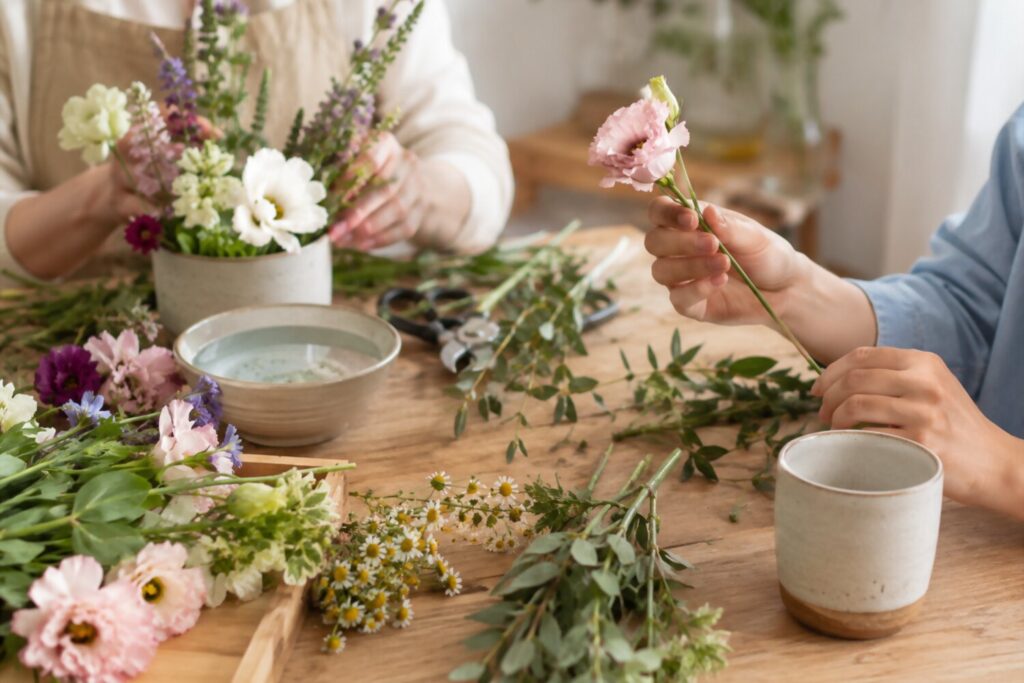
The phrase floral therapy can sound more formal than it sometimes is. In everyday use, people may use it to describe the emotional comfort they get from flowers: looking at them, arranging them, noticing their scent, or enjoying the way they change a room. That kind of flower appreciation can be meaningful, but it is not the same as a structured therapeutic practice.
Flower appreciation is broad and informal. It may include enjoying a bouquet on a table, noticing blooms during a walk, or feeling pleased by the colors and textures in an arrangement. The value here is mostly experiential. Flowers can make a space feel more welcoming, create a moment of attention, or add beauty to an ordinary day. These experiences may support a better mood for some people, but they do not need to be labeled as treatment to matter.
Floral therapy, when used carefully, refers to a more intentional wellness context. It may involve guided flower arranging, sensory engagement, nature-based activities, or creative expression using flowers as one part of a broader supportive setting. The flowers are not doing all the emotional work on their own. Instead, they may serve as a focus for attention, creativity, conversation, memory, or environmental comfort.
A simple way to separate the two is this:
- Flower appreciation is about enjoyment, beauty, and personal response.
- Floral therapy is about using flowers intentionally within a supportive emotional or wellness framework.
- Clinical care is different from both and involves trained professionals, established methods, and appropriate boundaries.
This distinction is important because the word “therapy” can create expectations that flowers alone cannot responsibly meet. A floral arrangement may feel calming, uplifting, or personally meaningful, but it should not be presented as a cure for emotional distress or a replacement for professional mental health support. A trustworthy discussion of floral therapy makes room for emotional benefit without turning that benefit into an unsupported medical claim.
For example, a person casually placing tulips on a kitchen counter because they enjoy the color is practicing flower appreciation. A guided creative session where participants arrange flowers while reflecting on texture, color, and personal associations may be closer to floral therapy, depending on the setting and purpose. In both cases, flowers can contribute to the emotional atmosphere, but the structure, intention, and claims are different.
In my view, this difference makes the topic more credible, not less. Flowers do not need to be framed as a powerful intervention to be valuable. Their role may be quieter: helping people notice beauty, engage the senses, and experience a space or moment differently. That modest framing is also the most honest one. It respects what flowers can offer while avoiding promises that the evidence does not support.
Why Context Matters: Home, Work, Gifts, and Social Connection
Flowers do not exist in a vacuum. Their emotional effect often depends on where they appear, who gives them, what they symbolize, and what the surrounding moment already means. A bouquet on a kitchen table, a floral arrangement in a workplace lobby, and flowers received from a close friend can all involve the same basic object, yet the emotional experience may be very different.
At home, flowers can change the atmosphere of a room by adding color, softness, and a visible sign of care. Their presence may make a space feel more lived-in, warmer, or more connected to the outside world. This is not because flowers have a guaranteed psychological effect, but because environments influence perception. A room with natural details may feel less sterile than one made only of hard surfaces, screens, and artificial materials.
In work settings, flowers may play a different role. They can contribute to a sense of welcome in shared spaces, soften formal environments, or make a reception area feel more approachable. The effect is usually subtle. Flowers are unlikely to change the pressures of a workplace, but they can influence the first impression of a space and the emotional tone people associate with it.
The social meaning of flowers is just as important as their appearance. When flowers are given as a gift, the emotional response often comes from more than the flowers themselves. It may come from the feeling of being noticed, remembered, or appreciated. In that sense, flowers can act as a social signal: they carry attention, intention, and personal meaning.
Several layers of context can shape how flowers are experienced:
- Setting: A quiet room, a busy office, or a shared table can change how noticeable flowers feel.
- Relationship: Flowers from a friend, partner, colleague, or family member may carry different meanings.
- Timing: Seasonal flowers may feel connected to a particular time of year or personal memory.
- Personal taste: Color, scent, and flower type can affect whether the experience feels pleasant, neutral, or overwhelming.
- Cultural meaning: Flowers may carry different associations depending on background, tradition, and social context.
This is why broad claims about flowers and happiness can be misleading. The same arrangement may feel joyful to one person, ordinary to another, and distracting to someone sensitive to fragrance. Context does not weaken the case for flowers; it makes the explanation more accurate.
In my view, the most useful way to understand flowers is as part of an emotional environment. They may support warmth, beauty, and connection, but their meaning is shaped by the room, the relationship, and the moment. Flowers matter not only because they are beautiful, but because people encounter them inside real situations filled with memory, expectation, and social meaning.
The Balanced Takeaway: Flowers May Help, But They Are Not Magic
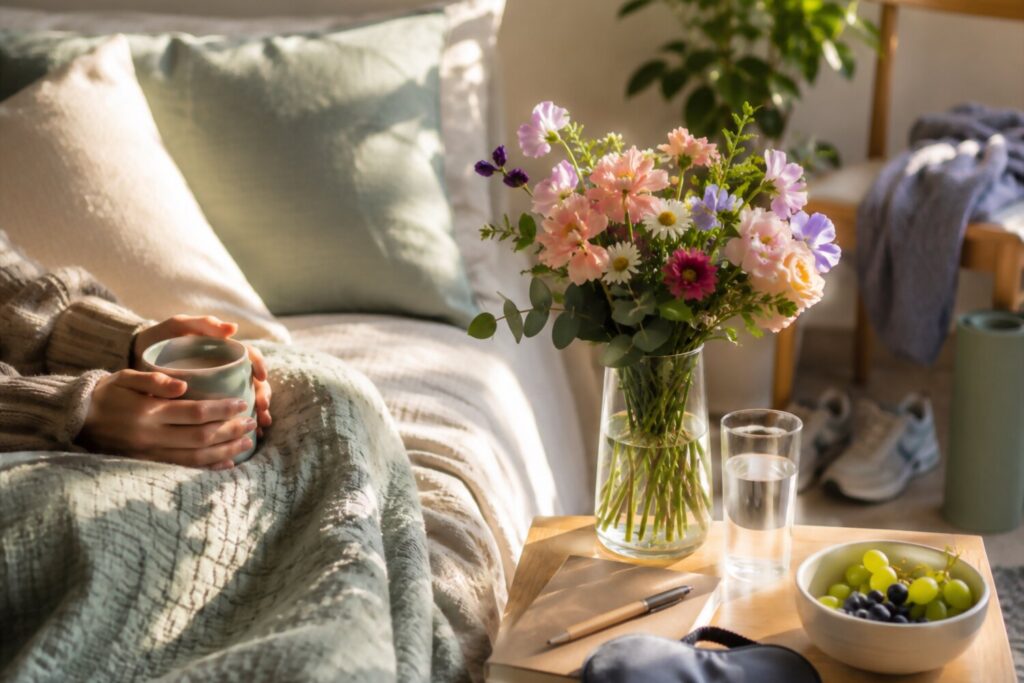
The most honest answer to the question “Do flowers really make you happier?” is: they can contribute to positive feelings, but they do not work like a switch. Flowers may brighten a room, invite attention, carry personal meaning, or make a moment feel more thoughtful. Those effects can matter, especially because mood is often shaped by many small environmental and social cues. Still, flowers should not be described as a guaranteed path to happiness.
A balanced view recognizes both sides. Flowers can be emotionally meaningful without being medically powerful. They can support a pleasant atmosphere without solving deeper sources of stress or sadness. They can be part of a comforting environment without becoming a substitute for professional care. This distinction keeps the topic grounded and protects readers from exaggerated wellness claims.
What makes flowers valuable is often their combination of modest effects:
- Sensory appeal: color, shape, fragrance, and texture can make a space feel more engaging.
- Environmental warmth: natural details may make a room feel less sterile or impersonal.
- Personal association: certain flowers may connect with memory, season, place, or relationship.
- Social meaning: flowers given by another person can signal attention, care, or appreciation.
- Momentary focus: flowers may draw attention to beauty in an otherwise ordinary setting.
None of these effects needs to be overstated to be meaningful. In fact, the quieter explanation is often the stronger one. Flowers may influence happiness not by changing a person’s emotional life in a dramatic way, but by shaping the atmosphere around a moment. They can soften a room, mark a gesture, or create a brief sense of freshness and presence.
In my view, the real science-backed value of flowers lies in their role as part of a larger human experience. They bring together nature, perception, memory, and social connection. Their effect depends on the person, the setting, and the meaning attached to them. That does not make them unreliable; it makes them human.
So, do flowers really make people happier? Sometimes, in small and meaningful ways. A more precise answer is that flowers can support positive emotion, enrich an environment, and deepen the feeling of a moment. They are not magic, and they are not medicine. But they can be a beautiful reminder that mood is shaped not only by major life events, but also by the details we notice, the spaces we inhabit, and the meanings we bring to ordinary things.
Key Takeaways
Flowers can be emotionally powerful, but the strongest explanation is usually practical rather than magical. They affect how a space looks, feels, and is interpreted. Their meaning also depends on memory, culture, personal taste, social context, and the setting in which they appear.
The most important takeaway is balance: flowers may support positive feelings, but they should not be described as a guaranteed source of happiness or as a substitute for professional care. A careful article can still recognize their emotional value without turning that value into an unsupported health claim.
Key points to remember:
- Flowers influence mood indirectly. Their color, scent, shape, and texture can make an environment feel warmer, softer, or more engaging.
- Personal meaning matters. A flower connected to a memory, season, place, or relationship may feel more emotionally significant than the same flower in a neutral setting.
- Context shapes the response. Flowers at home, in a workplace, or as a gift can create different emotional impressions.
- The evidence should be framed carefully. Research on nature, plants, and sensory environments can help explain why flowers may feel uplifting, but it does not prove that flowers reliably make every person happier.
- Floral therapy is best understood as supportive, not clinical. Flowers can be part of a broader wellness or creative setting, but they should not be presented as a medical treatment.
In my view, the value of flowers lies in their quiet ability to make ordinary moments feel more noticeable. They bring nature, beauty, memory, and social meaning into spaces where people live, work, and connect. That is a modest claim, but it is also a meaningful one.