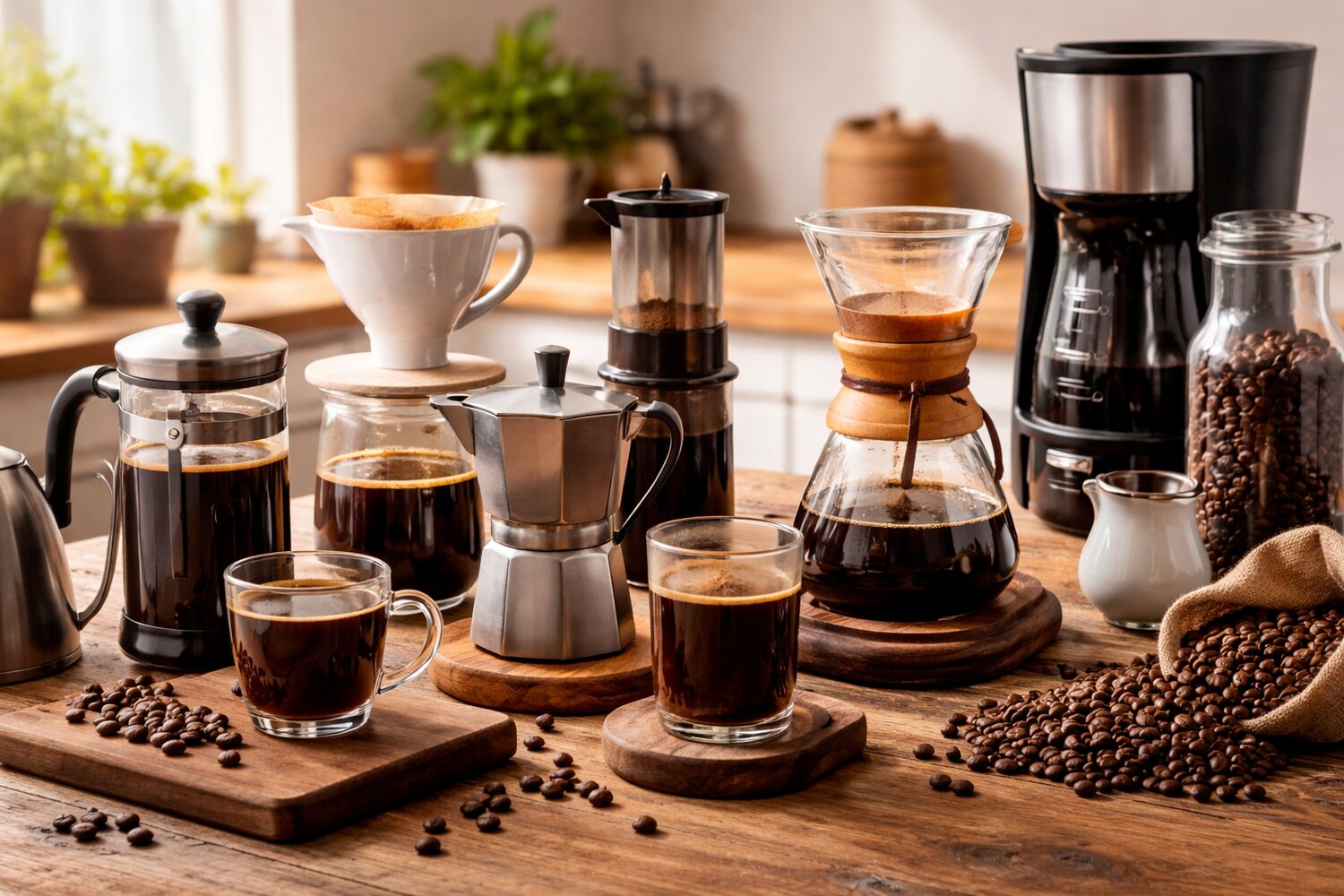
Coffee Brewing Methods Explained: A Complete Beginner’S Guide
What if the best cup of coffee you’ll ever drink is the one you make yourself tomorrow morning?
Coffee is more than a caffeine delivery system. It’s a ritual, a comfort, a science experiment, and for many people, the highlight of the day. Yet for beginners, coffee brewing can feel confusing, even intimidating. French press, pour-over, espresso, cold brew—why are there so many methods, and do they really taste different?
Yes, they do. And once you understand why, everything clicks.
This complete beginner’s guide explains the most popular coffee brewing methods in clear, simple language—no snobbery, no jargon overload. By the end, you’ll know how each method works, what it tastes like, and which one fits your lifestyle best.
Let’s start at the foundation.
Why Brewing Method Matters More Than You Think
Coffee is just two main ingredients: coffee and water. But how those two meet changes everything.
Brewing method affects:
- Flavor and aroma
- Strength and body
- Clarity vs. richness
- Acidity and bitterness
- How forgiving the process is for beginners
Think of brewing like cooking eggs. Scrambled, boiled, fried, or poached—same ingredient, totally different experience.
The good news? There’s no “best” method. There’s only best for you.
Coffee Brewing Basics (Before We Dive In)
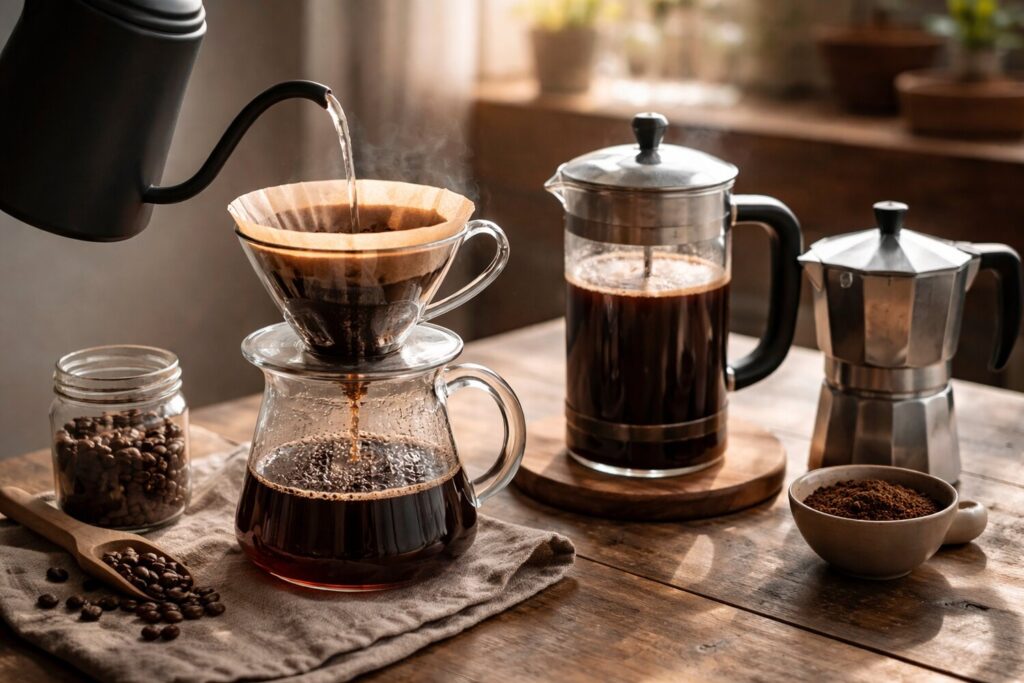
Before exploring individual methods, let’s cover a few universal principles. These apply no matter how you brew.
1. Grind Size Matters
Different methods need different grind sizes:
- Coarse – French press, cold brew
- Medium – Drip coffee, pour-over
- Fine – Espresso
- Extra fine – Turkish coffee
Wrong grind size is the #1 reason coffee tastes off.
2. Water Quality Counts
Coffee is mostly water. If your water tastes bad on its own, coffee won’t fix it. Clean, fresh water makes a noticeable difference.
3. Coffee-to-Water Ratio Shapes Flavor
More coffee = stronger, heavier cup. Less coffee = lighter, thinner cup. Most methods start around:
- 1–2 tablespoons of coffee per 6 oz of water
Adjust to taste.
4. Freshness Changes Everything
Freshly ground coffee loses flavor fast. Grinding right before brewing is one of the easiest upgrades you can make.
Immersion vs. Percolation: Two Brewing Styles Explained
All coffee brewing methods fall into one of two categories.
Immersion Brewing
Coffee grounds sit fully immersed in water for a set time.
- Examples: French press, cold brew, AeroPress (sometimes)
- Results: Richer body, deeper flavors
Percolation Brewing
Water flows through coffee grounds and extracts flavor as it passes.
- Examples: Pour-over, drip machines, espresso
- Results: Cleaner, brighter flavors
Neither is better—just different.
French Press: Bold, Simple, and Forgiving
How It Works
Coarse coffee grounds steep in hot water, then a metal filter presses them down.
What It Tastes Like
- Full-bodied
- Rich and heavy
- Slightly textured (some sediment)
Why Beginners Love It
- No paper filters
- Hard to mess up
- Minimal equipment
Basic Steps
- Add coarse coffee to the press
- Pour hot water over grounds
- Stir gently
- Steep for 4 minutes
- Press slowly and pour
Pros
- Strong, robust flavor
- Affordable
- Easy to scale for multiple cups
Cons
- Sediment at the bottom
- Can taste muddy if over-steeped
Best for: People who like bold coffee and a relaxed brewing process.
Pour-Over Coffee: Clean, Bright, and Hands-On
How It Works
Hot water is poured slowly over coffee grounds in a filter, dripping into a cup or carafe.
What It Tastes Like
- Clean and clear
- Bright acidity
- Highlights subtle flavors
Why It’s Popular
Pour-over gives you control. It’s part science, part ritual.
Basic Steps
- Rinse the paper filter
- Add medium-ground coffee
- Pour a small amount of water to “bloom”
- Slowly pour remaining water in circles
- Let it drip through
Pros
- Excellent flavor clarity
- Minimal bitterness
- Lightweight and portable
Cons
- Requires attention
- Consistency takes practice
Best for: Curious beginners who enjoy slowing down and experimenting.
Drip Coffee Maker: Convenient and Familiar
How It Works
A machine heats water and drips it evenly over coffee grounds in a paper or metal filter.
What It Tastes Like
- Balanced
- Clean
- Mild to medium body
Why It’s Still Popular
It’s reliable, hands-off, and easy—especially for busy mornings.
Pros
- Set it and forget it
- Brews multiple cups at once
- Consistent results
Cons
- Less control
- Quality varies by machine
Best for: People who want good coffee without thinking too much.
Espresso: Small Cup, Big Impact
How It Works
Hot water is forced through finely ground coffee under high pressure.
What It Tastes Like
- Intense and concentrated
- Thick body
- Creamy foam (crema) on top
Why It Feels Intimidating
Espresso is precise. Small changes make big differences.
Pros
- Powerful flavor
- Base for lattes, cappuccinos, and more
- Quick once mastered
Cons
- Equipment can be expensive
- Steep learning curve
Best for: Those who love strong coffee and café-style drinks.
AeroPress: The Beginner’s Secret Weapon
How It Works
Coffee steeps briefly, then is pushed through a paper or metal filter using air pressure.
What It Tastes Like
- Smooth
- Clean yet rich
- Highly customizable
Why It’s Special
AeroPress is forgiving, fast, and endlessly adaptable.
Pros
- Quick brewing
- Easy cleanup
- Great for travel
Cons
- Small serving size
- Requires manual effort
Best for: Beginners who want flexibility without complexity.
Cold Brew: Smooth, Low-Acid, and Refreshing
How It Works
Coarse coffee grounds steep in cold water for 12–24 hours.
What It Tastes Like
- Smooth
- Sweet
- Very low acidity
Why People Love It
Cold brew is easy and gentle on the stomach.
Pros
- No heat required
- Stays fresh for days
- Naturally less bitter
Cons
- Long wait time
- Uses more coffee
Best for: People who prefer smooth coffee or iced drinks.
Moka Pot: Strong Coffee Without Espresso Machines
How It Works
Steam pressure pushes water through coffee grounds on the stovetop.
What It Tastes Like
- Strong and intense
- Somewhere between drip coffee and espresso
Pros
- Affordable
- Durable
- No electricity needed
Cons
- Can taste bitter if overheated
- Requires attention
Best for: Fans of strong coffee with minimal equipment.
Turkish Coffee: The Oldest Brewing Method
How It Works
Extra-fine coffee is simmered with water (and often sugar), unfiltered.
What It Tastes Like
- Thick and intense
- Very strong
- Foam on top, grounds at the bottom
Pros
- Unique experience
- No special filters
Cons
- Not beginner-friendly
- Sediment-heavy
Best for: Adventurous drinkers who enjoy tradition.
Comparing Brewing Methods at a Glance
If you want…
- Bold and rich → French press
- Clean and bright → Pour-over
- Convenience → Drip coffee maker
- Intensity → Espresso or Moka pot
- Smooth and low-acid → Cold brew
- Versatility → AeroPress
Common Beginner Mistakes (And How to Avoid Them)
- Over-extracting → Don’t brew too long
- Under-extracting → Use enough coffee
- Ignoring water quality → Start with clean water
- Expecting instant perfection → Coffee is learned, not guessed
Everyone messes up at first. That’s part of the process.
How to Choose Your First Brewing Method
Ask yourself:
- Do I want convenience or control?
- Do I drink coffee alone or for a group?
- Do I prefer bold or light flavors?
- Do I enjoy hands-on rituals?
Start simple. You can always explore later.
A Personal Note: Why Experimenting Is Worth It
Most people drink coffee the way they were introduced to it—and never question it. But switching brewing methods is like hearing your favorite song played on a different instrument. Familiar, yet surprisingly new.
Trying a new method doesn’t require expertise. Just curiosity.
Final Takeaway: Brewing Is About Enjoyment, Not Perfection
Coffee brewing isn’t about chasing some mythical “perfect cup.” It’s about discovering what you enjoy and making it part of your daily life.
Start with one method. Learn its rhythm. Make mistakes. Adjust. Taste again.
And remember—if you enjoyed the cup, you did it right.
Quick Summary
- Brewing method dramatically changes flavor
- Immersion methods = richer, heavier cups
- Percolation methods = cleaner, brighter cups
- Beginners should start simple and experiment
- There’s no best method—only your favorite